 🚀 *Gen AI Engineer Telugu (Production Focused)*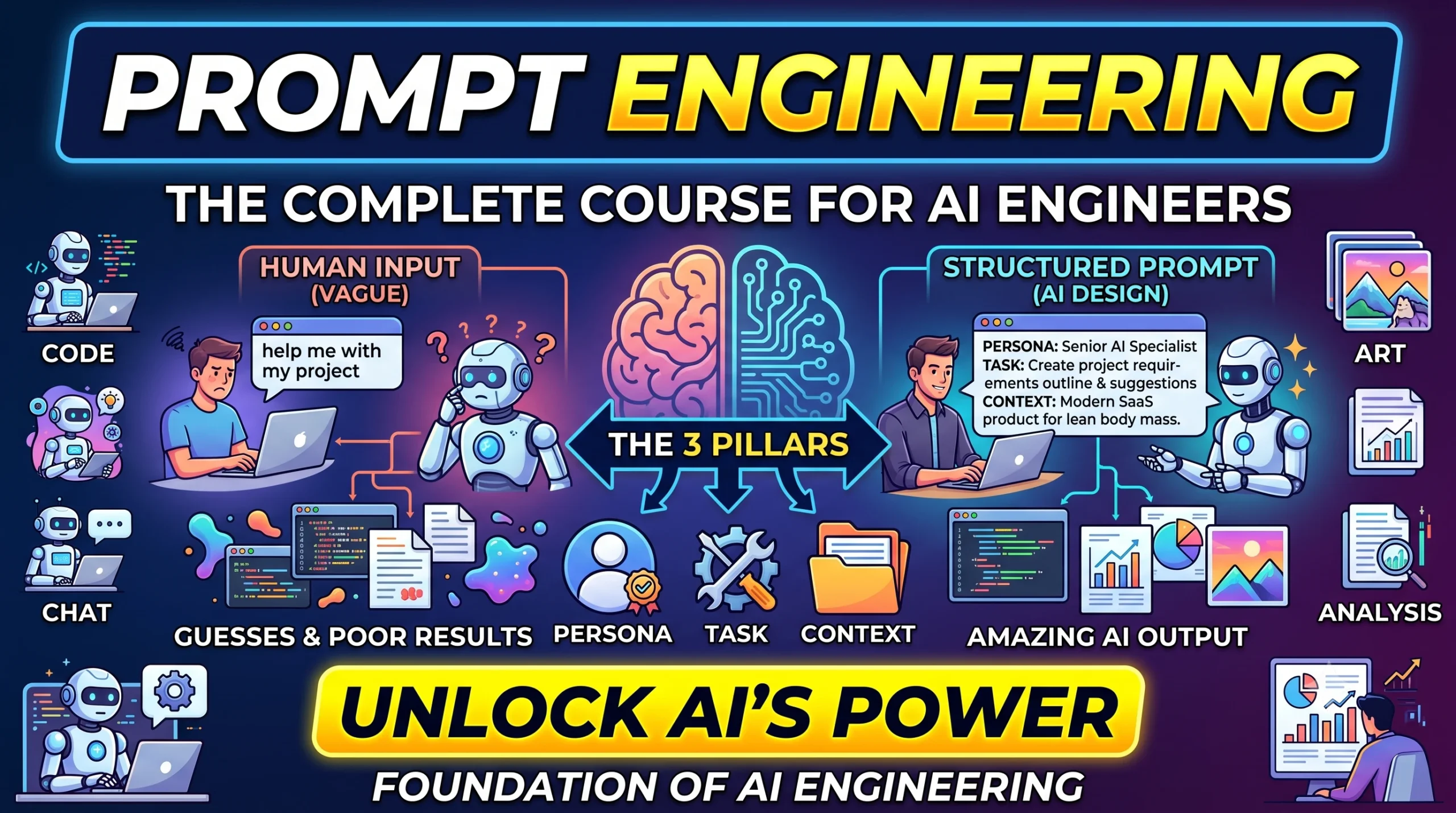
Introduction to Prompt Engineering
- AI systems possess immense capabilities (writing code, solving problems, generating art) but require exact instructions to function effectively.
- Vague requests yield poor results, while clearly explained requirements and structured outlines generate high-quality outputs.
Defining a Prompt
- Definition: A prompt is anything you provide to an AI to elicit a response.
- Input Types: A prompt can be a question, a request, a task, step-by-step instructions, an image, a file, or voice input.
- Structure: The prompt serves as the message (input), and the AI’s reaction is the output.
Real-Life Examples of Prompts
We use prompts daily in natural human interactions and basic technology:
- Ordering: “A large pepperoni pizza with extra cheese.”
- Search Engines: “Best budget laptops for college students.”
- Giving Directions: “Take the second exit at the roundabout, then park on the right.”
The Three Pillars of a Good Prompt
- Persona (The Role): Instructs the AI on who to act as (e.g., “You are a senior financial advisor”). This directly alters the tone, depth, and style of the generated answer.
- Task (The Action): Tells the AI the specific action to perform (e.g., translate, debug, outline, brainstorm, or “draft a welcoming email for new employees”).
- Context (The Background): Provides the necessary background information before the task is executed (e.g., “The audience consists of recent college graduates joining a tech startup”). Without context, the AI will guess, leading to inaccurate results.
Human Understanding vs. AI Understanding
- Humans: Interpret requests using emotions, tone, body language, and shared history. A human can understand a vague statement like, “Can you fix my presentation?”
- AI Systems: Lack implicit understanding and rely entirely on structure and clarity. An effective AI equivalent must be explicit: “Review the attached presentation slides for typos, rewrite the bullet points to be more persuasive, and ensure a professional business tone.”
Why Prompts Drive the AI Workflow
- Prompts function as the engine behind every AI workflow, regardless of complexity.
- They are necessary for:
- Writing code and summarizing long documents.
- Building chatbots, AI agents, and automation systems.
- Analyzing data, generating images, and interacting with APIs.
- Prompt engineering is not simply typing; it is the practice of designing instructions for intelligence to control output quality.
The Foundation of AI Engineering
Mastering prompt design unlocks advanced creativity, superior problem-solving, and complete control over AI systems. It transitions users from simply operating AI to actively designing its intelligence.
Prompt Engineering కి పరిచయం
- AI systems కి అద్భుతమైన సామర్థ్యాలు ఉన్నాయి (writing code, problems solve చేయడం, art generate చేయడం వంటివి), కానీ అవి సరిగ్గా పనిచేయడానికి ఖచ్చితమైన instructions అవసరం.
- అస్పష్టమైన requests సరైన ఫలితాలను ఇవ్వవు, కానీ requirements ని స్పష్టంగా వివరించి, ఒక structured outline ఇస్తే high-quality outputs వస్తాయి.
Prompt ని నిర్వచించడం (Defining a Prompt)
- Definition: AI నుండి ఒక response రాబట్టడానికి మీరు ఇచ్చే దేనినైనా Prompt అంటారు.
- Input Types: Prompt అనేది ఒక question, ఒక request, ఒక task, step-by-step instructions, ఒక image, ఒక file, లేదా మీ voice input కూడా కావచ్చు.
- Structure: ఇక్కడ prompt అనేది message (input) గా పనిచేస్తుంది, మరియు AI ఇచ్చే reaction ని output అంటారు.
Prompts కి సంబంధించిన Real-Life ఉదాహరణలు
మనం మన రోజువారీ జీవితంలో, సాధారణ సంభాషణలలో మరియు టెక్నాలజీలో prompts ని ఉపయోగిస్తాము:
- Ordering: “ఒక large pepperoni pizza, extra cheese తో.”
- Search Engines: “college students కి best budget laptops.”
- Giving Directions: “Roundabout దగ్గర second exit తీసుకోండి, తర్వాత right సైడ్ park చేయండి.”
Good Prompt యొక్క Three Pillars
- Persona (The Role): AI ఏ పాత్ర పోషించాలో ఇది చెప్తుంది (ఉదాహరణకు, “మీరు ఒక senior financial advisor”). ఇది AI generate చేసే answer యొక్క tone, depth, మరియు style ని మారుస్తుంది.
- Task (The Action): AI ఏ నిర్దిష్టమైన పని చేయాలో ఇది చెప్తుంది (ఉదాహరణకు, translate, debug, outline, brainstorm, లేదా “కొత్త ఉద్యోగుల కోసం ఒక welcoming email draft చేయండి”).
- Context (The Background): Task చేయడానికి ముందు అవసరమైన background information ని ఇది ఇస్తుంది (ఉదాహరణకు, “ఈ ఆడియన్స్ అంతా ఒక tech startup లో జాయిన్ అవుతున్న recent college graduates”). Context లేకపోతే AI సొంతంగా guess చేస్తుంది, దీనివల్ల inaccurate రిజల్ట్స్ వస్తాయి.
Human Understanding మరియు AI Understanding మధ్య తేడా
- Humans: మనుషులు emotions, tone, body language, మరియు పాత అనుభవాల ఆధారంగా requests ని అర్థం చేసుకుంటారు. “Can you fix my presentation?” లాంటి అస్పష్టమైన మాటను కూడా మనుషులు అర్థం చేసుకోగలరు.
- AI Systems: AI కి స్వతహాగా అర్థం చేసుకునే శక్తి ఉండదు, అది కేవలం structure మరియు clarity పైన ఆధారపడుతుంది. కాబట్టి AI కి స్పష్టమైన instructions ఇవ్వాలి: “Attached presentation slides లో typos కోసం review చేయండి, bullet points ని మరింత persuasive గా rewrite చేయండి, మరియు professional business tone ఉండేలా చూసుకోండి.”
Prompts, AI Workflow ని ఎందుకు నడిపిస్తాయి?
- ఎంత కష్టమైన పనైనా సరే, ప్రతి AI workflow వెనుక prompts ఒక engine లాగా పనిచేస్తాయి.
- ఇవి దేనికి అవసరం అంటే:
- Code రాయడానికి మరియు పెద్ద పెద్ద documents ని summarize చేయడానికి.
- Chatbots, AI agents, మరియు automation systems ని build చేయడానికి.
- Data ని analyze చేయడానికి, images ని generate చేయడానికి, మరియు APIs తో ఇంటరాక్ట్ అవ్వడానికి.
- Prompt engineering అంటే కేవలం ఏదో టైప్ చేయడం కాదు; output quality ని కంట్రోల్ చేయడం కోసం intelligence కి సరిగ్గా instructions ని design చేయడమే.
AI Engineering కి పునాది
Prompt design ని మాస్టర్ చేయడం వల్ల advanced creativity, మెరుగైన problem-solving స్కిల్స్, మరియు AI systems పైన పూర్తి control వస్తుంది. ఇది యూజర్లని కేవలం AI ని ఆపరేట్ చేసే స్థాయి నుండి, దాని intelligence ని యాక్టివ్ గా డిజైన్ చేసే స్థాయికి మారుస్తుంది.