🚀 *Gen AI Engineer (Production Focused)*
 🌐 What is a Service Mesh?
A service mesh is a dedicated infrastructure layer built right into an application that controls how different parts of that application (called microservices) share data with one another.
🏗️ In modern software, a single application might actually be made up of dozens or hundreds of independent, smaller services. As the number of these services grows, getting them to communicate securely, reliably, and quickly becomes incredibly complex.
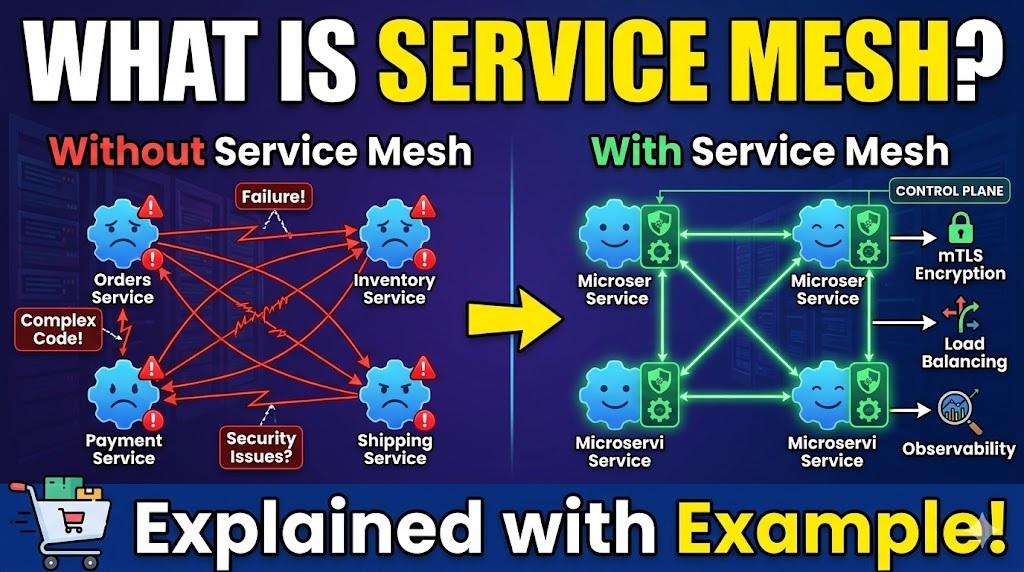
🧹 A service mesh takes all that messy networking logic out of the application code itself and handles it behind the scenes.
⚙️ How It Works: The “Sidecar” Pattern
A service mesh typically operates using a sidecar proxy.
🛵 Instead of an application service talking directly to another service over the network, it talks to a tiny local proxy (the “sidecar”) attached directly to it. This sidecar intercepts all incoming and outgoing network traffic.
When Service A wants to talk to Service B, the flow looks like this:
🖥️ Service A ➡️ 🛵 Sidecar A ➡️ 🌐 (Network) ➡️ 🛵 Sidecar B ➡️ 🖥️ Service B
🕵️♂️ Because these sidecars handle all the transit, they can automatically enforce security rules, monitor performance, and route traffic without the actual services even knowing it’s happening.
🛒 A Real-World Example: An E-Commerce App
Imagine you are building an online store using a microservices architecture. You break the app down into three distinct services:
- 📱 The Web Frontend: The user interface the customer sees.
- 📦 The Inventory Service: Checks if an item is in stock.
- 💳 The Payment Service: Processes the credit card.
When a user clicks “Buy,” the Web Frontend needs to talk to the Inventory Service, and then to the Payment Service.
❌ Without a Service Mesh:
Your developers have to write complex networking code directly into the Web Frontend. They have to code what happens if the Inventory Service is slow (timeouts), what happens if a connection drops (retries), and how to encrypt the data so credit card info isn’t stolen in transit. They have to do this for every single service they write.
✅ With a Service Mesh (like Istio or Linkerd):
Your developers only write the business logic. The Web Frontend simply says, “Send this data to the Payment Service.”
The sidecar proxy takes over and automatically:
- 🔒 Encrypts the request so hackers can’t intercept the payment details (Mutual TLS).
- 🔀 Routes the request to the healthiest server running the Payment Service.
- 🔄 Retries the request automatically if there is a sudden network blip.
- ⏱️ Logs exactly how many milliseconds the transaction took so your monitoring tools can spot bottlenecks.
🚀 Why Do We Use It?
By moving communication logic into a service mesh, you gain several massive benefits:
- 🔍 Observability: You can see exactly how data flows through your massive network of services and quickly spot where errors or slowdowns are happening.
- 🛡️ Security: Traffic between all services is automatically encrypted and authenticated. You can dictate that the “Inventory Service” is strictly forbidden from talking to the “Payment Service.”
- 🚦 Traffic Management: You can easily route 5% of your live user traffic to a brand-new version of a service to test it out (Canary deployment) without affecting the rest of your users.
- 🛠️ Reliability: The mesh handles automatic retries, timeouts, and circuit breaking if a service starts failing, preventing cascading failures across your entire application.
🌐 Service Mesh అంటే ఏమిటి?
Service mesh అనేది అప్లికేషన్లోనే built చేయబడిన ఒక dedicated infrastructure layer. అప్లికేషన్లోని వేర్వేరు భాగాలు (వీటిని microservices అంటారు) ఒకదానితో ఒకటి డేటాను ఎలా share చేసుకుంటాయో ఇది కంట్రోల్ చేస్తుంది.
🏗️ Modern software లో, ఒక సింగిల్ అప్లికేషన్ అనేది డజన్ల కొద్దీ లేదా వందల కొద్దీ independent, చిన్న చిన్న services తో తయారు కావచ్చు. ఈ services సంఖ్య పెరిగేకొద్దీ, వాటి మధ్య secure గా, reliable గా, మరియు quickly కమ్యూనికేషన్ జరిగేలా చేయడం చాలా complex అయిపోతుంది.
🧹 Service mesh ఈ messy networking logic అంతటినీ అప్లికేషన్ కోడ్ నుండి తీసివేసి, దాన్ని behind the scenes హ్యాండిల్ చేస్తుంది.
⚙️ ఇది ఎలా పనిచేస్తుంది (How It Works): “Sidecar” Pattern
సాధారణంగా Service mesh ఒక sidecar proxy ని ఉపయోగించి ఆపరేట్ అవుతుంది.
🛵 ఒక అప్లికేషన్ సర్వీస్ నెట్వర్క్ ద్వారా నేరుగా ఇంకో సర్వీస్ తో మాట్లాడే బదులు, దానికి నేరుగా attach చేసి ఉన్న ఒక చిన్న local proxy (దాన్నే “sidecar” అంటారు) తో మాట్లాడుతుంది. ఈ sidecar అనేది incoming మరియు outgoing network traffic అంతటినీ intercept చేస్తుంది.
Service A, Service B తో మాట్లాడాలనుకున్నప్పుడు, ఆ flow ఇలా ఉంటుంది:
🖥️ Service A ➡️ 🛵 Sidecar A ➡️ 🌐 (Network) ➡️ 🛵 Sidecar B ➡️ 🖥️ Service B
🕵️♂️ ఈ sidecars అంతా transit ని handle చేస్తాయి కాబట్టి, అసలు services కి ఏమి జరుగుతుందో తెలియకుండానే అవి automatically సెక్యూరిటీ రూల్స్ ని enforce చేస్తాయి, performance ని మానిటర్ చేస్తాయి మరియు traffic ని route చేస్తాయి.
🛒 ఒక Real-World ఎగ్జాంపుల్: ఒక E-Commerce App
మీరు microservices architecture ని వాడి ఒక ఆన్లైన్ స్టోర్ ని బిల్డ్ చేస్తున్నారని ఊహించుకోండి. మీరు ఆ యాప్ ని మూడు వేర్వేరు services గా డివైడ్ చేసారు:
- 📱 Web Frontend: కస్టమర్ చూసే user interface.
- 📦 Inventory Service: ఏదైనా ఐటెమ్ స్టాక్ లో ఉందో లేదో చెక్ చేస్తుంది.
- 💳 Payment Service: క్రెడిట్ కార్డు పేమెంట్స్ ని ప్రాసెస్ చేస్తుంది.
యూజర్ “Buy” పైన క్లిక్ చేసినప్పుడు, Web Frontend అనేది Inventory Service తోనూ, ఆ తర్వాత Payment Service తోనూ మాట్లాడాల్సి ఉంటుంది.
❌ Service Mesh లేకుండా ఉంటే (Without a Service Mesh):
మీ డెవలపర్లు complex networking code ని డైరెక్ట్ గా Web Frontend లో రాయాల్సి వస్తుంది. ఒకవేళ Inventory Service స్లోగా ఉంటే (timeouts) ఏం జరగాలి, కనెక్షన్ డ్రాప్ అయితే (retries) ఏం చేయాలి, క్రెడిట్ కార్డ్ ఇన్ఫర్మేషన్ దొంగిలించబడకుండా transit లో డేటాను ఎలా encrypt చేయాలి అనేది అంతా వాళ్ళే కోడ్ చేయాలి. వాళ్ళు రాసే ప్రతీ single service కీ ఈ విధంగా చేయాల్సి వస్తుంది.
✅ Service Mesh ఉంటే (With a Service Mesh – ఉదాహరణకు Istio లేదా Linkerd):
మీ డెవలపర్లు కేవలం business logic మాత్రమే రాస్తారు. Web Frontend సింపుల్ గా “ఈ డేటాను Payment Service కి పంపు” అని మాత్రమే చెబుతుంది.
అప్పుడు sidecar proxy ఆ బాధ్యత తీసుకుని, automatically ఇలా చేస్తుంది:
- 🔒 Hackers పేమెంట్ డీటెయిల్స్ ని దొంగిలించకుండా request ని Encrypt చేస్తుంది (Mutual TLS).
- 🔀 Payment Service రన్ అవుతున్న అత్యంత ఆరోగ్యవంతమైన (healthiest) సర్వర్కి request ని Route చేస్తుంది.
- 🔄 సడన్గా ఏదైనా నెట్వర్క్ ఇష్యూ (blip) వస్తే ఆటోమేటిక్ గా request ని Retry చేస్తుంది.
- ⏱️ ఈ లావాదేవీ (transaction) కి ఎన్ని మిల్లీసెకన్లు పట్టిందో ఖచ్చితంగా Log చేస్తుంది, దీనివల్ల మీ monitoring tools ఏవైనా సమస్యలు (bottlenecks) ఉంటే ఈజీగా గుర్తుపట్టగలవు.
🚀 మనం దీన్ని ఎందుకు వాడాలి? (Why Do We Use It?)
Communication logic ని సర్వీస్ మెష్ (service mesh) లోకి మార్చడం వల్ల, మీకు ఎన్నో massive బෙනిఫిట్స్ కలుగుతాయి:
- 🔍 Observability (పరిశీలనాత్మకత): మీ సర్వీసెస్ యొక్క massive నెట్వర్క్ ద్వారా డేటా ఎలా ఫ్లో అవుతుందో మీరు ఖచ్చితంగా చూడగలరు మరియు ఎక్కడ ఎర్రర్స్ లేదా slowdowns జరుగుతున్నాయో చాలా త్వరగా గుర్తించగలరు.
- 🛡️ Security (భద్రత): అన్ని సర్వీసెస్ మధ్య జరిగే ట్రాఫిక్ ఆటోమేటిక్ గా ఎన్క్రిప్ట్ (encrypted) మరియు అథెంటికేట్ (authenticated) అవుతుంది. మీరు “Inventory Service” అనేది “Payment Service” తో మాట్లాడకూడదు అని కఠినమైన రూల్స్ (dictate) పెట్టవచ్చు.
- 🚦 Traffic Management (ట్రాఫిక్ మేనేజ్మెంట్): మీరు చాలా సులభంగా మీ live user traffic లో 5% ని ఒక కొత్త వెర్షన్ సర్వీస్కి రూట్ చేసి టెస్ట్ చేయవచ్చు (దీన్నే Canary deployment అంటారు), దీనివల్ల మిగతా యూజర్లకు ఎటువంటి ఇబ్బంది (affect) కలగదు.
- 🛠️ Reliability (విశ్వసనీయత): ఒక సర్వీస్ ఫెయిల్ అవ్వడం స్టార్ట్ అయితే ఈ mesh ఆటోమేటిక్ retries, timeouts, మరియు circuit breaking ని హ్యాండిల్ చేస్తుంది, తద్వారా మీ ఎంటైర్ అప్లికేషన్ మొత్తం కుప్పకూలిపోకుండా (cascading failures) కాపాడుతుంది.