🌐 V2X (Vehicle-to-Everything) is an umbrella term for a vehicle’s communication system. It refers to the technology that allows a car to share information with any entity that might affect it, and vice versa.
🎯 The primary goals of V2X are to:
- 🛡️ Improve road safety
- 📈 Increase traffic efficiency
- 🤖 Pave the way for fully autonomous driving
It acts as an 👁️🗨️ invisible sensor, allowing a vehicle to “see” things beyond the driver’s line of sight or the car’s physical sensors (like cameras and radar).
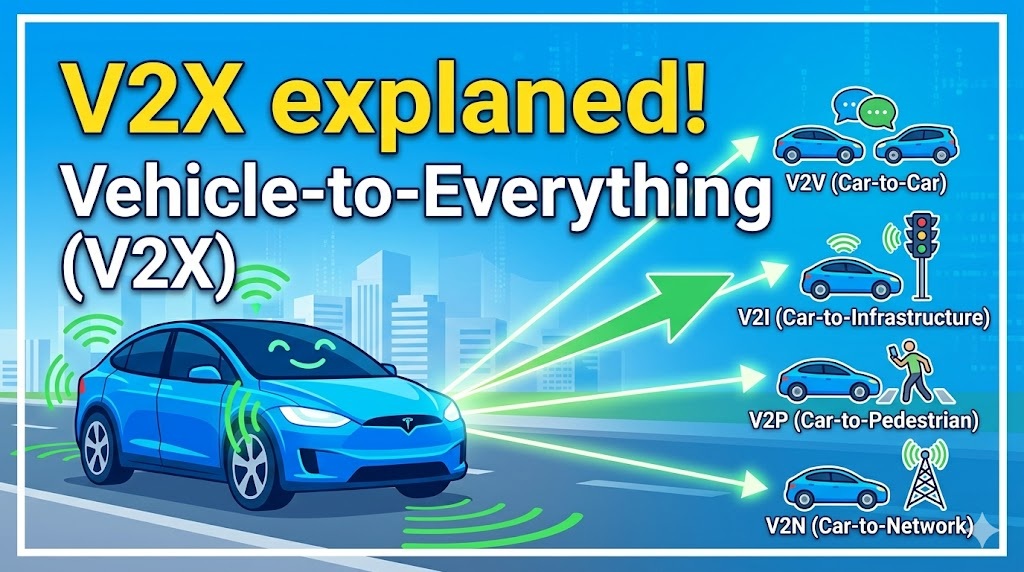
📶 V2X Communication Types
V2X is broken down into several specific types of communication:
- 🚘 V2V (Vehicle-to-Vehicle): Cars talk directly to each other, sharing data like speed, position, and direction. This helps prevent collisions, especially in blind spots or at intersections.
- 🚥 V2I (Vehicle-to-Infrastructure): Vehicles communicate with road infrastructure like traffic lights, speed signs, toll booths, and road sensors.
- 🚶 V2P (Vehicle-to-Pedestrian): Communication between vehicles and pedestrians or cyclists, usually via a smartphone app. It alerts both the driver and the pedestrian if they are on a collision course.
- ☁️ V2N (Vehicle-to-Network): The vehicle connects to cellular networks (like 4G/5G) and cloud services. This provides real-time traffic updates, weather alerts, and route optimization over a wider geographical area.
🌫️ A Real-World Example
Imagine you are driving to work in a V2X-equipped car on a foggy morning. Here is how the system keeps you safe and efficient:
- ☁️ V2N (Network): As you start your drive, your car connects to the cloud. It downloads real-time traffic data, sees that there is heavy congestion on your usual route due to an accident, and automatically reroutes you.
- 🚥 V2I (Infrastructure): As you approach a major intersection, your car communicates with the smart traffic light ahead. The light tells your car it will turn red in 5 seconds. Your car calculates your speed and gently advises you to slow down, saving fuel and preventing a sudden, hard stop.
- 📱 V2P (Pedestrian): The fog is thick, and you are about to turn right. A person wearing dark clothing is about to cross the street, hidden in the fog. Their smartphone broadcasts a V2P signal. Your car detects this, alerts you visually on the dashboard, and automatically applies the brakes before you even see them.
- 🚚 V2V (Vehicle): Further down the road, a truck three cars ahead of you slams on its brakes to avoid a deer. You cannot see the truck yet, but the truck’s V2V system broadcasts an emergency braking alert. Your car receives this signal instantly and begins braking preemptively, preventing a chain-reaction pileup.
💻 To help you visualize how these systems interact in real-time, I have generated an interactive simulation below.
🌐 V2X (వెహికల్-టు-ఎవ్రీథింగ్) అనేది వాహన కమ్యూనికేషన్ సిస్టమ్ కోసం వాడే ఒక సమగ్ర పదం. కారును ప్రభావితం చేసే ఏ ఇతర వస్తువుతోనైనా సమాచారాన్ని పంచుకోవడానికి మరియు గ్రహించడానికి అనుమతించే సాంకేతికతను ఇది సూచిస్తుంది.
🎯 V2X యొక్క ప్రధాన లక్ష్యాలు:
- 🛡️ రహదారి భద్రతను మెరుగుపరచడం
- 📈 ట్రాఫిక్ సామర్థ్యాన్ని పెంచడం
- 🤖 పూర్తిగా అటానమస్ (స్వయం-చాలక) డ్రైవింగ్కు మార్గం సుగమం చేయడం
ఇది ఒక 👁️🗨️ అదృశ్య సెన్సార్గా పనిచేస్తుంది, డ్రైవర్ దృష్టికి లేదా కారు భౌతిక సెన్సార్లకు (కెమెరాలు మరియు రాడార్ వంటివి) కనబడని విషయాలను కూడా వాహనం “చూడటానికి” ఇది అనుమతిస్తుంది.
📶 V2X కమ్యూనికేషన్ రకాలు
V2X పలు నిర్దిష్ట రకాల కమ్యూనికేషన్లుగా విభజించబడింది:
- 🚘 V2V (వెహికల్-టు-వెహికల్): కార్లు నేరుగా ఒకదానితో ఒకటి మాట్లాడుకుంటాయి, వేగం, స్థానం మరియు దిశ వంటి డేటాను పంచుకుంటాయి. ఇది ముఖ్యంగా బ్లైండ్ స్పాట్లలో లేదా కూడళ్ల వద్ద ప్రమాదాలను నివారించడంలో సహాయపడుతుంది.
- 🚥 V2I (వెహికల్-టు-ఇన్ఫ్రాస్ట్రక్చర్): ట్రాఫిక్ లైట్లు, స్పీడ్ సైన్లు, టోల్ బూత్లు మరియు రోడ్ సెన్సార్ల వంటి రహదారి మౌలిక సదుపాయాలతో వాహనాలు కమ్యూనికేట్ చేస్తాయి.
- 🚶 V2P (వెహికల్-టు-పెడెస్ట్రియన్): వాహనాలు మరియు పాదచారులు లేదా సైక్లిస్టుల మధ్య జరిగే కమ్యూనికేషన్, సాధారణంగా స్మార్ట్ఫోన్ యాప్ ద్వారా జరుగుతుంది. వారు ఢీకొనే అవకాశం ఉన్నట్లయితే ఇది డ్రైవర్ మరియు పాదచారులను హెచ్చరిస్తుంది.
- ☁️ V2N (వెహికల్-టు-నెట్వర్క్): వాహనం సెల్యులార్ నెట్వర్క్లకు (4G/5G వంటివి) మరియు క్లౌడ్ సేవలకు కనెక్ట్ అవుతుంది. ఇది విశాలమైన భౌగోళిక ప్రాంతంలో రియల్-టైమ్ ట్రాఫిక్ అప్డేట్లు, వాతావరణ హెచ్చరికలు మరియు రూట్ ఆప్టిమైజేషన్ను అందిస్తుంది.
🌫️ ఒక రియల్-వరల్డ్ ఉదాహరణ
పొగమంచుతో ఉన్న ఉదయాన్నే మీరు V2X సదుపాయం ఉన్న కారులో ఆఫీసుకు వెళుతున్నారని ఊహించుకోండి. ఈ సిస్టమ్ మిమ్మల్ని ఎలా సురక్షితంగా మరియు సమర్థవంతంగా ఉంచుతుందో ఇక్కడ చూడండి:
- ☁️ V2N (నెట్వర్క్): మీరు డ్రైవింగ్ ప్రారంభించినప్పుడు, మీ కారు క్లౌడ్కు కనెక్ట్ అవుతుంది. ఇది రియల్-టైమ్ ట్రాఫిక్ డేటాను డౌన్లోడ్ చేస్తుంది, ప్రమాదం కారణంగా మీ సాధారణ మార్గంలో భారీ ట్రాఫిక్ ఉందని గమనించి, ఆటోమేటిక్గా మరో మార్గాన్ని చూపిస్తుంది.
- 🚥 V2I (ఇన్ఫ్రాస్ట్రక్చర్): మీరు ఒక ప్రధాన కూడలిని సమీపిస్తున్నప్పుడు, మీ కారు ముందున్న స్మార్ట్ ట్రాఫిక్ లైట్తో కమ్యూనికేట్ చేస్తుంది. ఆ లైట్ 5 సెకన్లలో ఎరుపు రంగులోకి మారుతుందని మీ కారుకు చెబుతుంది. మీ కారు మీ వేగాన్ని లెక్కించి, నెమ్మదించమని సున్నితంగా సలహా ఇస్తుంది, తద్వారా ఇంధనాన్ని ఆదా చేస్తుంది మరియు ఆకస్మిక బ్రేకులు వేయడాన్ని నివారిస్తుంది.
- 📱 V2P (పెడెస్ట్రియన్): పొగమంచు దట్టంగా ఉంది మరియు మీరు కుడివైపుకు తిరగబోతున్నారు. ముదురు రంగు దుస్తులు ధరించిన ఒక వ్యక్తి పొగమంచులో దాగి, రోడ్డు దాటబోతున్నాడు. వారి స్మార్ట్ఫోన్ V2P సిగ్నల్ను ప్రసారం చేస్తుంది. మీ కారు దీనిని గుర్తించి, డ్యాష్బోర్డ్లో మిమ్మల్ని దృశ్యమానంగా హెచ్చరిస్తుంది మరియు మీరు వారిని చూసేలోపే ఆటోమేటిక్గా బ్రేకులను వేస్తుంది.
- 🚚 V2V (వెహికల్): రోడ్డుపై కొంచెం ముందుకు వెళ్లాక, మీకు ముందున్న మూడు కార్ల అవతల ఒక ట్రక్ జింకను తప్పించడానికి సడన్ బ్రేక్ వేసింది. మీరు ఇంకా ఆ ట్రక్కును చూడలేరు, కానీ ట్రక్ యొక్క V2V సిస్టమ్ ఎమర్జెన్సీ బ్రేకింగ్ అలర్ట్ను ప్రసారం చేస్తుంది. మీ కారు ఈ సిగ్నల్ను తక్షణమే స్వీకరిస్తుంది మరియు ముందుగానే బ్రేక్ వేయడం ప్రారంభిస్తుంది, తద్వారా వరుస ప్రమాదాలను (chain-reaction pileup) నివారిస్తుంది.
💻 ఈ సిస్టమ్లు రియల్-టైమ్లో ఎలా పరస్పరం వ్యవహరిస్తాయో అర్థం చేసుకోవడంలో మీకు సహాయపడటానికి, నేను క్రింద ఒక ఇంటరాక్టివ్ అనుకరణను (సిమ్యులేషన్) రూపొందించాను.