🚀 *Gen AI Engineer Telugu (Production Focused)*
 🌐 What is Edge Analytics?
📊 Edge analytics is the practice of collecting, processing, and analyzing data locally at the “edge” of a network—right where the data is generated—rather than sending it all back to a centralized cloud server or data center for analysis.
📱 In this context, the “edge” refers to IoT (Internet of Things) devices, 🌡️ sensors, 🏭 industrial machines, 📷 smart cameras, or 📡 local network routers.
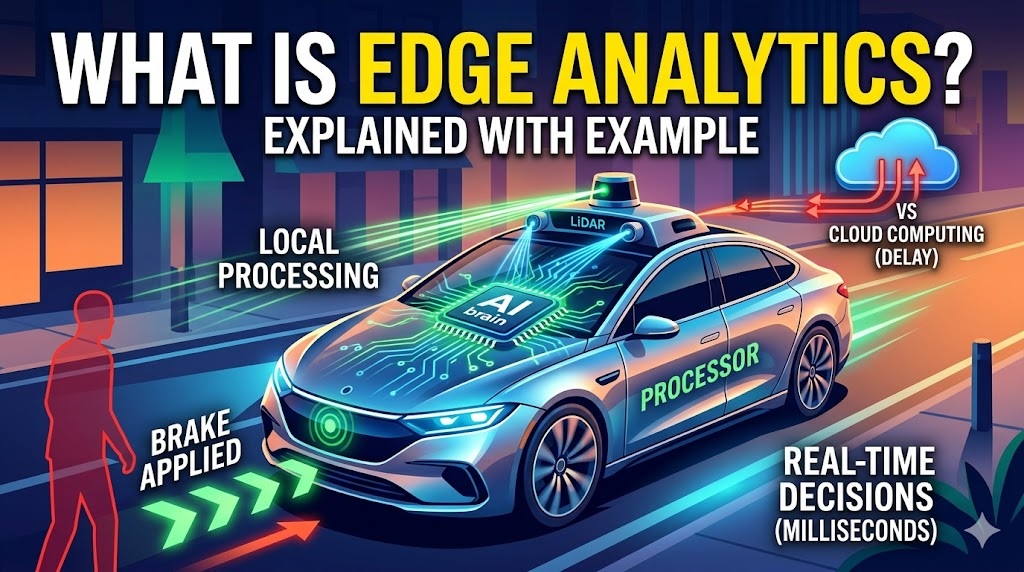
- ☁️ Traditional Cloud Model: A device collects data ➡️ sends it over the internet to a central server ➡️ the server analyzes it ➡️ sends a command back.
- ⚡ Edge Analytics Model: Skips the round-trip commute! The device (or a local hub just a few feet away) has enough computing power to run the analytical models itself.
🚗 A Real-World Example: The Autonomous Vehicle
🤖 To understand why this is necessary, consider a self-driving car. An autonomous vehicle is essentially a massive data-generating machine, producing terabytes of data daily from its cameras, LIDAR, and radar sensors.
- 🔴 The Cloud Analytics Approach (The Problem): If the car suddenly detects a pedestrian stepping into the road, it cannot afford to send that 4K video feed to a cloud server hundreds of miles away, wait for the server to analyze the video, determine it’s a human, and send a signal back saying “Hit the brakes.” The ⏳ network latency (delay) of that round trip could easily cause a fatal accident.
- 🟢 The Edge Analytics Approach (The Solution): The car’s onboard computer acts as an edge device. It runs the machine learning algorithms locally. It analyzes the camera feed in real-time, recognizes the pedestrian, and engages the brakes in milliseconds. ⏱️
📶 Later, when the car is parked and connected to Wi-Fi, it might send summarized data back to the cloud (e.g., “I encountered 14 hard-braking events today”) so the manufacturer can improve their overall driving algorithms. But the critical, real-time analysis happens at the edge.
✨ Key Benefits of Edge Analytics
- ⏱️ Near-Zero Latency: Decisions are made in milliseconds because the data doesn’t have to travel over a network. This is critical for manufacturing robotics, healthcare monitors, and autonomous vehicles.
- 📉 Reduced Bandwidth Costs: Transmitting massive volumes of raw data (like continuous HD video feeds) to the cloud is expensive and clogs network bandwidth. Edge analytics only sends the valuable insights or anomalies, saving massive amounts of network space.
- 🔌 Offline Reliability: If a smart factory loses its internet connection, edge devices can continue to operate, analyze data, and make safe decisions without needing to phone home.
- 🔒 Enhanced Security and Privacy: Because raw data (which might include sensitive information like security footage or patient vitals) is processed locally and discarded or encrypted, there is a much smaller risk of it being intercepted during transit to the cloud.
🌐 ఎడ్జ్ అనలిటిక్స్ అంటే ఏమిటి?
📊 ఎడ్జ్ అనలిటిక్స్ అనేది విశ్లేషణ కోసం డేటాను కేంద్రీకృత క్లౌడ్ సర్వర్ లేదా డేటా సెంటర్కు పంపడానికి బదులుగా, నెట్వర్క్ యొక్క “ఎడ్జ్” వద్ద (అంటే డేటా ఎక్కడైతే ఉత్పత్తి అవుతుందో అక్కడే) స్థానికంగా డేటాను సేకరించడం, ప్రాసెస్ చేయడం మరియు విశ్లేషించే విధానం.
📱 ఈ సందర్భంలో, “ఎడ్జ్” అంటే IoT (ఇంటర్నెట్ ఆఫ్ థింగ్స్) పరికరాలు, 🌡️ సెన్సార్లు, 🏭 పారిశ్రామిక యంత్రాలు, 📷 స్మార్ట్ కెమెరాలు లేదా 📡 స్థానిక నెట్వర్క్ రూటర్లు అని అర్థం.
- ☁️ సాంప్రదాయ క్లౌడ్ మోడల్: ఒక పరికరం డేటాను సేకరించి ➡️ ఇంటర్నెట్ ద్వారా సెంట్రల్ సర్వర్కు పంపుతుంది ➡️ సర్వర్ దాన్ని విశ్లేషించి ➡️ తిరిగి కమాండ్ను పంపుతుంది.
- ⚡ ఎడ్జ్ అనలిటిక్స్ మోడల్: ఈ రాకపోకల సమయాన్ని ఆదా చేస్తుంది! విశ్లేషణాత్మక మోడళ్లను స్వయంగా అమలు చేయడానికి ఆ పరికరం (లేదా కొద్ది అడుగుల దూరంలో ఉన్న స్థానిక హబ్) తగినంత కంప్యూటింగ్ శక్తిని కలిగి ఉంటుంది.
🚗 ఒక వాస్తవ ఉదాహరణ: అటానమస్ వెహికల్ (స్వయంచాలక వాహనం)
🤖 ఇది ఎందుకు అవసరమో అర్థం చేసుకోవడానికి, సెల్ఫ్-డ్రైవింగ్ కారును ఉదాహరణగా తీసుకుందాం. అటానమస్ వాహనం ప్రాథమికంగా భారీ డేటాను ఉత్పత్తి చేసే యంత్రం. ఇది తన కెమెరాలు, LIDAR మరియు రాడార్ సెన్సార్ల నుండి ప్రతిరోజూ టెరాబైట్ల కొద్దీ డేటాను ఉత్పత్తి చేస్తుంది.
- 🔴 క్లౌడ్ అనలిటిక్స్ విధానం (సమస్య): రోడ్డు మీదకు అకస్మాత్తుగా ఒక పాదచారి రావడం కారు గుర్తిస్తే, అది ఆ 4K వీడియో ఫీడ్ను వందల మైళ్ల దూరంలో ఉన్న క్లౌడ్ సర్వర్కు పంపి, సర్వర్ ఆ వీడియోను విశ్లేషించి, అది మనిషి అని నిర్ధారించి, “బ్రేకులు వేయండి” అని తిరిగి సిగ్నల్ పంపే వరకు వేచి ఉండలేదు. ఈ రాకపోకల ⏳ నెట్వర్క్ లాటెన్సీ (ఆలస్యం) సులభంగా ప్రాణాంతక ప్రమాదానికి దారి తీస్తుంది.
- 🟢 ఎడ్జ్ అనలిటిక్స్ విధానం (పరిష్కారం): కారులో ఉండే ఆన్బోర్డ్ కంప్యూటర్ ఎడ్జ్ పరికరంగా పనిచేస్తుంది. ఇది స్థానికంగా మెషీన్ లెర్నింగ్ అల్గారిథమ్లను రన్ చేస్తుంది. ఇది కెమెరా ఫీడ్ను రియల్ టైమ్లో విశ్లేషిస్తుంది, పాదచారులను గుర్తిస్తుంది మరియు మిల్లీసెకన్లలో బ్రేకులను వేస్తుంది. ⏱️
📶 తర్వాత, కారు పార్క్ చేసి, Wi-Fiకి కనెక్ట్ చేసినప్పుడు, అది క్లుప్తమైన డేటాను తిరిగి క్లౌడ్కు పంపవచ్చు (ఉదాహరణకు, “నేను ఈ రోజు 14 సార్లు హార్డ్-బ్రేకింగ్ చేయాల్సి వచ్చింది”), తద్వారా తయారీదారులు వారి మొత్తం డ్రైవింగ్ అల్గారిథమ్లను మెరుగుపరచగలరు. కానీ అత్యంత కీలకమైన, రియల్-టైమ్ విశ్లేషణ మాత్రం ఎడ్జ్ వద్దనే జరుగుతుంది.
✨ ఎడ్జ్ అనలిటిక్స్ యొక్క ముఖ్య ప్రయోజనాలు
- ⏱️ జీరో లాటెన్సీకి దగ్గరగా: డేటా నెట్వర్క్ ద్వారా ప్రయాణించాల్సిన అవసరం లేనందున నిర్ణయాలు మిల్లీసెకన్లలో తీసుకోబడతాయి. ఉత్పాదక రోబోటిక్స్, హెల్త్కేర్ మానిటర్లు మరియు స్వయంచాలక వాహనాలకు ఇది చాలా కీలకం.
- 📉 తగ్గిన బ్యాండ్విడ్త్ ఖర్చులు: భారీ పరిమాణంలో ఉన్న ముడి డేటాను (నిరంతర HD వీడియో ఫీడ్ల వలె) క్లౌడ్కు ప్రసారం చేయడం ఖరీదైనది మరియు నెట్వర్క్ బ్యాండ్విడ్త్ను అడ్డుకుంటుంది. ఎడ్జ్ అనలిటిక్స్ కేవలం విలువైన సమాచారాన్ని లేదా క్రమరాహిత్యాలను మాత్రమే పంపుతుంది, తద్వారా భారీ నెట్వర్క్ స్పేస్ను ఆదా చేస్తుంది.
- 🔌 ఆఫ్లైన్ విశ్వసనీయత: స్మార్ట్ ఫ్యాక్టరీ ఇంటర్నెట్ కనెక్షన్ను కోల్పోయినట్లయితే, ఎడ్జ్ పరికరాలు ఆపరేట్ చేయడం, డేటాను విశ్లేషించడం మరియు ప్రధాన నెట్వర్క్తో సంబంధం లేకుండా సురక్షితమైన నిర్ణయాలు తీసుకోవడం కొనసాగించగలవు.
- 🔒 మెరుగైన భద్రత మరియు గోప్యత: ముడి డేటా (భద్రతా ఫుటేజీ లేదా రోగి వివరాల వంటి సున్నితమైన సమాచారాన్ని కలిగి ఉండవచ్చు) స్థానికంగా ప్రాసెస్ చేయబడి, తొలగించబడుతుంది లేదా ఎన్క్రిప్ట్ చేయబడుతుంది కాబట్టి, క్లౌడ్కు వెళ్లే మార్గంలో ఇది హ్యాక్ చేయబడే ప్రమాదం చాలా తక్కువగా ఉంటుంది.