🚀 *Gen AI Engineer (Production Focused)*
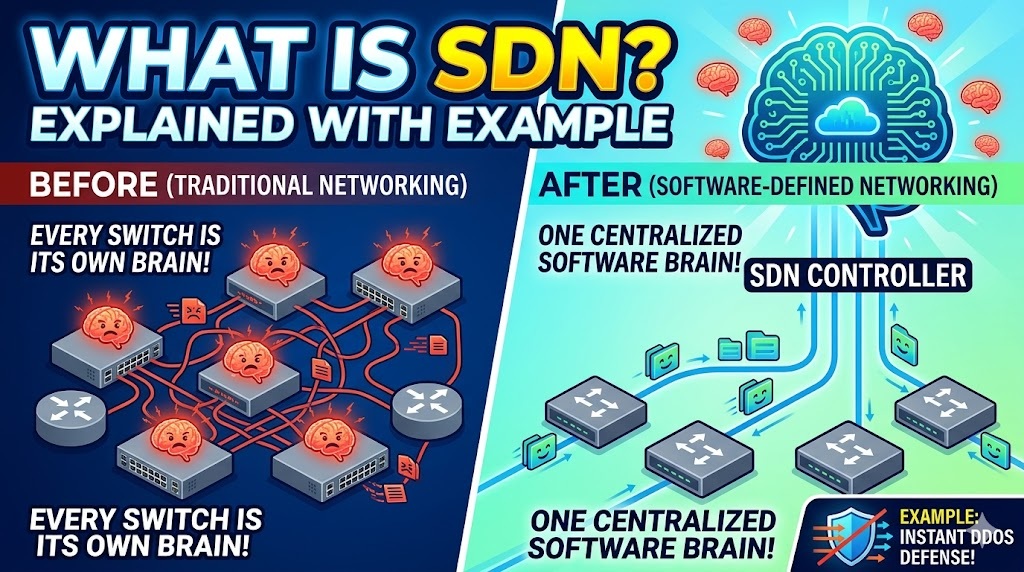
 🌐 Software-Defined Networking (SDN) is an architectural approach to IT networks that separates the 🧠 “brains” of the network from the 💪 “muscle” that actually moves the data.
Instead of relying on individual routers and switches to figure out where traffic should go, SDN moves that decision-making power into a 🖥️ centralized software application.
✂️ The Core Concept: Decoupling
To understand SDN, you need to understand the two main layers (or “planes”) of a network:
- 🏋️♂️ The Data Plane (The Muscle): These are the physical or virtual switches and routers that physically forward data packets from point A to point B.
- 🧠 The Control Plane (The Brains): This is the logic that decides how and where those packets should be routed.
🏗️ In traditional networking, every single switch and router has its own built-in control plane. They all have to talk to each other to figure out the best path for data.
☁️ In SDN, the control plane is ripped out of the individual hardware devices and moved to a central server called an SDN Controller. The physical switches are left as “dumb” forwarding devices that simply wait for instructions from the central controller.
🚦 A Simple Analogy: City Traffic Lights
Imagine a city’s traffic light system:
- 🛑 Traditional Network: Every intersection has its own independent timer or sensor. If there is a major accident on Main Street, the traffic lights 10 blocks away have no idea. They keep operating normally, relentlessly sending cars 🚗 directly into a massive traffic jam.
- 🚁 Software-Defined Network (SDN): All the traffic lights are connected to a central City Command Center 🏢. The command center has a bird’s-eye view of the entire city. When an accident happens on Main Street, the software instantly reprograms the lights 10 blocks away to detour cars around the crash, keeping traffic flowing efficiently 🛣️.
🚨 A Real-World Technical Example
Let’s say a university campus experiences a sudden, massive 👾 Distributed Denial of Service (DDoS) attack from a specific group of IP addresses, flooding their network with junk traffic.
- 🐢 Without SDN (Traditional):A network engineer receives an alert. To stop the attack, they have to manually log into dozens of individual routers across the campus, typing specific command-line instructions into each one to block the malicious IP addresses. By the time they finish, the network might have already crashed 💥.
- ⚡ With SDN:The engineer (or an automated security script 🤖) logs into the single, central SDN Controller. They write one simple rule: “Drop all traffic coming from these IP addresses.”The SDN Controller instantly communicates this rule to all the network switches simultaneously using a protocol like OpenFlow (the language the controller uses to talk to the data plane). The attack is blocked network-wide in a matter of seconds ⏱️, all from a single pane of glass.
✨ Key Benefits of SDN
- 🎛️ Centralized Management: Administrators can manage the entire network from one dashboard rather than configuring devices one by one.
- 🚀 Agility and Speed: Network routing can be changed on the fly to handle traffic spikes or outages.
- ⚙️ Programmability: Because the network is controlled by software, it can be integrated with scripts and APIs to automate tasks.
🌐 Software-Defined Networking (SDN) అనేది IT నెట్వర్క్ల ఒక architectural approach. ఇది నెట్వర్క్ యొక్క 🧠 “brains” (మెదడు) మరియు డేటాను వాస్తవంగా కదిలించే 💪 “muscle” (కండరాలు) ని వేరు చేస్తుంది.
ట్రాఫిక్ ఎక్కడికి వెళ్లాలి అనేది నిర్ణయించడానికి individual routers మరియు switches పై ఆధారపడకుండా, ఆ decision-making power ని ఒక 🖥️ centralized software application కి మారుస్తుంది.
✂️ The Core Concept: Decoupling (వేరు చేయడం)
SDN గురించి అర్థం చేసుకోవాలంటే, నెట్వర్క్ లోని రెండు ప్రధాన layers (లేదా “planes”) గురించి తెలుసుకోవాలి:
- 🏋️♂️ The Data Plane (The Muscle): ఇవి physical లేదా virtual switches మరియు routers. ఇవి డేటా ప్యాకెట్లను point A నుండి point B కి భౌతికంగా ఫార్వర్డ్ చేస్తాయి.
- 🧠 The Control Plane (The Brains): ఆ ప్యాకెట్లను ఎలా మరియు ఎక్కడికి రూట్ చేయాలి అని నిర్ణయించే logic ఇది.
🏗️ Traditional networking లో, ప్రతి ఒక్క switch మరియు router కి దాని స్వంత built-in control plane ఉంటుంది. డేటా కి బెస్ట్ పాత్ కనుక్కోవడానికి అవన్నీ ఒకదానితో ఒకటి కమ్యూనికేట్ అవ్వాలి.
☁️ SDN లో, ఈ control plane ని individual hardware devices నుండి తీసేసి, SDN Controller అనే ఒక central server కి మూవ్ చేస్తారు. అప్పుడు Physical switches కేవలం central controller ఇచ్చే instructions కోసం వెయిట్ చేసే “dumb” forwarding devices గా మిగిలిపోతాయి.
🚦 A Simple Analogy: City Traffic Lights
ఒక సిటీ లోని ట్రాఫిక్ లైట్ సిస్టమ్ ని ఊహించుకోండి:
- 🛑 Traditional Network: ప్రతి intersection కి దాని స్వంత independent timer లేదా sensor ఉంటుంది. Main Street లో ఏదైనా పెద్ద accident జరిగితే, 10 బ్లాక్స్ దూరంలో ఉన్న ట్రాఫిక్ లైట్స్కి ఆ విషయం తెలియదు. అవి మామూలుగానే పనిచేస్తూ, కార్లను 🚗 నేరుగా ఆ ట్రాఫిక్ జామ్ లోకే పంపిస్తుంటాయి.
- 🚁 Software-Defined Network (SDN): ట్రాఫిక్ లైట్స్ అన్నీ ఒక central City Command Center 🏢 కి కనెక్ట్ అయి ఉంటాయి. ఈ కమాండ్ సెంటర్కి మొత్తం సిటీ పై bird’s-eye view (పూర్తి అవగాహన) ఉంటుంది. Main Street లో accident జరిగినప్పుడు, సాఫ్ట్వేర్ వెంటనే 10 బ్లాక్స్ దూరంలో ఉన్న లైట్స్ని reprogram చేసి, కార్లను వేరే రూట్ (detour) లో మళ్లించి ట్రాఫిక్ ఎఫిషియంట్ గా వెళ్లేలా చేస్తుంది 🛣️.
🚨 A Real-World Technical Example
ఒక university campus నెట్వర్క్ పై కొన్ని నిర్దిష్ట IP addresses నుండి అకస్మాత్తుగా భారీ 👾 Distributed Denial of Service (DDoS) ఎటాక్ జరిగిందనుకుందాం. అంటే junk traffic తో నెట్వర్క్ మొత్తం నిండిపోతుంది.
- 🐢 Without SDN (Traditional):ఒక network engineer కి అలర్ట్ వస్తుంది. ఆ ఎటాక్ ని ఆపడానికి, అతను క్యాంపస్ లోని డజన్ల కొద్దీ individual routers లోకి manually లాగిన్ అయ్యి, ఆ malicious IP addresses ని బ్లాక్ చేయడానికి ప్రతి దానిలో specific command-line instructions టైప్ చేయాలి. ఈ పని పూర్తయ్యేలోపు, నెట్వర్క్ క్రాష్ అయిపోవచ్చు 💥.
- ⚡ With SDN:ఇంజనీర్ (లేదా ఒక automated security script 🤖) ఒకే ఒక central SDN Controller లోకి లాగిన్ అవుతాడు. “Drop all traffic coming from these IP addresses” అని ఒక సింపుల్ rule రాస్తాడు.SDN Controller వెంటనే ఈ rule ని OpenFlow (controller మరియు data plane మధ్య కమ్యూనికేషన్ కి వాడే లాంగ్వేజ్) లాంటి ప్రోటోకాల్ ద్వారా నెట్వర్క్ స్విచ్లన్నింటికీ ఒకేసారి పంపుతుంది. కేవలం కొన్ని సెకన్లలోనే ⏱️ ఒక single dashboard (pane of glass) నుండి నెట్వర్క్ అంతటా ఎటాక్ బ్లాక్ చేయబడుతుంది.
✨ Key Benefits of SDN
- 🎛️ Centralized Management: Administrators ప్రతి డివైజ్ ని విడివిడిగా కన్ఫిగర్ చేయాల్సిన అవసరం లేకుండా, ఒకే dashboard నుండి మొత్తం నెట్వర్క్ని మేనేజ్ చేయవచ్చు.
- 🚀 Agility and Speed: ట్రాఫిక్ స్పైక్స్ లేదా నెట్వర్క్ ఔటేజెస్ (outages) వచ్చినప్పుడు నెట్వర్క్ రూటింగ్ని ఆన్-ది-ఫ్లై (వెంటనే) మార్చవచ్చు.
- ⚙️ Programmability: నెట్వర్క్ సాఫ్ట్వేర్ ద్వారా కంట్రోల్ చేయబడుతుంది కాబట్టి, టాస్క్లను ఆటోమేట్ చేయడానికి దీన్ని scripts మరియు APIs తో సులభంగా integrate చేయవచ్చు.