🚀 *Gen AI Forward Deployed Engineer in Telugu*
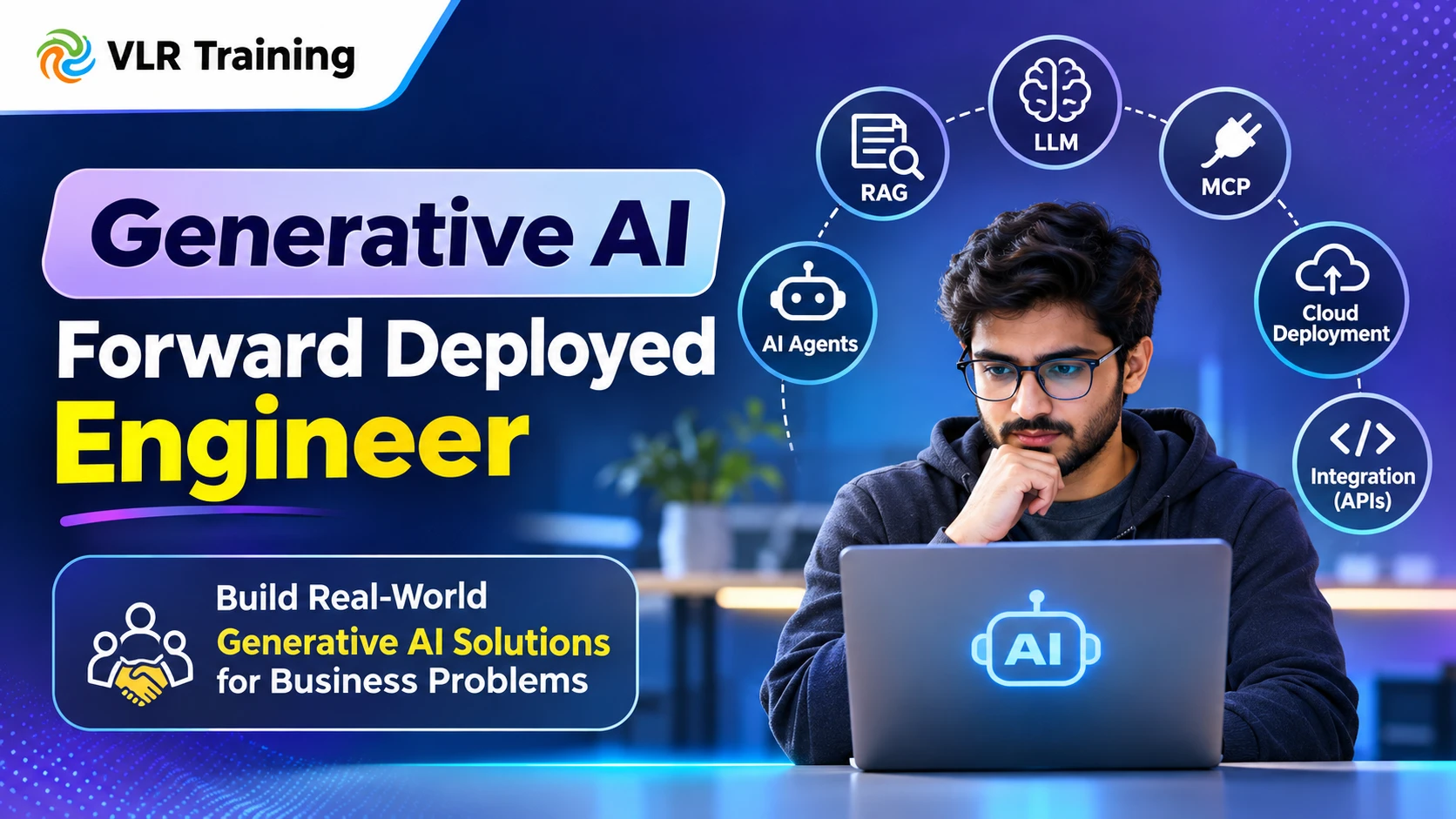
🚀 What is a Generative AI Forward Deployed Engineer (GenAI FDE)?
🤖 A Generative AI Forward Deployed Engineer (GenAI FDE) is a specialized engineering professional who understands real-world business problems and develops practical AI solutions using Generative AI technologies.
💡 In simple words, a GenAI Forward Deployed Engineer connects AI technology with real-world business requirements.
A Traditional Software Developer develops applications based on predefined requirements. However, a GenAI FDE takes on broader responsibilities.
They understand customer business requirements, identify problems that can be solved using AI, select appropriate AI technologies, develop AI applications, integrate them with existing business systems, and deploy the solutions into production environments.
📌 Here, Forward Deployed means working closely with customers and developing AI solutions within their real business environments.
🎯 1. Why is a GenAI FDE Required?
Today, many companies want to improve their business operations using Artificial Intelligence.
Every company has different business problems that require different AI solutions.
Some real-world examples:
🏦 Banking: A bank wants to develop an AI assistant that can answer customer questions about loans, accounts, and banking services.
🏥 Healthcare: A hospital wants to use AI to summarize patient records for authorized medical professionals.
🛒 E-commerce: An e-commerce company wants to automate customer support and product return processes using AI.
💻 Software Development: A software company wants to build an AI coding assistant to help developers write and understand code.
👨💼 Human Resources: An HR department wants to use AI to analyze resumes and answer employee questions.
Simply purchasing an LLM or connecting ChatGPT to an application will not solve all these problems.
Companies need engineers who can connect AI with their existing data, applications, databases, APIs, and security systems to develop complete business solutions.
✅ This is why the GenAI FDE role is becoming increasingly important.
🛒 2. Real-Time Example: E-commerce Customer Support AI Agent
Let’s understand the GenAI FDE role through a practical example.
Imagine an e-commerce company receives approximately 10,000 customer support requests every day.
Customers ask questions such as:
- 📦 Where is my order?
- 🔄 How can I return a product?
- 📋 What is your refund policy?
- 💰 When will my money be refunded?
- 📍 Can I change my delivery address?
The company wants to develop an AI-powered customer support system to reduce manual work and improve customer service.
🔍 Step 1: Understand Business Requirements
First, the GenAI FDE meets with the company’s management team, customer support team, and technical team.
They understand the company’s business requirements.
Example Requirements:
- 🤖 AI should automatically answer customer questions.
- 📄 AI should retrieve information from company documents.
- 📦 AI should check real-time order information.
- 🔄 AI should initiate product return requests.
- 💰 AI should provide refund status information.
- 👨💼 AI should transfer complex issues to human employees.
The engineer also identifies security, accuracy, performance, and cost requirements.
🏗️ Step 2: Design the GenAI Architecture
After understanding the business requirements, the GenAI FDE selects the appropriate technologies and designs the AI architecture.
| 🧩 Component | 🛠️ Technology | 🎯 Purpose |
|---|---|---|
| Programming | Python | Application Development |
| LLM | GPT / Gemini / Claude | Understand customer questions and generate responses |
| RAG | LangChain / LlamaIndex | Retrieve company information |
| Vector Database | Pinecone / FAISS / Chroma | Store and search document embeddings |
| Agent Framework | LangGraph | Develop AI agent workflows |
| API Integration | REST APIs | Connect with company applications |
| MCP | Model Context Protocol | Connect AI applications with external tools and data |
| Backend | FastAPI | Develop application APIs |
| Cloud | AWS / Azure / GCP | Deploy AI solutions |
| Monitoring | Logging and Tracing Tools | Monitor application performance |
📌 These are example technology choices. Every GenAI FDE project does not necessarily require all these technologies.
📚 Step 3: Implement RAG (Retrieval-Augmented Generation)
Imagine a customer asks the following question:
Customer: “What is your company’s product return policy?”
The company already stores its return policies in PDF documents, Word documents, and internal knowledge bases.
The GenAI FDE develops a RAG system to retrieve relevant information from these documents and provide accurate answers to customers.
⚙️ RAG Process:
- 📂 Collect company documents.
- 📝 Extract text from the documents.
- ✂️ Divide the text into smaller chunks.
- 🧠 Generate embeddings for each chunk.
- 🗄️ Store embeddings in a Vector Database.
- 🔎 Search for relevant information when a customer asks a question.
- 🤖 Send the retrieved information to the LLM.
- 💬 Generate a relevant answer using the LLM.
💡 Example:
👤 Customer: “Can I return a product after 15 days?”
🤖 AI Assistant: “According to the company’s return policy, this product can be returned within the specified return period, subject to the applicable conditions.”
📌 The AI should generate its response based on the company’s actual return policy rather than relying on general information that may not be accurate.
🤖 Step 4: Develop an AI Agent
Now, consider a more advanced business requirement.
Imagine a customer says:
👤 Customer: “I want to return the headphones I recently purchased.”
A traditional chatbot might only explain the return policy.
However, an AI Agent can do more than provide answers. It can also perform specific business actions using authorized tools.
⚙️ How the AI Agent Works:
- 🧠 Understands the customer’s request.
- 🆔 Requests the Order ID if necessary.
- 🔗 Calls the company’s Order Management API.
- 📦 Retrieves the customer’s order details.
- 📋 Checks the return policy using RAG.
- ✅ Verifies whether the product is eligible for return.
- 🔄 Uses the Return Management API to create a return request.
- 📩 Provides return confirmation to the customer.
For sensitive actions such as issuing refunds, the system can require additional authorization or human approval.
🔌 Step 5: Integrate MCP and External Systems
Imagine an e-commerce company uses several business applications.
Company Applications:
- 📦 Order Management System
- 💳 Payment Gateway
- 👥 Customer Database
- 🏬 Inventory Management System
- 📊 CRM Application
The GenAI FDE needs to integrate the AI application with these systems.
This can involve REST APIs, Function Calling, and MCP Servers.
💡 Example:
👤 Customer: “Please check my order status.”
🤖 AI Agent uses an authorized tool to retrieve the latest order status from the Order Management System.
📌 MCP (Model Context Protocol) is a standardized protocol that allows AI applications to connect with external tools and data sources.
The GenAI FDE configures the required MCP integrations and establishes appropriate permissions.
🧪 Step 6: Testing and Evaluation
After developing the AI application, testing is extremely important.
The GenAI FDE verifies the solution using different test scenarios.
| 🧪 Test Scenario | ✅ Expected Result |
|---|---|
| Customer asks for order status | Retrieve the correct order status |
| Customer asks about return policy | Provide an answer based on company policy |
| Customer provides an invalid Order ID | Request valid order information |
| Unauthorized user attempts access | Prevent access to another customer’s data |
| API failure occurs | Handle the error safely |
| AI cannot provide a reliable answer | Escalate the request to human support |
The engineer also evaluates the following:
- 🎯 Response Accuracy
- ⚠️ AI Hallucinations
- ⏱️ Response Latency
- 🪙 Token Usage
- 💰 Application Cost
- 🔐 Security
☁️ Step 7: Deploy the Application into Production
After completing testing, the GenAI FDE deploys the AI application into the company’s cloud environment or approved infrastructure.
During deployment, the engineer configures:
- 🔐 Security
- 🔑 Authentication
- 📝 Logging
- 📊 Monitoring
- 📈 Application Scaling
- 🔗 Production API Integrations
- ⚡ Performance Optimization
After deployment, the engineer provides documentation and operational guidance to the company’s engineering and support teams.
🎉 Final Business Result:
The company now has an AI-powered customer support system.
Using this AI system, the company can:
- 💬 Answer customer questions.
- 📄 Retrieve information from company documents.
- 📦 Check customer orders.
- 🔄 Create return requests.
- ⚙️ Execute approved business workflows.
✅ Developing an end-to-end AI solution to solve a real business problem is one of the primary responsibilities of a GenAI FDE.
🎯 3. What Are the Major Responsibilities of a GenAI FDE?
A GenAI Forward Deployed Engineer performs several technical and customer-facing responsibilities.
| 👨💻 Responsibility | 📝 Explanation |
|---|---|
| Business Understanding | Understand customer business problems and requirements |
| Technical Discovery | Identify existing systems, data sources, and integration requirements |
| AI Architecture | Design the complete GenAI solution architecture |
| LLM Integration | Integrate models such as GPT, Gemini, and Claude |
| RAG Development | Build enterprise knowledge retrieval systems |
| AI Agent Development | Develop intelligent AI agents that perform business tasks |
| API Integration | Connect AI applications with existing business systems |
| MCP Integration | Connect AI applications with external tools and resources |
| Cloud Deployment | Deploy AI solutions into production environments |
| Evaluation | Test accuracy, safety, latency, and reliability |
| Monitoring | Monitor AI performance, failures, and costs |
| Customer Collaboration | Work closely with customers and technical teams |
🧑💻 4. What Technologies Should You Learn to Become a GenAI FDE?
Anyone planning to become a GenAI FDE should develop knowledge and practical experience across multiple technology areas.
🐍 1. Programming and Backend Development
First, learn Software Development Fundamentals.
Topics:
- Python
- OOP (Object-Oriented Programming)
- Exception Handling
- REST APIs
- FastAPI
- SQL
- Git and GitHub
🧠 2. Generative AI Fundamentals
Understand how Generative AI works and how LLMs generate responses.
Topics:
- AI vs ML vs Deep Learning
- Generative AI
- LLM Fundamentals
- Tokens and Context Windows
- Prompt Engineering
- Embeddings
- Fine-tuning Fundamentals
📚 3. RAG and Knowledge Systems
RAG is used to retrieve relevant information from company documents and knowledge bases.
Topics:
- Document Processing
- Chunking Strategies
- Embedding Models
- Vector Databases
- Semantic Search
- Hybrid Search
- Reranking
- Advanced RAG
🤖 4. Agentic AI
AI Agents are intelligent systems that understand user requirements and use tools to perform specific tasks.
Topics:
- AI Agents
- Tool Calling
- Function Calling
- LangChain
- LangGraph
- CrewAI
- Multi-Agent Systems
- Agent Memory
🔌 5. MCP and Integrations
MCP and APIs help connect AI applications with external systems.
Topics:
- Model Context Protocol (MCP)
- MCP Servers
- MCP Clients
- REST API Integration
- Authentication and Authorization
- Enterprise Application Integration
☁️ 6. Cloud and Production Engineering
Learning application development alone is not enough. You should also understand how to deploy AI applications into production environments.
Topics:
- AWS / Azure / GCP
- Docker
- CI/CD
- Cloud Deployment
- Logging and Monitoring
- Security and Governance
- LLM Evaluation and Observability
⚖️ 5. Difference Between a GenAI Developer and a GenAI FDE
Both roles involve developing Generative AI applications. However, their responsibilities and work approaches are different.
| 👨💻 GenAI Developer | 🚀 GenAI Forward Deployed Engineer |
|---|---|
| Mainly focuses on AI application development | Focuses on customer business problems and AI implementation |
| Usually works within a product or engineering team | Often works directly with customer teams |
| Develops applications based on assigned technical requirements | Also participates in discovering and defining technical requirements |
| Develops RAG systems and AI Agents | Develops, integrates, and deploys complete AI solutions |
| May work with predefined systems | Often integrates with complex customer systems |
| Focuses on software functionality | Focuses on business outcomes and production success |
💡 Example:
A GenAI Developer builds an AI chatbot using Python, an LLM, and RAG.
A GenAI FDE works with a bank, understands its customer support process, develops the AI chatbot, integrates it with banking systems, implements security controls, deploys it into production, and ensures that it works reliably.
🧠 6. Difference Between an AI Engineer and a GenAI FDE
An AI Engineer generally focuses on developing AI models, Machine Learning pipelines, intelligent applications, and inference systems.
A GenAI FDE generally focuses on applying existing AI models and technologies to solve customer-specific business problems.
💡 Example:
🔹 AI Engineer: Develops and improves an AI-powered fraud detection system.
🔹 GenAI FDE: Develops an AI-powered banking assistant, connects it with banking systems, and deploys it for customers to use.
📌 These two roles can have overlapping responsibilities, especially in smaller AI engineering teams.
🏢 7. Which Companies Hire GenAI FDEs?
Several leading technology and AI companies have established Forward Deployed Engineering teams or advertise related job positions.
🌐 1. Google Cloud
Google Cloud has job roles such as Generative AI Forward Deployed Engineer.
These roles involve technologies and areas such as:
- Enterprise AI
- Agentic Workflows
- RAG
- MCP
- Cloud Integration
🔷 2. Palantir
Palantir has Forward Deployed AI Engineers who work on customer-specific GenAI solutions and production AI workflows.
They collaborate with customers to understand business requirements and implement AI solutions.
🤖 3. Anthropic
Anthropic also has roles related to Forward Deployed Engineering.
These engineers build enterprise applications using Claude models and integrate AI solutions into customer environments.
📌 Other AI startups, consulting companies, and technology organizations may also offer jobs involving similar responsibilities. However, job titles can vary from company to company.
🎓 8. Is GenAI FDE an Entry-Level Job?
Generally, GenAI FDE is a demanding engineering role.
This is because the position requires a combination of technical, problem-solving, and communication skills.
Important Skills Required:
- 🐍 Strong Programming Skills.
- 🤖 Practical Generative AI Development Experience.
- 🔌 API and Enterprise Integration Knowledge.
- ☁️ Cloud and Deployment Experience.
- 🧩 Problem-Solving and Debugging Skills.
- 🗣️ Customer Communication Skills.
- 🚀 Ability to take projects from initial requirements to production deployment.
💡 Example:
A Google Cloud Generative AI FDE job description specifies requirements such as eight years of experience in cloud computing or technical customer-facing roles. It also asks for production AI and RAG experience.
📌 This is an example of an advanced job position. The same experience requirement does not apply to every FDE vacancy.
🛣️ 9. Learning Roadmap to Become a GenAI FDE
Anyone targeting a career as a GenAI FDE can follow the learning path below.
🐍 Phase 1 – Python and Software Development
First, learn Programming Fundamentals.
Topics:
- Python
- OOP
- SQL
- REST APIs
- Git
- FastAPI
- Backend Development
🧠 Phase 2 – Generative AI and LLMs
Learn Generative AI Fundamentals and LLM Integration.
Topics:
- LLM Fundamentals
- OpenAI APIs
- Gemini APIs
- Claude APIs
- Prompt Engineering
- Embeddings
- Model Integration
📚 Phase 3 – RAG Development
Learn how to develop applications that retrieve information from company documents.
Topics:
- LangChain
- LlamaIndex
- Vector Databases
- Document Processing
- Semantic Search
- Advanced RAG
🤖 Phase 4 – Agentic AI
Learn how to develop intelligent AI Agents and Agent Workflows.
Topics:
- AI Agents
- LangGraph
- Tool Calling
- Function Calling
- Multi-Agent Systems
- Agent Workflows
🔌 Phase 5 – MCP and Enterprise Integration
Learn how to connect AI applications with external tools and business systems.
Topics:
- MCP Servers
- MCP Clients
- REST API Integration
- Authentication
- Authorization
- External Business Applications
☁️ Phase 6 – Cloud and Production Deployment
Learn how to deploy developed AI applications into production environments.
Topics:
- AWS / Azure / GCP
- Docker
- CI/CD
- Cloud Deployment
- Monitoring
- Security
- AI Evaluation
- Observability
🚀 Phase 7 – Real-Time Projects
Finally, develop end-to-end projects based on real-world business problems.
These projects help you gain practical experience.
🏗️ 10. Five Practical Projects for GenAI FDE
Developing the following projects can help you gain practical knowledge of GenAI FDE technologies and responsibilities.
📄 Project 1: Enterprise PDF Chatbot
Develop an AI application that allows users to upload company PDF documents and ask questions based on their content.
Technologies: Python, LLM, RAG, Vector Database.
🛒 Project 2: AI Customer Support Agent
Develop an AI Agent that answers customer questions, checks orders, and creates product return requests.
Technologies: LangGraph, APIs, RAG.
👨💼 Project 3: AI HR Recruitment Assistant
Develop an AI application that analyzes resumes, retrieves candidate information, and assists the recruitment team.
Technologies: LLM, Python, SQL, RAG.
💰 Project 4: AI Finance Assistant
Develop an AI assistant that retrieves financial information and performs approved tasks using financial tools.
Technologies: AI Agents, MCP, API Integration.
🌐 Project 5: Multi-Agent Business Automation
Develop an application where multiple AI Agents collaborate to automate business workflows.
Technologies: LangGraph, MCP, Cloud.
📌 For every project, focus on the following areas:
- 📋 Business Requirements
- 🏗️ Solution Architecture
- 💻 Application Development
- 🔗 API Integration
- 🧪 Testing
- 🔐 Security
- ☁️ Cloud Deployment
- 📊 Monitoring
Do not focus only on developing the project. Learn the complete process, from understanding the business problem to deploying the solution into production.
⏰ 11. What Does a GenAI FDE Do Every Day?
A typical working day of a GenAI FDE may include the following activities.
| 🕒 Activity | 📝 Work Involved |
|---|---|
| 🌅 Morning | Discuss business problems with customer teams |
| 📋 Requirements | Understand business workflows and technical challenges |
| 💻 Development | Write Python code and develop RAG or AI Agent workflows |
| 🔌 Integration | Connect AI applications with APIs, databases, and enterprise systems |
| 🧪 Testing | Validate AI responses, security, and application performance |
| ☁️ Deployment | Debug applications and deploy solutions into production |
| 🌇 Evening | Demonstrate project progress and discuss improvements with customers |
The actual daily schedule depends on the company and project.
Some FDE roles may require working at customer offices, while others operate in hybrid or remote environments.
🌟 12. Final Understanding: What Exactly Is a GenAI FDE?
A Generative AI Forward Deployed Engineer combines three important professional capabilities.
👨💻 1. Engineer
Developing AI applications, writing code, and solving technical problems.
🧠 2. AI Specialist
Developing AI solutions using Generative AI, LLMs, RAG, AI Agents, and MCP technologies.
🤝 3. Problem Solver
Understanding customer business problems and providing appropriate technical solutions.
💡 Key Takeaway
A GenAI FDE does not simply develop chatbots or write prompts.
They understand real business problems, select appropriate AI technologies, develop end-to-end AI solutions, integrate them with existing business systems, and ensure that the applications work reliably in production environments.
🚀 The main goal of a GenAI Forward Deployed Engineer is not just to build AI applications. It is to deliver real business value through Artificial Intelligence.
🚀 Generative AI Forward Deployed Engineer (GenAI FDE) అంటే ఏమిటి?
🤖 Generative AI Forward Deployed Engineer (GenAI FDE) అనేది కంపెనీలకు ఎదురయ్యే నిజమైన Business Problems ను అర్థం చేసుకొని, వాటికి Generative AI Technologies ఉపయోగించి Practical AI Solutions అభివృద్ధి చేసే ఒక ప్రత్యేకమైన Engineering Role.
💡 సింపుల్గా చెప్పాలంటే, AI Technology కి Real-World Business Requirements కి మధ్య అనుసంధానంగా పనిచేసే వ్యక్తిని GenAI Forward Deployed Engineer అంటారు.
ఒక Traditional Software Developer కి Requirements ఇచ్చినప్పుడు, ఆ Requirements ఆధారంగా Application Develop చేస్తారు. కానీ GenAI FDE అంతకంటే ఎక్కువ బాధ్యతలు నిర్వహిస్తారు.
వారు Customer Business Requirements ను అర్థం చేసుకుంటారు, ఏ సమస్యకు AI ఉపయోగపడుతుందో గుర్తిస్తారు, అవసరమైన AI Technologies ఎంచుకుంటారు, AI Application Develop చేస్తారు, Existing Business Applications తో Integrate చేస్తారు మరియు చివరకు Production Environment లో Deploy చేస్తారు.
📌 ఇక్కడ Forward Deployed అంటే Customer కు దగ్గరగా ఉంటూ, వారి నిజమైన Business Environment లో పనిచేస్తూ AI Solutions అభివృద్ధి చేయడం.
🎯 1. GenAI FDE ఎందుకు అవసరం?
ప్రస్తుతం అనేక కంపెనీలు తమ Business Operations ను మెరుగుపరచడానికి Artificial Intelligence ఉపయోగించాలని భావిస్తున్నాయి.
ప్రతి కంపెనీకి వేర్వేరు Business Problems ఉంటాయి.
కొన్ని Real-Time Examples:
🏦 Banking: ఒక Bank తన Customers కు Loan వివరాలు తెలియజేయడానికి AI Assistant Develop చేయాలనుకుంటుంది.
🏥 Healthcare: ఒక Hospital Patient Records ను Summarize చేయడానికి AI ఉపయోగించాలనుకుంటుంది.
🛒 E-commerce: ఒక E-commerce Company Customer Support మరియు Product Returns Process ను AI ద్వారా Automate చేయాలనుకుంటుంది.
💻 Software Development: ఒక Software Company Developers కు సహాయం చేయడానికి AI Coding Assistant రూపొందించాలనుకుంటుంది.
👨💼 Human Resources: ఒక HR Department Resumes ను Analyze చేయడానికి మరియు Employees ప్రశ్నలకు సమాధానాలు ఇవ్వడానికి AI ఉపయోగించాలనుకుంటుంది.
కేవలం ఒక LLM కొనుగోలు చేయడం లేదా ChatGPT ను Application కు Connect చేయడం ద్వారా ఈ సమస్యలన్నీ పరిష్కారం కావు.
కంపెనీలకు తమ Existing Data, Applications, Databases, APIs మరియు Security Systems తో AI ను అనుసంధానం చేసి పనిచేసేలా చేయగల Engineers అవసరం.
✅ అందుకే GenAI FDE Role కు ప్రాధాన్యత పెరుగుతోంది.
🛒 2. Real-Time Example: E-commerce Customer Support AI Agent
ఈ Role ను ఒక Practical Example ద్వారా అర్థం చేసుకుందాం.
ఒక E-commerce Company ప్రతిరోజూ సుమారు 10,000 Customer Support Requests అందుకుంటోందని అనుకుందాం.
Customers అడిగే ప్రశ్నలు:
- 📦 నా Order ఎక్కడ ఉంది?
- 🔄 నేను Product ను ఎలా Return చేయాలి?
- 📋 మీ Refund Policy ఏమిటి?
- 💰 నా Money ఎప్పుడు Refund అవుతుంది?
- 📍 నా Delivery Address మార్చుకోవచ్చా?
ఈ Customer Support పనులను తగ్గించడానికి కంపెనీ ఒక AI-Powered Customer Support System Develop చేయాలనుకుంటోంది.
🔍 Step 1: Business Requirements అర్థం చేసుకోవడం
మొదట GenAI FDE కంపెనీ Management Team, Customer Support Team మరియు Technical Team తో మాట్లాడతారు.
వారి Business Requirements ను అర్థం చేసుకుంటారు.
Example Requirements:
- 🤖 AI Customers ప్రశ్నలకు స్వయంచాలకంగా సమాధానాలు ఇవ్వాలి.
- 📄 కంపెనీ Documents నుండి Information Retrieve చేయాలి.
- 📦 Real-Time Order Information తెలుసుకోవాలి.
- 🔄 Product Return Requests Initiate చేయాలి.
- 💰 Refund Status తెలియజేయాలి.
- 👨💼 క్లిష్టమైన సమస్యలను Human Employees కు Transfer చేయాలి.
అదేవిధంగా Security, Accuracy, Performance మరియు Cost Requirements ను కూడా గుర్తిస్తారు.
🏗️ Step 2: GenAI Architecture Design చేయడం
Business Requirements అర్థం చేసుకున్న తర్వాత అవసరమైన Technologies ను Select చేసి AI Architecture Design చేస్తారు.
| 🧩 Component | 🛠️ Technology | 🎯 ఉపయోగం |
|---|---|---|
| Programming | Python | Application Development |
| LLM | GPT / Gemini / Claude | Customer Questions అర్థం చేసుకొని Responses Generate చేయడం |
| RAG | LangChain / LlamaIndex | Company Information Retrieve చేయడం |
| Vector Database | Pinecone / FAISS / Chroma | Document Embeddings Store మరియు Search చేయడం |
| Agent Framework | LangGraph | AI Agent Workflows Develop చేయడం |
| API Integration | REST APIs | Company Applications తో Connect చేయడం |
| MCP | Model Context Protocol | AI Applications ను External Tools మరియు Data తో Connect చేయడం |
| Backend | FastAPI | Application APIs Develop చేయడం |
| Cloud | AWS / Azure / GCP | AI Solution Deploy చేయడం |
| Monitoring | Logging and Tracing Tools | Application Performance Monitor చేయడం |
📌 ఇవి ఒక Project కోసం ఉపయోగించగల Example Technologies మాత్రమే. ప్రతి GenAI FDE Project లో ఇవన్నీ తప్పనిసరిగా ఉపయోగించాల్సిన అవసరం లేదు.
📚 Step 3: RAG (Retrieval-Augmented Generation) Implement చేయడం
ఒక Customer ఈ ప్రశ్న అడిగాడని అనుకుందాం:
Customer: “మీ కంపెనీలో Product Return Policy ఏమిటి?”
కంపెనీ Return Policies ఇప్పటికే PDF Documents, Word Documents మరియు Internal Knowledge Bases లో ఉన్నాయి.
ఈ Documents నుండి సరైన Information Retrieve చేసి Customer కు సమాధానం ఇవ్వడానికి GenAI FDE ఒక RAG System Develop చేస్తారు.
⚙️ RAG Process:
- 📂 Company Documents Collect చేయడం.
- 📝 Documents లోని Text Extract చేయడం.
- ✂️ Text ను చిన్న చిన్న Chunks గా Divide చేయడం.
- 🧠 ప్రతి Chunk కు Embeddings Generate చేయడం.
- 🗄️ Embeddings ను Vector Database లో Store చేయడం.
- 🔎 Customer Question అడిగినప్పుడు Relevant Information Search చేయడం.
- 🤖 Retrieve చేసిన Information ను LLM కు పంపించడం.
- 💬 LLM ద్వారా Relevant Answer Generate చేయించడం.
💡 Example:
👤 Customer: “నేను 15 రోజుల తర్వాత Product Return చేయవచ్చా?”
🤖 AI Assistant: “కంపెనీ Return Policy ప్రకారం, ఈ Product ను నిర్ణయించిన Return Period లోపు, వర్తించే షరతులకు అనుగుణంగా Return చేయవచ్చు.”
📌 ఇక్కడ AI తనకు తెలిసిన General Information ఆధారంగా సమాధానం ఇవ్వకూడదు. కంపెనీ యొక్క నిజమైన Return Policy ఆధారంగా సమాధానం ఇవ్వాలి.
🤖 Step 4: AI Agent Develop చేయడం
ఇప్పుడు మరో Advanced Requirement ను పరిశీలిద్దాం.
Customer ఇలా అడిగాడని అనుకుందాం:
👤 Customer: “నేను ఇటీవల కొనుగోలు చేసిన Headphones ను Return చేయాలనుకుంటున్నాను.”
సాధారణ Chatbot అయితే Return Policy వివరాలను మాత్రమే తెలియజేస్తుంది.
కానీ ఒక AI Agent సమాధానం ఇవ్వడంతో పాటు కొన్ని Actions కూడా Perform చేయగలదు.
⚙️ AI Agent పనిచేసే విధానం:
- 🧠 Customer Request ను అర్థం చేసుకుంటుంది.
- 🆔 అవసరమైతే Order ID అడుగుతుంది.
- 🔗 కంపెనీ Order Management API ను Call చేస్తుంది.
- 📦 Customer Order Details Retrieve చేస్తుంది.
- 📋 RAG ఉపయోగించి Return Policy Check చేస్తుంది.
- ✅ Product Return Eligibility ను Verify చేస్తుంది.
- 🔄 Return Management API ను ఉపయోగించి Return Request Create చేస్తుంది.
- 📩 Customer కు Return Confirmation అందిస్తుంది.
ఉదాహరణకు Refund Issue చేయడం వంటి Sensitive Actions కోసం Additional Authorization లేదా Human Approval ఏర్పాటు చేయవచ్చు.
🔌 Step 5: MCP మరియు External Systems Integration
ఒక E-commerce Company వివిధ Applications ఉపయోగిస్తోందని అనుకుందాం.
Company Applications:
- 📦 Order Management System
- 💳 Payment Gateway
- 👥 Customer Database
- 🏬 Inventory Management System
- 📊 CRM Application
GenAI FDE ఈ Systems తో AI Application ను Integrate చేయాలి.
దీనికి REST APIs, Function Calling మరియు MCP Servers వంటి Technologies ఉపయోగించవచ్చు.
💡 Example:
👤 Customer: “నా Order Status Check చేయండి.”
🤖 AI Agent తనకు అనుమతి ఉన్న Tool ను ఉపయోగించి Order Management System నుండి Latest Order Status Retrieve చేస్తుంది.
📌 MCP (Model Context Protocol) అనేది AI Applications ను External Tools మరియు Data Sources తో అనుసంధానం చేయడానికి ఉపయోగించే ఒక Standardized Protocol.
GenAI FDE అవసరమైన MCP Integrations ను Configure చేసి, సరైన Permissions ఏర్పాటు చేస్తారు.
🧪 Step 6: Testing మరియు Evaluation
AI Application Develop చేసిన తర్వాత Testing చాలా ముఖ్యమైనది.
GenAI FDE ఈ క్రింది Test Scenarios ను Verify చేస్తారు.
| 🧪 Test Scenario | ✅ Expected Result |
|---|---|
| Customer Order Status అడిగితే | సరైన Order Status Retrieve చేయాలి |
| Return Policy గురించి అడిగితే | Company Policy ఆధారంగా Answer ఇవ్వాలి |
| Invalid Order ID ఇస్తే | సరైన Order Information అడగాలి |
| Unauthorized User అయితే | ఇతర Customers Data Access చేయకుండా నిరోధించాలి |
| API Failure వస్తే | Error ను సురక్షితంగా Handle చేయాలి |
| AI కు సరైన సమాధానం తెలియకపోతే | Human Support కు Escalate చేయాలి |
అదేవిధంగా ఈ క్రింది అంశాలను కూడా Evaluate చేస్తారు.
- 🎯 Response Accuracy
- ⚠️ Hallucinations
- ⏱️ Latency
- 🪙 Token Usage
- 💰 Application Cost
- 🔐 Security
☁️ Step 7: Application ను Production లో Deploy చేయడం
Testing పూర్తయిన తర్వాత AI Application ను కంపెనీ Cloud లేదా Approved Infrastructure లో Deploy చేస్తారు.
ఈ సమయంలో GenAI FDE క్రింది అంశాలను Configure చేస్తారు:
- 🔐 Security
- 🔑 Authentication
- 📝 Logging
- 📊 Monitoring
- 📈 Application Scaling
- 🔗 Production API Integrations
- ⚡ Performance Optimization
Application ను Deploy చేసిన తర్వాత Documentation మరియు Operational Guidance ను కంపెనీ Engineering మరియు Support Teams కు అందిస్తారు.
🎉 Final Business Result:
ఇప్పుడు కంపెనీకి ఒక AI-Powered Customer Support System అందుబాటులో ఉంటుంది.
ఈ AI System ద్వారా:
- 💬 Customer Questions కు Answers ఇవ్వవచ్చు.
- 📄 Company Documents నుండి Information Retrieve చేయవచ్చు.
- 📦 Orders Check చేయవచ్చు.
- 🔄 Return Requests Create చేయవచ్చు.
- ⚙️ Approved Business Workflows ను Execute చేయవచ్చు.
✅ ఒక నిజమైన Business Problem కు End-to-End AI Solution Develop చేయడమే GenAI FDE యొక్క ముఖ్యమైన పని.
🎯 3. GenAI FDE యొక్క ముఖ్యమైన Responsibilities ఏమిటి?
| 👨💻 Responsibility | 📝 వివరణ |
|---|---|
| Business Understanding | Customer Business Problems మరియు Requirements అర్థం చేసుకోవడం |
| Technical Discovery | Existing Systems, Data Sources మరియు Integration Requirements గుర్తించడం |
| AI Architecture | Complete GenAI Solution Architecture Design చేయడం |
| LLM Integration | GPT, Gemini, Claude వంటి Models ను Integrate చేయడం |
| RAG Development | Enterprise Knowledge Retrieval Systems Develop చేయడం |
| AI Agent Development | Business Tasks Perform చేసే Intelligent AI Agents Develop చేయడం |
| API Integration | AI Applications ను Existing Business Systems తో Connect చేయడం |
| MCP Integration | AI Applications ను External Tools మరియు Resources తో Connect చేయడం |
| Cloud Deployment | AI Solutions ను Production Environment లో Deploy చేయడం |
| Evaluation | Accuracy, Safety, Latency మరియు Reliability Test చేయడం |
| Monitoring | AI Performance, Failures మరియు Costs Monitor చేయడం |
| Customer Collaboration | Customers మరియు Technical Teams తో కలిసి పని చేయడం |
🧑💻 4. GenAI FDE నేర్చుకోవడానికి అవసరమైన Technologies ఏమిటి?
GenAI FDE గా మారాలనుకునే వారు వివిధ Technology Areas పై Knowledge మరియు Practical Experience సంపాదించాలి.
🐍 1. Programming మరియు Backend Development
మొదట Software Development Fundamentals నేర్చుకోవాలి.
Topics:
- Python
- OOP (Object-Oriented Programming)
- Exception Handling
- REST APIs
- FastAPI
- SQL
- Git and GitHub
🧠 2. Generative AI Fundamentals
Generative AI ఎలా పనిచేస్తుంది, LLMs ఎలా Responses Generate చేస్తాయి అనే విషయాలను తెలుసుకోవాలి.
Topics:
- AI vs ML vs Deep Learning
- Generative AI
- LLM Fundamentals
- Tokens and Context Windows
- Prompt Engineering
- Embeddings
- Fine-tuning Fundamentals
📚 3. RAG మరియు Knowledge Systems
Company Documents మరియు Knowledge Bases నుండి Relevant Information Retrieve చేయడానికి RAG ఉపయోగిస్తారు.
Topics:
- Document Processing
- Chunking Strategies
- Embedding Models
- Vector Databases
- Semantic Search
- Hybrid Search
- Reranking
- Advanced RAG
🤖 4. Agentic AI
AI Agents అనేవి User Requirements ను అర్థం చేసుకొని Tools ఉపయోగించి అవసరమైన Tasks Perform చేయగల Intelligent Systems.
Topics:
- AI Agents
- Tool Calling
- Function Calling
- LangChain
- LangGraph
- CrewAI
- Multi-Agent Systems
- Agent Memory
🔌 5. MCP మరియు Integrations
AI Applications ను External Systems తో Connect చేయడానికి MCP మరియు APIs ఉపయోగపడతాయి.
Topics:
- Model Context Protocol (MCP)
- MCP Servers
- MCP Clients
- REST API Integration
- Authentication and Authorization
- Enterprise Application Integration
☁️ 6. Cloud మరియు Production Engineering
AI Application Develop చేయడం మాత్రమే కాకుండా దానిని Production Environment లో Deploy చేయడం కూడా నేర్చుకోవాలి.
Topics:
- AWS / Azure / GCP
- Docker
- CI/CD
- Cloud Deployment
- Logging and Monitoring
- Security and Governance
- LLM Evaluation and Observability
⚖️ 5. GenAI Developer మరియు GenAI FDE మధ్య Difference ఏమిటి?
ఈ రెండు Roles కూడా Generative AI Applications Develop చేస్తాయి. అయితే వాటి Responsibilities మరియు Work Approach లో తేడా ఉంటుంది.
| 👨💻 GenAI Developer | 🚀 GenAI Forward Deployed Engineer |
|---|---|
| ప్రధానంగా AI Application Development పై దృష్టి పెడతారు | Customer Business Problems మరియు AI Implementation పై దృష్టి పెడతారు |
| సాధారణంగా Product లేదా Engineering Team లో పనిచేస్తారు | తరచుగా నేరుగా Customer Teams తో కలిసి పనిచేస్తారు |
| ఇచ్చిన Technical Requirements ఆధారంగా Develop చేస్తారు | Technical Requirements ను Discover చేయడంలో కూడా పాల్గొంటారు |
| RAG మరియు AI Agents Develop చేస్తారు | Complete AI Solutions Develop చేసి, Integrate చేసి Deploy చేస్తారు |
| ముందుగా నిర్ణయించిన Systems తో పని చేయవచ్చు | Complex Customer Systems తో Integrate చేయాల్సి ఉంటుంది |
| Software Functionality పై దృష్టి పెడతారు | Business Outcomes మరియు Production Success పై దృష్టి పెడతారు |
💡 Example:
ఒక GenAI Developer Python, LLM మరియు RAG ఉపయోగించి ఒక AI Chatbot Develop చేస్తారు.
కానీ GenAI FDE ఒక Bank తో కలిసి పనిచేస్తూ, వారి Customer Support Process ను అర్థం చేసుకొని, AI Chatbot Develop చేస్తారు. ఆ Chatbot ను Banking Systems తో Integrate చేస్తారు, Security Controls ఏర్పాటు చేస్తారు, Production లో Deploy చేస్తారు మరియు సరిగ్గా పనిచేస్తుందో లేదో నిర్ధారిస్తారు.
🧠 6. AI Engineer మరియు GenAI FDE మధ్య Difference ఏమిటి?
AI Engineer సాధారణంగా AI Models, Machine Learning Pipelines, Intelligent Applications మరియు Inference Systems Develop చేయడంపై దృష్టి పెడతారు.
GenAI FDE సాధారణంగా ఇప్పటికే అందుబాటులో ఉన్న AI Models మరియు Technologies ను ఉపయోగించి Customer-Specific Business Problems కు Solutions Develop చేయడంపై దృష్టి పెడతారు.
💡 Example:
🔹 AI Engineer: AI-Powered Fraud Detection System ను Develop చేయడం మరియు Improve చేయడం.
🔹 GenAI FDE: AI-Powered Banking Assistant ను Develop చేసి, Banking Systems తో Connect చేసి, Customers ఉపయోగించేలా Production లో Deploy చేయడం.
📌 ఈ రెండు Roles మధ్య కొన్ని Responsibilities ఒకదానితో మరొకటి Overlap కావచ్చు. ముఖ్యంగా చిన్న AI Engineering Teams లో ఈ పరిస్థితి కనిపిస్తుంది.
🏢 7. GenAI FDE ను Hire చేసే Companies ఏవి?
ప్రపంచవ్యాప్తంగా అనేక Technology మరియు AI Companies Forward Deployed Engineering Teams ను ఏర్పాటు చేస్తున్నాయి లేదా సంబంధిత Job Positions ను ప్రకటిస్తున్నాయి.
🌐 1. Google Cloud
Google Cloud లో Generative AI Forward Deployed Engineer వంటి Job Roles ఉన్నాయి.
ఈ Roles లో ముఖ్యంగా:
- Enterprise AI
- Agentic Workflows
- RAG
- MCP
- Cloud Integration
వంటి Technologies పై పనిచేయాల్సి ఉంటుంది.
🔷 2. Palantir
Palantir లో Forward Deployed AI Engineers Customer-Specific GenAI Solutions మరియు Production AI Workflows పై పనిచేస్తారు.
వారు Customers తో కలిసి వారి Business Requirements అర్థం చేసుకొని AI Solutions Implement చేస్తారు.
🤖 3. Anthropic
Anthropic లో కూడా Forward Deployed Engineering కు సంబంధించిన Roles ఉన్నాయి.
ఈ Engineers Claude Models ఉపయోగించి Enterprise Applications Develop చేస్తారు మరియు Customer Environments లో AI Solutions Integrate చేస్తారు.
📌 ఇతర AI Startups, Consulting Companies మరియు Technology Organizations లో కూడా ఇలాంటి Responsibilities ఉన్న Jobs లభించవచ్చు. అయితే Job Title కంపెనీని బట్టి మారవచ్చు.
🎓 8. GenAI FDE ఒక Entry-Level Job నా?
సాధారణంగా GenAI FDE అనేది Advanced Engineering Role.
ఎందుకంటే ఈ Job చేయడానికి అనేక Technical మరియు Communication Skills అవసరం.
అవసరమైన Skills:
- 🐍 Strong Programming Skills.
- 🤖 Practical Generative AI Development Experience.
- 🔌 API మరియు Enterprise Integration Knowledge.
- ☁️ Cloud మరియు Deployment Experience.
- 🧩 Problem-Solving మరియు Debugging Skills.
- 🗣️ Customer Communication Skills.
- 🚀 Projects ను ప్రారంభం నుండి Production వరకు తీసుకెళ్లగల సామర్థ్యం.
💡 Example:
Google Cloud లో ఒక Generative AI FDE Job Description లో ఎనిమిది సంవత్సరాల Cloud Computing లేదా Technical Customer-Facing Experience వంటి అవసరాలు పేర్కొనబడ్డాయి. అదేవిధంగా Production AI మరియు RAG Experience కూడా కోరబడింది.
📌 ఇది ఒక Advanced Job Position కు సంబంధించిన Example మాత్రమే. అన్ని కంపెనీలలో ఇదే Experience తప్పనిసరి కాదు.
🛣️ 9. GenAI FDE కావడానికి Learning Roadmap
GenAI FDE Career ను లక్ష్యంగా పెట్టుకున్నవారు ఈ క్రింది Learning Path ను Follow చేయవచ్చు.
🐍 Phase 1 – Python మరియు Software Development
మొదట Programming Fundamentals నేర్చుకోవాలి.
Topics:
- Python
- OOP
- SQL
- REST APIs
- Git
- FastAPI
- Backend Development
🧠 Phase 2 – Generative AI మరియు LLMs
Generative AI Fundamentals మరియు LLM Integration నేర్చుకోవాలి.
Topics:
- LLM Fundamentals
- OpenAI APIs
- Gemini APIs
- Claude APIs
- Prompt Engineering
- Embeddings
- Model Integration
📚 Phase 3 – RAG Development
Company Documents నుండి Information Retrieve చేసే Applications Develop చేయడం నేర్చుకోవాలి.
Topics:
- LangChain
- LlamaIndex
- Vector Databases
- Document Processing
- Semantic Search
- Advanced RAG
🤖 Phase 4 – Agentic AI
Intelligent AI Agents మరియు Agent Workflows Develop చేయడం నేర్చుకోవాలి.
Topics:
- AI Agents
- LangGraph
- Tool Calling
- Function Calling
- Multi-Agent Systems
- Agent Workflows
🔌 Phase 5 – MCP మరియు Enterprise Integration
AI Applications ను External Tools మరియు Business Systems తో Connect చేయడం నేర్చుకోవాలి.
Topics:
- MCP Servers
- MCP Clients
- REST API Integration
- Authentication
- Authorization
- External Business Applications
☁️ Phase 6 – Cloud మరియు Production Deployment
Develop చేసిన AI Applications ను Production Environment లో Deploy చేయడం నేర్చుకోవాలి.
Topics:
- AWS / Azure / GCP
- Docker
- CI/CD
- Cloud Deployment
- Monitoring
- Security
- AI Evaluation
- Observability
🚀 Phase 7 – Real-Time Projects
చివరిగా Real-Time Business Problems ఆధారంగా End-to-End Projects Develop చేయాలి.
ఈ Projects ద్వారా Practical Experience సంపాదించాలి.
🏗️ 10. GenAI FDE కోసం 5 Practical Projects
క్రింది Projects ను Develop చేయడం ద్వారా GenAI FDE Skills పై Practical Knowledge సంపాదించవచ్చు.
📄 Project 1: Enterprise PDF Chatbot
Company PDF Documents Upload చేసి, వాటి ఆధారంగా Questions అడిగితే సమాధానాలు ఇచ్చే AI Application.
Technologies: Python, LLM, RAG, Vector Database.
🛒 Project 2: AI Customer Support Agent
Customer Questions కు సమాధానాలు ఇవ్వడంతో పాటు Orders Check చేయడం మరియు Return Requests Create చేసే AI Agent.
Technologies: LangGraph, APIs, RAG.
👨💼 Project 3: AI HR Recruitment Assistant
Resumes Analyze చేయడం, Candidate Information Retrieve చేయడం మరియు Recruitment Team కు సహాయం చేసే AI Application.
Technologies: LLM, Python, SQL, RAG.
💰 Project 4: AI Finance Assistant
Financial Information Retrieve చేయడం మరియు Approved Financial Tools ద్వారా అవసరమైన Tasks Perform చేసే AI Assistant.
Technologies: AI Agents, MCP, API Integration.
🌐 Project 5: Multi-Agent Business Automation
వేర్వేరు AI Agents కలిసి పనిచేస్తూ Business Workflows Automate చేసే Application.
Technologies: LangGraph, MCP, Cloud.
📌 ప్రతి Project లో ఈ అంశాలపై పని చేయాలి:
- 📋 Business Requirements
- 🏗️ Solution Architecture
- 💻 Application Development
- 🔗 API Integration
- 🧪 Testing
- 🔐 Security
- ☁️ Cloud Deployment
- 📊 Monitoring
కేవలం Project ను Develop చేయడం మాత్రమే కాకుండా, Business Problem నుండి Production Deployment వరకు పూర్తి Process ను నేర్చుకోవాలి.
⏰ 11. GenAI FDE యొక్క Daily Work ఎలా ఉంటుంది?
ఒక GenAI FDE సాధారణ Working Day లో ఈ క్రింది పనులు చేయవచ్చు.
| 🕒 Activity | 📝 చేసే పని |
|---|---|
| 🌅 Morning | Customer Teams తో Business Problems గురించి Discussion |
| 📋 Requirements | Business Workflows మరియు Technical Challenges అర్థం చేసుకోవడం |
| 💻 Development | Python Code రాయడం, RAG మరియు AI Agent Workflows Develop చేయడం |
| 🔌 Integration | AI Applications ను APIs, Databases మరియు Enterprise Systems తో Connect చేయడం |
| 🧪 Testing | AI Responses, Security మరియు Performance Validate చేయడం |
| ☁️ Deployment | Application Debug చేసి Production లో Deploy చేయడం |
| 🌇 Evening | Customer కు Progress Demonstrate చేయడం మరియు Improvements గురించి Discussion చేయడం |
ప్రతి కంపెనీ మరియు Project ను బట్టి Daily Schedule మారుతుంది.
కొన్ని FDE Roles లో Customer Office లో పనిచేయాల్సి రావచ్చు. మరికొన్ని Roles Hybrid లేదా Remote Environment లో ఉండవచ్చు.
🌟 12. చివరిగా GenAI FDE అంటే ఏమిటి?
GenAI Forward Deployed Engineer అనేది మూడు ముఖ్యమైన Capabilities కలిసిన ఒక Engineering Role.
👨💻 1. Engineer
AI Applications Develop చేయడం, Programming చేయడం మరియు Technical Problems Solve చేయడం.
🧠 2. AI Specialist
Generative AI, LLMs, RAG, AI Agents మరియు MCP వంటి Technologies ఉపయోగించి AI Solutions Develop చేయడం.
🤝 3. Problem Solver
Customer Business Problems ను అర్థం చేసుకొని వాటికి సరైన Technical Solutions అందించడం.
💡 ముఖ్యమైన విషయం:
GenAI FDE అంటే కేవలం Chatbot Develop చేయడం లేదా Prompts రాయడం మాత్రమే కాదు.
ఒక నిజమైన Business Problem ను అర్థం చేసుకొని, సరైన AI Technologies Select చేసి, End-to-End AI Solution Develop చేసి, Existing Business Systems తో Integrate చేసి, Production Environment లో సరిగ్గా పనిచేసేలా చేయడమే GenAI Forward Deployed Engineer యొక్క ప్రధాన బాధ్యత.
🚀 GenAI FDE యొక్క ముఖ్యమైన లక్ష్యం కేవలం AI Applications Build చేయడం కాదు. Business Operations లో AI ద్వారా నిజమైన ప్రయోజనం అందించడం.
🚀 Generative AI Forward Deployed Engineer (GenAI FDE) क्या है?
🤖 Generative AI Forward Deployed Engineer (GenAI FDE) एक विशेष Engineering Professional है, जो कंपनियों की वास्तविक Business Problems को समझकर Generative AI Technologies की मदद से Practical AI Solutions विकसित करता है।
💡 आसान शब्दों में कहें तो, AI Technology और Real-World Business Requirements के बीच संबंध स्थापित करने वाले व्यक्ति को GenAI Forward Deployed Engineer कहते हैं।
एक Traditional Software Developer को जब Requirements दी जाती हैं, तो वह उन Requirements के आधार पर Application Develop करता है। लेकिन एक GenAI FDE की जिम्मेदारियाँ इससे कहीं अधिक होती हैं।
वे Customer की Business Requirements को समझते हैं, यह पहचानते हैं कि कौन-सी समस्याएँ AI की मदद से हल की जा सकती हैं, उचित AI Technologies Select करते हैं, AI Applications Develop करते हैं, उन्हें Existing Business Systems के साथ Integrate करते हैं और अंत में Production Environment में Deploy करते हैं।
📌 यहाँ Forward Deployed का अर्थ है Customer के करीब रहकर और उनके वास्तविक Business Environment में काम करते हुए AI Solutions विकसित करना।
🎯 1. GenAI FDE की आवश्यकता क्यों है?
आज कई कंपनियाँ अपने Business Operations को बेहतर बनाने के लिए Artificial Intelligence का उपयोग करना चाहती हैं।
हर कंपनी की अलग-अलग Business Problems होती हैं और उन्हें हल करने के लिए अलग-अलग AI Solutions की आवश्यकता होती है।
कुछ Real-Time Examples:
🏦 Banking: एक Bank अपने Customers को Loans, Accounts और Banking Services की जानकारी देने के लिए AI Assistant Develop करना चाहता है।
🏥 Healthcare: एक Hospital अधिकृत Medical Professionals के लिए Patient Records को Summarize करने हेतु AI का उपयोग करना चाहता है।
🛒 E-commerce: एक E-commerce Company Customer Support और Product Returns Process को AI की मदद से Automate करना चाहती है।
💻 Software Development: एक Software Company Developers की सहायता के लिए AI Coding Assistant बनाना चाहती है।
👨💼 Human Resources: एक HR Department Resumes को Analyze करने और Employees के सवालों के जवाब देने के लिए AI का उपयोग करना चाहता है।
केवल एक LLM खरीदने या ChatGPT को किसी Application से Connect करने से ये सभी समस्याएँ हल नहीं होंगी।
कंपनियों को ऐसे Engineers की आवश्यकता होती है, जो AI को उनके Existing Data, Applications, Databases, APIs और Security Systems के साथ Integrate करके Complete Business Solutions विकसित कर सकें।
✅ यही कारण है कि GenAI FDE की भूमिका तेजी से महत्वपूर्ण होती जा रही है।
🛒 2. Real-Time Example: E-commerce Customer Support AI Agent
आइए एक Practical Example के माध्यम से GenAI FDE की भूमिका को समझते हैं।
मान लीजिए कि एक E-commerce Company को प्रतिदिन लगभग 10,000 Customer Support Requests प्राप्त होती हैं।
Customers इस प्रकार के सवाल पूछते हैं:
- 📦 मेरा Order कहाँ है?
- 🔄 मैं Product को कैसे Return कर सकता हूँ?
- 📋 आपकी Refund Policy क्या है?
- 💰 मेरा पैसा कब Refund होगा?
- 📍 क्या मैं अपना Delivery Address बदल सकता हूँ?
कंपनी Manual Work को कम करने और Customer Service को बेहतर बनाने के लिए एक AI-Powered Customer Support System Develop करना चाहती है।
🔍 Step 1: Business Requirements को समझना
सबसे पहले GenAI FDE कंपनी की Management Team, Customer Support Team और Technical Team के साथ Meetings करता है।
इन Meetings के माध्यम से कंपनी की Business Requirements को समझा जाता है।
Example Requirements:
- 🤖 AI को Customers के सवालों का Automatically जवाब देना चाहिए।
- 📄 AI को Company Documents से Information Retrieve करनी चाहिए।
- 📦 AI को Real-Time Order Information Check करनी चाहिए।
- 🔄 AI को Product Return Requests Initiate करनी चाहिए।
- 💰 AI को Refund Status की जानकारी देनी चाहिए।
- 👨💼 जटिल समस्याओं को Human Employees तक Transfer करना चाहिए।
इसके साथ ही Security, Accuracy, Performance और Cost से संबंधित Requirements भी Identify की जाती हैं।
🏗️ Step 2: GenAI Architecture Design करना
Business Requirements को समझने के बाद GenAI FDE उचित Technologies Select करता है और AI Architecture Design करता है।
| 🧩 Component | 🛠️ Technology | 🎯 Purpose |
|---|---|---|
| Programming | Python | Application Development |
| LLM | GPT / Gemini / Claude | Customer Questions को समझना और Responses Generate करना |
| RAG | LangChain / LlamaIndex | Company Information Retrieve करना |
| Vector Database | Pinecone / FAISS / Chroma | Document Embeddings को Store और Search करना |
| Agent Framework | LangGraph | AI Agent Workflows Develop करना |
| API Integration | REST APIs | Company Applications से Connect करना |
| MCP | Model Context Protocol | AI Applications को External Tools और Data से Connect करना |
| Backend | FastAPI | Application APIs Develop करना |
| Cloud | AWS / Azure / GCP | AI Solutions Deploy करना |
| Monitoring | Logging and Tracing Tools | Application Performance Monitor करना |
📌 ये कुछ Example Technology Choices हैं। हर GenAI FDE Project में इन सभी Technologies का उपयोग करना अनिवार्य नहीं है।
📚 Step 3: RAG (Retrieval-Augmented Generation) Implement करना
मान लीजिए कि एक Customer निम्नलिखित सवाल पूछता है:
Customer: “आपकी कंपनी की Product Return Policy क्या है?”
कंपनी की Return Policies पहले से ही PDF Documents, Word Documents और Internal Knowledge Bases में उपलब्ध हैं।
इन Documents से Relevant Information Retrieve करके Customer को सही जवाब देने के लिए GenAI FDE एक RAG System Develop करता है।
⚙️ RAG Process:
- 📂 Company Documents को Collect करना।
- 📝 Documents से Text Extract करना।
- ✂️ Text को छोटे-छोटे Chunks में Divide करना।
- 🧠 प्रत्येक Chunk के लिए Embeddings Generate करना।
- 🗄️ Embeddings को Vector Database में Store करना।
- 🔎 Customer के सवाल पूछने पर Relevant Information Search करना।
- 🤖 Retrieved Information को LLM के पास भेजना।
- 💬 LLM की मदद से Relevant Answer Generate करना।
💡 Example:
👤 Customer: “क्या मैं 15 दिनों के बाद Product Return कर सकता हूँ?”
🤖 AI Assistant: “कंपनी की Return Policy के अनुसार, इस Product को निर्धारित Return Period के भीतर लागू शर्तों के अधीन Return किया जा सकता है।”
📌 AI को सामान्य जानकारी के आधार पर जवाब देने के बजाय कंपनी की वास्तविक Return Policy के आधार पर जवाब देना चाहिए।
🤖 Step 4: AI Agent Develop करना
अब एक Advanced Business Requirement को समझते हैं।
मान लीजिए कि एक Customer कहता है:
👤 Customer: “मैंने हाल ही में जो Headphones खरीदे हैं, उन्हें Return करना चाहता हूँ।”
एक Traditional Chatbot केवल Return Policy के बारे में जानकारी दे सकता है।
लेकिन एक AI Agent केवल जवाब ही नहीं देता, बल्कि Authorized Tools का उपयोग करके कुछ Business Actions भी Perform कर सकता है।
⚙️ AI Agent कैसे काम करता है?
- 🧠 Customer की Request को समझता है।
- 🆔 आवश्यकता पड़ने पर Order ID पूछता है।
- 🔗 कंपनी के Order Management API को Call करता है।
- 📦 Customer के Order Details Retrieve करता है।
- 📋 RAG का उपयोग करके Return Policy Check करता है।
- ✅ Product Return के लिए Eligible है या नहीं, यह Verify करता है।
- 🔄 Return Management API का उपयोग करके Return Request Create करता है।
- 📩 Customer को Return Confirmation प्रदान करता है।
Refund जारी करने जैसी Sensitive Actions के लिए Additional Authorization या Human Approval की आवश्यकता रखी जा सकती है।
🔌 Step 5: MCP और External Systems Integration
मान लीजिए कि एक E-commerce Company कई Business Applications का उपयोग करती है।
Company Applications: