🚀 *Gen AI Engineer (Production Focused)*
 ❓ What is GraphQL?
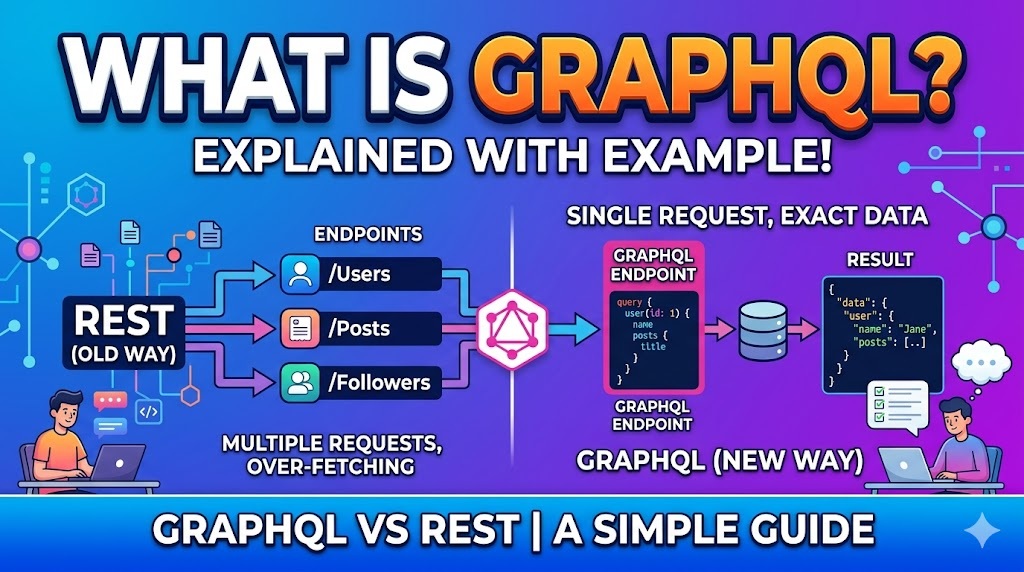
GraphQL is a query language for APIs and a runtime for fulfilling those queries with your existing data. It provides a complete and understandable description of the data in your API, gives clients the power to ask for exactly what they need and nothing more, and makes it easier to evolve APIs over time. 🚀
While traditional 🌐 REST APIs often involve multiple round-trips to different endpoints (e.g., /users/1, /users/1/posts, /users/1/followers), GraphQL allows a client to fetch all necessary data in a ⚡ single request.
🔑 Key Concepts
- 📜 Schema: The contract between the client and the server. It defines the types of data available and the relationships between them.
- 🔍 Query: How the client requests data.
- ✍️ Mutation: How the client modifies data (create, update, delete).
- ⚙️ Resolver: The actual function on the server that fetches the data for a specific field.
👤 Example: A User Profile
Imagine you want to fetch a user’s name and the titles of their recent blog posts. 📝
🏗️ 1. The Schema (Definition)
The server defines the shape of the data:
type User {
  id: ID!
  name: String!
  posts: [Post]
}

type Post {
  title: String!
  content: String
}

type Query {
  user(id: ID!): User
}
📨 2. The Request (Query)
The client sends a query specifying exactly which fields are needed:
query {
  user(id: "123") {
    name
    posts {
      title
    }
  }
}
📩 3. The Response
The server returns JSON that perfectly matches the structure of the query:
{
  "data": {
    "user": {
      "name": "Jane Doe",
      "posts": [
        { "title": "Understanding GraphQL" },
        { "title": "Introduction to APIs" }
      ]
    }
  }
}
🌟 Benefits of GraphQL
- 🎯 Avoid Over-fetching/Under-fetching: You never receive more data than you asked for, and you never have to make extra requests to get missing information.
- 🛡️ Strongly Typed: The schema acts as a formal contract, making it easier for front-end and back-end teams to work in parallel.
- 🔎 Introspection: Clients can query the schema itself to understand what data is available, enabling powerful tooling like automated documentation and IDE auto-completion.
- 📍 Single Endpoint: Unlike REST, where you have many endpoints, GraphQL typically operates via a single
/graphqlendpoint, simplifying network management.
❓ GraphQL అంటే ఏమిటి?
GraphQL అనేది APIs కోసం ఒక query language మరియు మీ existing data తో ఆ queries ని fulfill చేయడానికి ఒక runtime. ఇది మీ API లోని data యొక్క complete మరియు understandable description ని అందిస్తుంది. Clients కి కచ్చితంగా ఏమి కావాలో (exactly what they need) అది మాత్రమే అడిగే power ని ఇస్తుంది మరియు కాలక్రమేణా APIs ని evolve చేయడం easier చేస్తుంది. 🚀
Traditional 🌐 REST APIs లో వేర్వేరు endpoints కి (e.g., /users/1, /users/1/posts, /users/1/followers) multiple round-trips చేయాల్సి ఉంటుంది, కానీ GraphQL ద్వారా client తమకు అవసరమైన data అంతటినీ ఒకే ⚡ single request లో fetch చేసుకోవచ్చు.
🔑 Key Concepts (ముఖ్యమైన కాన్సెప్ట్స్)
- 📜 Schema: ఇది client మరియు server మధ్య ఒక contract లాంటిది. ఇది available గా ఉన్న data types ని మరియు వాటి మధ్య ఉన్న relationships ని define చేస్తుంది.
- 🔍 Query: Client data ని ఎలా request చేస్తారు అనేది ఇది తెలుపుతుంది.
- ✍️ Mutation: Client data ని ఎలా modify చేస్తారు (create, update, delete) అనేది దీని ద్వారా జరుగుతుంది.
- ⚙️ Resolver: ఒక specific field కోసం data ని fetch చేసే server లోని actual function ని resolver అంటారు.
👤 Example: A User Profile (ఉదాహరణ: ఒక User Profile)
ఒక user యొక్క name మరియు వారి recent blog posts యొక్క titles ని మీరు fetch చేయాలి అనుకుందాం. 📝
🏗️ 1. The Schema (Definition)
Server ఈ data యొక్క shape ని ఇలా define చేస్తుంది:
GraphQL
type User {
  id: ID!
  name: String!
  posts: [Post]
}

type Post {
  title: String!
  content: String
}

type Query {
  user(id: ID!): User
}
📨 2. The Request (Query)
Client తమకు exactly ఏ fields కావాలో specify చేస్తూ ఒక query ని పంపుతారు:
GraphQL
query {
  user(id: "123") {
    name
    posts {
      title
    }
  }
}
📩 3. The Response
Server query యొక్క structure తో perfectly match అయ్యే JSON ని return చేస్తుంది:
JSON
{
  "data": {
    "user": {
      "name": "Jane Doe",
      "posts": [
        { "title": "Understanding GraphQL" },
        { "title": "Introduction to APIs" }
      ]
    }
  }
}
🌟 Benefits of GraphQL (GraphQL వల్ల ఉపయోగాలు)
- 🎯 Avoid Over-fetching/Under-fetching: మీరు అడిగిన దానికంటే ఎక్కువ data రాదు (Over-fetching జరగదు), అలాగని missing information కోసం మళ్ళీ extra requests చేయాల్సిన అవసరం కూడా ఉండదు (Under-fetching జరగదు).
- 🛡️ Strongly Typed: Schema ఒక formal contract లాగా పనిచేస్తుంది, దీనివల్ల front-end మరియు back-end teams ఎవరికి వారు parallel గా వర్క్ చేయడం easier అవుతుంది.
- 🔎 Introspection: ఏ data available గా ఉందో అర్థం చేసుకోవడానికి clients డైరెక్ట్ గా schema నే query చేయవచ్చు. ఇది automated documentation మరియు IDE auto-completion లాంటి powerful tooling ని enable చేస్తుంది.
- 📍 Single Endpoint: REST లో లాగా multiple endpoints కాకుండా, GraphQL సాధారణంగా ఒకే single
/graphqlendpoint ద్వారా operate అవుతుంది, ఇది network management ని simplify చేస్తుంది.