🚀 *Gen AI Engineer Telugu (Production Focused)*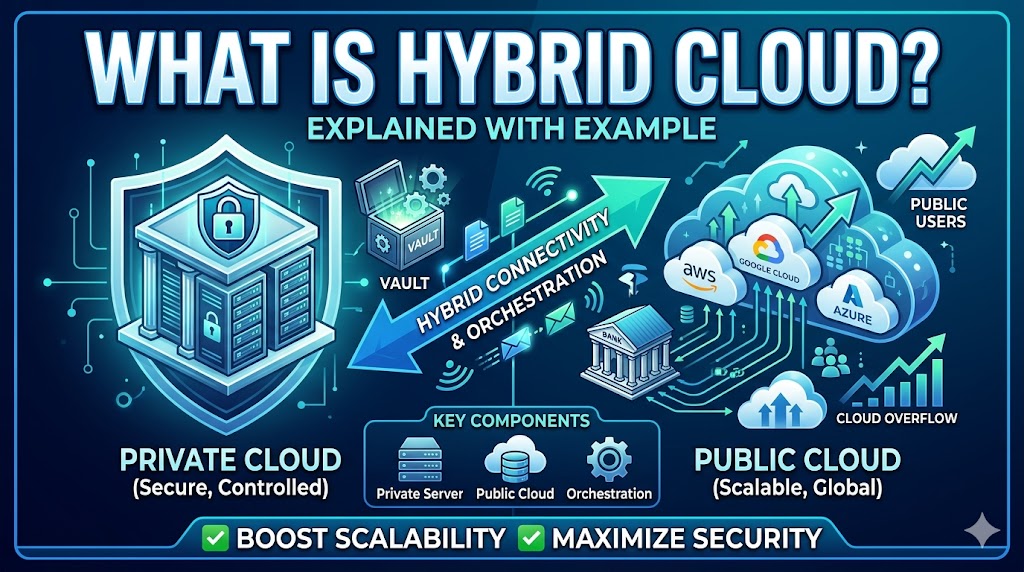
☁️ Hybrid Cloud: The Best of Both Worlds
A Hybrid Cloud is a computing environment that bridges the gap between a Private Cloud (on-premises infrastructure) and a Public Cloud (like AWS, Google Cloud, or Azure).
It uses a management layer to allow data and applications to move seamlessly between these environments, offering a perfect balance of security and scalability.
🏦 Real-World Example: The Modern Bank
Imagine how a large financial institution manages its digital operations:
- 🔐 The Private Cloud (The “Vault”): The bank stores sensitive data—like account numbers and social security info—on its own private servers to ensure maximum security and regulatory compliance.
- 🌐 The Public Cloud (The “Overflow”): During high-traffic periods (like tax season), the bank “bursts” non-sensitive tasks—like the app’s interface or general help pages—into the public cloud to handle the surge.
- 🔗 The Integration: When you log in, the Public Cloud handles your app navigation, while it securely fetches your balance from the Private Cloud in the background.
🛠️ Key Components
- 🏢 Private Cloud: Dedicated resources for one organization. Ideal for sensitive data and legacy systems.
- 🌍 Public Cloud: Shared resources available over the internet. Perfect for high-volume, lower-security tasks.
- ⚙️ Orchestration: The “brain” of the operation—automation software that manages how data moves between the two clouds.
🚀 Why Choose Hybrid?
| Feature | How it Helps |
| 📈 Scalability | Tap into “infinite” public cloud resources during peak demand (Cloud Bursting). |
| 🛡️ Security | Keep your most critical data behind a private firewall while using the public cloud for the rest. |
| 💸 Cost Efficiency | Pay only for the extra public cloud power when you need it, avoiding expensive hardware. |
| 🔄 Legacy Support | Keep older “on-prem” systems running while slowly adding modern cloud features. |
☁️ హైబ్రిడ్ క్లౌడ్ (Hybrid Cloud)
హైబ్రిడ్ క్లౌడ్ అనేది ప్రైవేట్ క్లౌడ్ (On-premises) మరియు పబ్లిక్ క్లౌడ్ (AWS, Google Cloud, Azure) రెండింటినీ కలిపి ఉపయోగించే ఒక ఆధునిక సాంకేతిక విధానం. ఇది డేటా మరియు అప్లికేషన్లు అవసరాన్ని బట్టి రెండు క్లౌడ్ల మధ్య సులభంగా మారుతూ ఉండేలా చేస్తుంది.
🏦 నిజ జీవిత ఉదాహరణ: ఒక పెద్ద బ్యాంక్
ఒక బ్యాంక్ తన కార్యకలాపాలను హైబ్రిడ్ క్లౌడ్ ద్వారా ఎలా నిర్వహిస్తుందో ఇక్కడ చూడండి:
- 🔐 ప్రైవేట్ క్లౌడ్ (The “Vault”): బ్యాంక్ తన కస్టమర్ల అకౌంట్ నంబర్లు, పాన్ వివరాలు వంటి అత్యంత రహస్యమైన డేటాను తన సొంత ప్రైవేట్ సర్వర్లలో భద్రపరుస్తుంది. దీనివల్ల పూర్తి భద్రత ఉంటుంది.
- 🌐 పబ్లిక్ క్లౌడ్ (The “Overflow”): పండుగలు లేదా ఆఫర్ల సమయంలో బ్యాంక్ యాప్ వాడే వారి సంఖ్య పెరుగుతుంది. అప్పుడు అదనపు లోడ్ను తట్టుకోవడానికి బ్యాంక్ పబ్లిక్ క్లౌడ్ను వాడుకుంటుంది.
- 🔗 కనెక్షన్ (Integration): కస్టమర్ లాగిన్ అయినప్పుడు, యాప్ పైకి పబ్లిక్ క్లౌడ్లో పనిచేస్తున్నట్లు కనిపిస్తుంది, కానీ బ్యాలెన్స్ వివరాలను మాత్రం లోపల ఉన్న ప్రైవేట్ క్లౌడ్ నుండి సురక్షితంగా తీసుకుంటుంది.
🛠️ ముఖ్యమైన అంశాలు
- ☁️ పబ్లిక్ క్లౌడ్: ఇంటర్నెట్ ద్వారా అందరికీ లభించే వనరులు. భారీ ట్రాఫిక్ ఉన్నప్పుడు ఇది బాగా పనిచేస్తుంది.
- 🏠 ప్రైవేట్ క్లౌడ్: ఒక సంస్థకు మాత్రమే కేటాయించబడిన సర్వర్లు. రహస్య సమాచారం కోసం వీటిని వాడతారు.
- ⚙️ ఆర్కెస్ట్రేషన్ (Orchestration): డేటా మరియు అప్లికేషన్లు ఈ రెండు క్లౌడ్ల మధ్య ఎలా ప్రవహించాలో పర్యవేక్షించే టెక్నాలజీ.
🚀 హైబ్రిడ్ క్లౌడ్ ప్రయోజనాలు
| ప్రయోజనం | వివరణ |
| 📈 స్కేలబిలిటీ | అవసరమైనప్పుడు పబ్లిక్ క్లౌడ్ సహాయంతో సామర్థ్యాన్ని తక్షణమే పెంచుకోవచ్చు. |
| 🛡️ భద్రత | కీలకమైన సమాచారాన్ని ప్రైవేట్ క్లౌడ్లో అత్యంత సురక్షితంగా ఉంచవచ్చు. |
| 💰 తక్కువ ఖర్చు | అవసరమైనప్పుడు మాత్రమే పబ్లిక్ క్లౌడ్ వనరులను వాడుకోవడం వల్ల డబ్బు ఆదా అవుతుంది. |
| 🔄 పాత వ్యవస్థలు | పాత సాఫ్ట్వేర్లను మార్చకుండానే కొత్త క్లౌడ్ ఫీచర్లను వాడుకునే వీలుంటుంది. |