🚀 *Gen AI Engineer Telugu (Production Focused)*
 ☁️ What is FinOps?
FinOps, short for Cloud Financial Management, is a cultural practice and operational framework that brings financial accountability to the variable spend model of the cloud. It’s the “Finance” version of DevOps, designed to help engineering, finance, and business teams collaborate to make data-driven decisions. 🤝
- 🏢 Old School (CapEx): You bought physical hardware once every few years.
- ☁️ Cloud Era (OpEx): Costs are variable. If a developer leaves a high-powered environment running over the weekend, the bill spikes in real-time! 📈
- 💎 The Goal: Don’t just “save money”—maximize the value of every dollar spent.
🔄 The FinOps Lifecycle
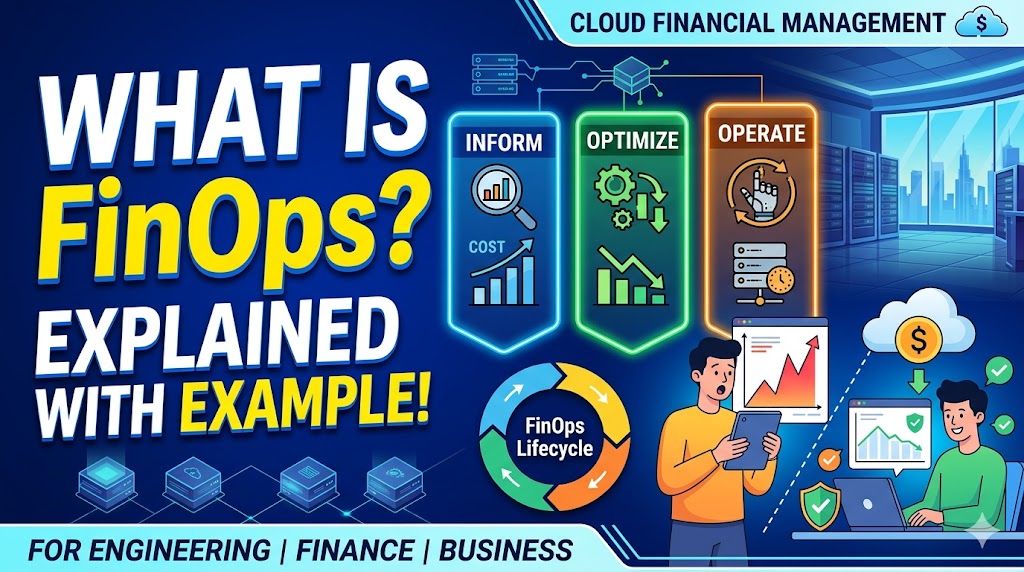
FinOps is a continuous three-phase loop:
1. Inform 👁️
This phase focuses on visibility. You can’t manage what you can’t see.
- Action: Teams “tag” resources (e.g., “Marketing Dept” or “Project X”) to break down the bill.
- 🎯 Goal: Accurate budget allocation and zero “mystery” charges.
2. Optimize ✂️
Once you see the spend, it’s time to cut the waste.
- Rightsizing: Shrinking a massive server that is only using 10% of its power. 📉
- Commitments: Paying upfront for “Reserved Instances” to lock in 30–50% discounts. 🎟️
- 🎯 Goal: Maximum efficiency and cost reduction.
3. Operate ⚙️
This is the “steady state” where teams define long-term processes.
- Action: Finance and Engineering meet regularly to review goals and automate governance.
- 🎯 Goal: Continuous improvement and automated efficiency.
🎬 Real-World Example: The “Viral App”
Imagine a startup called StreamIt that hosts video content.
❌ The Problem (Without FinOps)
A video goes viral! 🚀 Engineers spin up 500 high-performance servers to handle the rush. The traffic dies down after three days, but the engineers forget to turn the servers off. At the end of the month, the company gets a $50,000 bill for a weekend of activity. 😱 Finance is angry, and Engineering is frustrated.
✅ The Solution (With FinOps)
- 📊 Inform: Real-time dashboards alert Finance to the spike on Tuesday morning, not weeks later.
- 💡 Optimize: The team uses Spot Instances (spare capacity sold at a 90% discount) for background tasks.
- 🤖 Operate: They set up Auto-scaling—the cloud automatically kills unnecessary servers when traffic drops. They also get a Slack alert 🚨 if spending exceeds $500 in a single hour.
🌟 Why FinOps Matters
- 👤 Accountability: Developers take ownership of their own cloud spend.
- ⚡ Speed: Engineering can move fast without waiting for slow procurement processes.
- 🔮 Predictability: Finance can finally forecast exactly what next month’s bill will look like.
☁️ FinOps అంటే ఏమిటి?
FinOps అంటే “Cloud Financial Management” అని అర్థం. ఇది క్లౌడ్ వినియోగంలో అయ్యే ఖర్చులకు సంబంధించి ఆర్థిక జవాబుదారీతనాన్ని (financial accountability) పెంచే ఒక సాంస్కృతిక పద్ధతి మరియు కార్యాచరణ ఫ్రేమ్వర్క్. సరళంగా చెప్పాలంటే, ఇది క్లౌడ్ టెక్నాలజీకి సంబంధించిన “DevOps” వంటిది. 🤝
- 🏢 పాత పద్ధతి (CapEx): కంపెనీలు సర్వర్లను ఒకేసారి భారీ మొత్తంలో కొనేవి.
- 🌐 క్లౌడ్ పద్ధతి (OpEx): ఖర్చు అనేది మనం వాడే సమయం మరియు సామర్థ్యంపై ఆధారపడి ఉంటుంది. ఒకవేళ డెవలపర్ అవసరం లేని సర్వర్ను ఆఫ్ చేయడం మర్చిపోతే, రియల్-టైమ్లో బిల్లు పెరిగిపోతుంది! 📈
- 💎 ముఖ్య ఉద్దేశ్యం: కేవలం “డబ్బు పొదుపు చేయడం” మాత్రమే కాదు, ఖర్చు చేసే ప్రతి రూపాయికి సరైన విలువ (Value) వచ్చేలా చూడటం.
🔄 FinOps జీవనచక్రం (Lifecycle)
FinOps నిరంతరం కొనసాగే మూడు దశల్లో పనిచేస్తుంది:
1. Inform (సమాచారం/అవగాహన) 👁️
ఇది విజిబిలిటీ (Visibility) గురించి. ఖర్చు ఎక్కడ, ఎవరు, దేనికోసం చేస్తున్నారో తెలుసుకోవడం.
- చర్య: క్లౌడ్ రిసోర్సెస్కు “ట్యాగ్స్” (Tags) ఉపయోగిస్తారు (ఉదా: “Marketing Project”).
- 🎯 లక్ష్యం: బడ్జెట్ ఎంత ఖర్చవుతుందో ఖచ్చితంగా తెలుసుకోవడం మరియు “మిస్టరీ” ఛార్జీలు లేకుండా చూడటం.
2. Optimize (మెరుగుపరచడం) ✂️
ఖర్చు ఎక్కడ అవుతుందో తెలిశాక, వృథాను ఎలా తగ్గించాలో చూడటం.
- Rightsizing: అవసరం లేని పెద్ద సర్వర్లను తగ్గించి, చిన్నవిగా మార్చడం. 📉
- Discounts: ముందుగానే పేమెంట్ చేయడం ద్వారా (Reserved Instances) 30–50% డిస్కౌంట్లు పొందడం. 🎟️
- 🎯 లక్ష్యం: క్లౌడ్ వాడుకలో గరిష్ట సామర్థ్యాన్ని సాధించడం.
3. Operate (అమలు చేయడం) ⚙️
ఇది ఒక నిరంతర ప్రక్రియ. టీమ్స్ అన్నీ కలిసి పని చేస్తూ నియమాలను అమలు చేస్తాయి.
- చర్య: ఫైనాన్స్ మరియు ఇంజనీరింగ్ టీమ్స్ క్రమం తప్పకుండా సమావేశమై ఆటోమేషన్ ద్వారా ఖర్చులను నియంత్రిస్తారు.
- 🎯 లక్ష్యం: నిరంతర మెరుగుదల మరియు ఆటోమేటెడ్ గవర్నెన్స్.
🎬 ఒక ఉదాహరణ: “వైరల్ యాప్” సందర్భం
StreamIt అనే ఒక వీడియో స్ట్రీమింగ్ స్టార్టప్ ఉందనుకుందాం.
❌ సమస్య (FinOps లేనప్పుడు)
ఒక వీడియో వైరల్ అవ్వడంతో, ఇంజనీర్లు ట్రాఫిక్ను తట్టుకోవడానికి 500 శక్తివంతమైన సర్వర్లను రన్ చేశారు. 🚀 మూడు రోజుల తర్వాత ట్రాఫిక్ తగ్గిపోయింది, కానీ సర్వర్లను ఆఫ్ చేయడం మర్చిపోయారు. నెల చివరలో $50,000 భారీ బిల్లు వచ్చింది. 😱 ఫైనాన్స్ టీమ్ కోపంగా ఉంది, ఇంజనీర్లు అసహనంగా ఉన్నారు.
✅ పరిష్కారం (FinOps ఉన్నప్పుడు)
- 📊 Inform: బిల్లు పెరగడాన్ని ఫైనాన్స్ టీమ్ రియల్-టైమ్ డ్యాష్బోర్డ్లో వెంటనే గమనిస్తారు.
- 💡 Optimize: 500 ఖరీదైన సర్వర్లకు బదులుగా, 90% తక్కువ ధరకే దొరికే “Spot Instances” వాడతారు.
- 🤖 Operate: ట్రాఫిక్ తగ్గగానే సర్వర్లు ఆటోమేటిక్గా ఆఫ్ అయ్యేలా “Auto-scaling” సెట్ చేస్తారు. ఖర్చు పరిమితి దాటితే వెంటనే Slack అలర్ట్ 🚨 వచ్చేలా ఆటోమేషన్ చేస్తారు.
🌟 FinOps వల్ల కలిగే ప్రయోజనాలు
- 👤 జవాబుదారీతనం: ప్రతి టీమ్ తమ క్లౌడ్ ఖర్చుకు తామే బాధ్యత వహిస్తారు.
- ⚡ వేగం: బడ్జెట్ పరిమితుల్లో ఉంటూనే ఇంజనీర్లు వేగంగా కొత్త ఫీచర్లను డెవలప్ చేయవచ్చు.
- 🔮 అంచనా వేయడం: వచ్చే నెల బిల్లు ఎంత వస్తుందో ఫైనాన్స్ టీమ్ ముందుగానే ఖచ్చితంగా ఊహించగలరు.