🚀 *Gen AI Engineer (Production Focused)*
 🚀 Understanding RISC-V
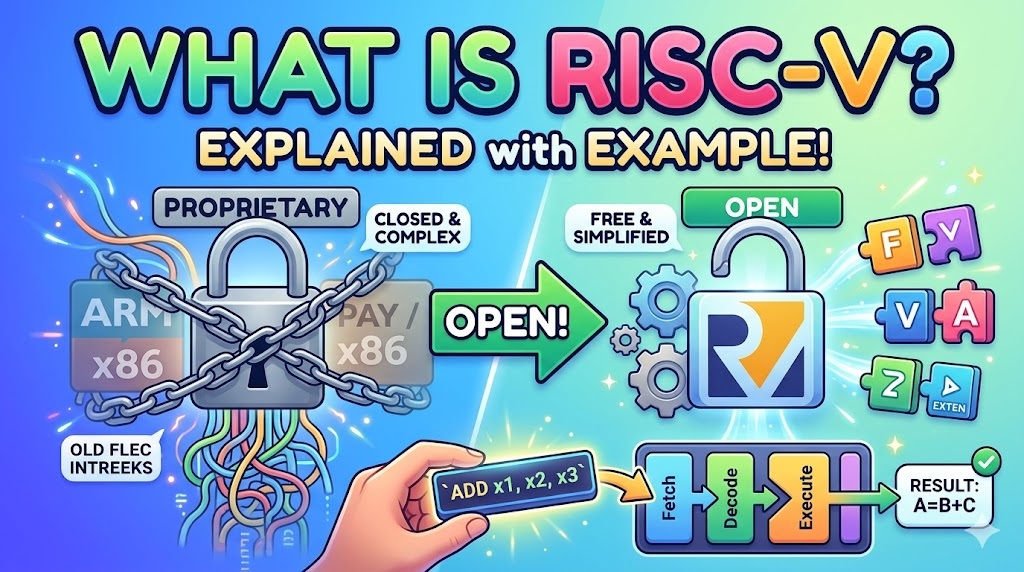
RISC-V (pronounced “risk-five”) is an open-standard Instruction Set Architecture (ISA) based on established Reduced Instruction Set Computer (RISC) principles.
🧠 The Vocabulary of Computers
Think of an ISA as the vocabulary a computer processor understands. It acts as the bridge between the physical hardware (the chip) and the software (the operating system and programs), telling the hardware exactly how to execute the software’s commands.
🔓 Free and Open-Source
While the most common ISAs today—like x86 (used by Intel and AMD) or ARM (used in most smartphones)—are proprietary and require companies to pay hefty licensing fees to build chips with them, RISC-V is entirely open-source and royalty-free. Anyone can design, manufacture, and sell RISC-V chips without paying licensing fees.
🤖 The “RISC” Concept: An Analogy
To understand RISC-V, you have to understand the difference between RISC and its older counterpart, CISC (Complex Instruction Set Computer, which x86 uses). Imagine you are giving instructions to a robot to make a peanut butter sandwich.
- 🍔 CISC Approach: You give one complex command: “Make a peanut butter sandwich.” The robot’s internal hardware is incredibly complex, designed to interpret that single big command, break it down internally, gather the ingredients, and assemble it.
- 🥪 RISC Approach: You give a series of simple, highly optimized commands: “Get bread,” “Get peanut butter,” and “Spread peanut butter on bread.”
⚡ The Advantage
While the RISC approach requires more individual instructions to accomplish the task, the processor’s actual hardware can be much simpler, faster, and more energy-efficient because it only has to understand a small set of basic, uniform commands.
💻 A Concrete Example: RISC-V Assembly
When a developer writes code in a high-level language like C++ or Python, a compiler translates that code down into the processor’s ISA (assembly code). Suppose we want the computer to perform a basic calculation: $A = B + C$
📦 Registers in Action
In a processor, data is manipulated inside fast, temporary storage slots called registers (labeled x1, x2, x3, etc. in RISC-V). Let’s assume the compiler has organized the data like this:
- Variable B: Stored in register
x2 - Variable C: Stored in register
x3 - Final Result (A): Stored in register
x1
The RISC-V instruction for this is beautifully straightforward:
Code snippet
add x1, x2, x3
🔍 How the processor reads this line:
- ➕
add: The specific operation to perform (addition). - 🎯
x1: The destination register (where to put the final answer). - 📥
x2: The first source register. - 📥
x3: The second source register.
🧩 The Power of Modularity
What makes RISC-V truly unique is its modularity. The “base” RISC-V instruction set contains only about 40 fundamental instructions (like the add command above).
- 🌡️ Scale Down: If an engineer is building a tiny, low-power chip for a smart thermometer, they only need to implement those 40 instructions.
- 🧠 Scale Up: If they are building a massive processor for an AI supercomputer, they can snap on standard “extensions” to that base without having to reinvent the core architecture.
- 🧮 Extensions: Examples include the “F” extension for handling decimals (floating-point math) or the “V” extension for processing massive blocks of data simultaneously (vector operations).
🚀 RISC-V అంటే ఏమిటి?
RISC-V (దీన్ని “risk-five” అని చదువుతారు) అనేది established Reduced Instruction Set Computer (RISC) principles ఆధారంగా పనిచేసే ఒక open-standard Instruction Set Architecture (ISA).
🧠 కంప్యూటర్లకు అర్థమయ్యే భాష (The Vocabulary of Computers)
ISA ని ఒక computer processor కి అర్థమయ్యే vocabulary లాగా ఊహించుకోండి. ఇది physical hardware (chip) మరియు software (operating system ఇంకా programs) మధ్య bridge లాగా పనిచేస్తుంది, software commands ని ఎలా execute చేయాలో hardware కి కచ్చితంగా చెబుతుంది.
🔓 ఫ్రీ మరియు Open-Source
ప్రస్తుతం వాడుతున్న అత్యంత సాధారణ ISA లు—అంటే x86 (Intel మరియు AMD వాడేది) లేదా ARM (చాలా smartphones లో వాడేది)—proprietary గా ఉంటాయి, వాటితో chips ని build చేయడానికి కంపెనీలు భారీగా licensing fees చెల్లించాల్సి ఉంటుంది. కానీ RISC-V పూర్తిగా open-source మరియు royalty-free. ఎవరైనా సరే licensing fees చెల్లించకుండా RISC-V chips ని design, manufacture, మరియు sell చేసుకోవచ్చు.
🤖 “RISC” Concept: ఒక Analogy (ఉదాహరణ)
RISC-V ని అర్థం చేసుకోవాలంటే, మీకు RISC మరియు దాని older counterpart అయిన CISC (Complex Instruction Set Computer, దీన్ని x86 వాడుతుంది) మధ్య ఉన్న తేడా తెలియాలి. ఒక robot కి peanut butter sandwich చేయడానికి మీరు instructions ఇస్తున్నారని ఊహించుకోండి.
- 🍔 CISC Approach: మీరు ఒకే ఒక్క complex command ఇస్తారు: “Make a peanut butter sandwich.” ఆ robot యొక్క internal hardware చాలా complex గా ఉంటుంది. ఆ పెద్ద command ని అర్థం చేసుకుని, internally దాన్ని break down చేసి, కావలసిన ingredients ని gather చేసి assemble చేసేలా దీన్ని design చేస్తారు.
- 🥪 RISC Approach: ఇక్కడ మీరు series of simple, highly optimized commands ఇస్తారు: “బ్రెడ్ తీసుకురా,” “పీనట్ బటర్ తీసుకురా,” మరియు “బ్రెడ్ పైన పీనట్ బటర్ spread చెయ్.”
⚡ దీనివల్ల లాభం (The Advantage)
ఈ task ని పూర్తి చేయడానికి RISC approach లో ఎక్కువ individual instructions అవసరం అయినప్పటికీ, processor యొక్క actual hardware మాత్రం చాలా simpler, faster, మరియు మరింత energy-efficient గా ఉంటుంది. ఎందుకంటే ఇది కేవలం చిన్న basic, uniform commands ని మాత్రమే అర్థం చేసుకుంటే సరిపోతుంది.
💻 ఒక Concrete Example: RISC-V Assembly
ఒక developer C++ లేదా Python లాంటి high-level language లో code రాసినప్పుడు, ఆ code ని ఒక compiler processor యొక్క ISA (assembly code) లోకి translate చేస్తుంది. Computer చేత ఒక basic calculation చేయించాలనుకుందాం: $A = B + C$
📦 Registers ఎలా పనిచేస్తాయి
Processor లో, data అనేది registers అని పిలువబడే fast, temporary storage slots (RISC-V లో x1, x2, x3 గా labels ఉంటాయి) లోపల manipulate చేయబడుతుంది. Compiler ఆ data ని ఇలా organize చేసిందని అనుకుందాం:
- Variable B: ప్రస్తుతం register
x2లో స్టోర్ అయి ఉంది - Variable C: ప్రస్తుతం register
x3లో స్టోర్ అయి ఉంది - Final Result (A): మనం register
x1లో స్టోర్ చేయాలి అనుకుంటున్నాము
దీనికి RISC-V instruction చాలా beautifully straightforward గా ఉంటుంది:
Code snippet
add x1, x2, x3
🔍 ఈ లైన్ ని processor ఎలా రీడ్ చేస్తుందంటే:
- ➕
add: మనం చేయాల్సిన specific operation (addition – కూడిక). - 🎯
x1: Destination register (final answer ని ఎక్కడ పెట్టాలో చెప్పేది). - 📥
x2: మొదటి source register. - 📥
x3: రెండవ source register.
🧩 Modularity యొక్క పవర్ (The Power of Modularity)
RISC-V ని నిజంగా unique గా మార్చేది దాని modularity. “Base” RISC-V instruction set లో సుమారు 40 fundamental instructions (పైన చూసిన add command లాంటివి) మాత్రమే ఉంటాయి.
- 🌡️ Scale Down: ఒక engineer ఒక smart thermometer కోసం చిన్న, low-power chip ని build చేస్తుంటే, వారు ఆ 40 instructions ని implement చేస్తే చాలు.
- 🧠 Scale Up: ఒకవేళ వారు AI supercomputer కోసం భారీ processor ని build చేస్తుంటే, మళ్లీ core architecture ని reinvent చేయాల్సిన పనిలేకుండా ఆ base కి standard “extensions” ని snap on చేసుకోవచ్చు.
- 🧮 Extensions: అంటే decimals ని handle చేయడానికి “F” extension (floating-point math) లేదా ఒకేసారి భారీ data blocks ని process చేయడానికి “V” extension (vector operations) లాంటివి జతచేసుకోవచ్చు.