🚀 *Gen AI Engineer (Production Focused)*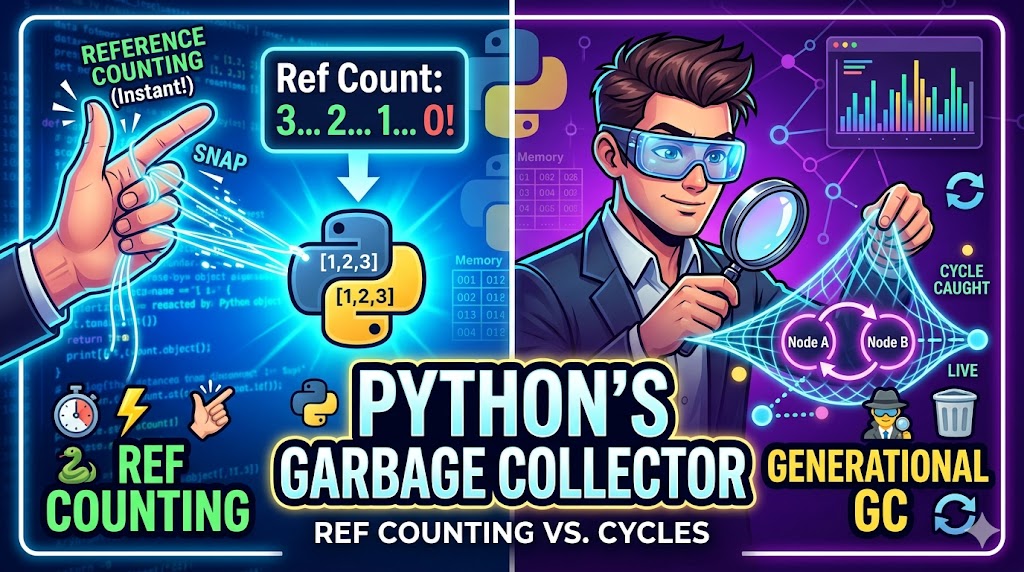
🐍 Python Memory Management & Garbage Collection
In Python, memory management is primarily handled automatically, meaning you don’t have to manually allocate or deallocate memory for objects like you do in languages such as C or C++. The system responsible for cleaning up unused memory is the Garbage Collector (GC) 🗑️.
Python uses two main strategies for garbage collection:
- ⏱️ Reference Counting (The primary, real-time mechanism)
- 🔄 Generational Garbage Collection (A background process to catch what reference counting misses)
Here is a detailed breakdown of how both systems work.
🔢 1. Reference Counting: The First Line of Defense
Every object in Python maintains a variable called a reference count 📊. This count tracks how many variables, lists, or other objects are pointing to it.
- ➕ When you create an object and assign it to a variable, its reference count becomes
1. - 📈 If you assign that same object to another variable, or put it in a list, the count goes up.
- 📉 If a variable pointing to the object is reassigned, deleted, or goes out of scope (like when a function finishes executing), the count goes down.
- 🌟 The Golden Rule: When an object’s reference count drops to
0, Python immediately deallocates it and frees the memory 💥.
💻 Example: Reference Counting in Action
You can check an object’s reference count using the sys module. (Note: sys.getrefcount() temporarily increases the count by 1 because passing it to the function creates a temporary reference).
Python
import sys

# Create a list. Ref count is 1.
my_list = [1, 2, 3]

# Check ref count (returns 2 because of the temporary function argument)
print(sys.getrefcount(my_list))  # Output: 2

# Create another reference
alias_list = my_list
print(sys.getrefcount(my_list))  # Output: 3

# Delete the alias
del alias_list
print(sys.getrefcount(my_list))  # Output: 2

# Reassign the original variable
my_list = None
# At this point, the original list [1, 2, 3] has a ref count of 0
# and is immediately removed from memory.
♻️ 2. Generational Garbage Collection: Catching Cycles
Reference counting is fast and efficient, but it has one major flaw: Reference Cycles 🔁 (or circular references).
A reference cycle happens when Object A has a property pointing to Object B, and Object B has a property pointing to Object A 🔗. If you delete your program’s main variables pointing to them, their reference counts drop to 1 (because they still point to each other). They are completely inaccessible to your code, but reference counting won’t delete them because their count isn’t 0 🛑.
💻 Example: A Reference Cycle
Python
class Node:
    def __init__(self, value):
        self.value = value
        self.next = None

# Create two nodes
node_a = Node("A")
node_b = Node("B")

# Create a cycle: A points to B, B points to A
node_a.next = node_b
node_b.next = node_a

# Delete the main references
del node_a
del node_b

# node_a and node_b still exist in memory!
# Their ref counts are 1 because they point to each other.
To fix this, Python runs a secondary system called the Generational Garbage Collector 🧹 (using the gc module). It periodically scans memory looking for isolated groups of objects that point to each other but have no external connections to the main program.
⏳ How Generations Work
Scanning all of memory is slow, so Python assumes that young objects die young and old objects are likely to stick around. It divides objects into three “generations”:
- 👶 Generation 0 (Young): Newly created objects. The GC scans this generation frequently. If an object survives a GC sweep, it gets moved to Generation 1.
- 🧑 Generation 1 (Middle-aged): Scanned less frequently. Survivors are promoted to Generation 2.
- 👴 Generation 2 (Old): Long-lived objects (like global configurations). Scanned very rarely.
You can interact with this system using the gc module:
Python
import gc

# Check current thresholds (when the GC is triggered for each generation)
print(gc.get_threshold())
# Typical output: (700, 10, 10)
# Meaning: Scan Gen 0 when there are >700 net object allocations.
# Scan Gen 1 after Gen 0 has been scanned 10 times.

# Force a manual garbage collection scan (returns the number of unreachable objects found)
unreachable_objects = gc.collect()
print(f"Cleaned up {unreachable_objects} objects.")
📝 Summary
- ⚡ Reference Counting cleans up 99% of your memory instantly as variables are no longer needed.
- 🕵️♂️ Generational GC runs in the background periodically to clean up circular references.
- 💡 As a developer, you almost never need to manage this manually, but understanding it helps you write memory-efficient code and avoid creating massive, unnecessary reference cycles.
(Interactive visualization to help you experiment with reference counting and cyclic garbage collection goes here 🎮)
పైథాన్లో మెమరీ మేనేజ్మెంట్ (Memory Management) ఆటోమేటిక్గా జరుగుతుంది. అంటే C లేదా C++ లాగా మీరు మాన్యువల్గా మెమరీని కేటాయించడం (allocate) లేదా తొలగించడం (deallocate) చేయాల్సిన అవసరం లేదు. ఉపయోగించని మెమరీని క్లీన్ చేసి, ఖాళీ చేసే బాధ్యతను గార్బేజ్ కలెక్టర్ (Garbage Collector – GC) తీసుకుంటుంది.
గార్బేజ్ కలెక్షన్ కోసం పైథాన్ ప్రధానంగా రెండు పద్ధతులను ఉపయోగిస్తుంది:
- రిఫరెన్స్ కౌంటింగ్ (Reference Counting) (ప్రధానమైన, రియల్-టైమ్ విధానం)
- జనరేషనల్ గార్బేజ్ కలెక్షన్ (Generational Garbage Collection) (రిఫరెన్స్ కౌంటింగ్ వదిలేసిన వాటిని క్లీన్ చేసే బ్యాక్గ్రౌండ్ ప్రాసెస్)
ఈ రెండు సిస్టమ్స్ ఎలా పనిచేస్తాయో ఇక్కడ వివరంగా చూద్దాం.
1. రిఫరెన్స్ కౌంటింగ్ (Reference Counting): మొదటి రక్షణ వలయం
పైథాన్లోని ప్రతి ఆబ్జెక్ట్ ఒక రిఫరెన్స్ కౌంట్ (reference count) ను నిర్వహిస్తుంది. ఎన్ని వేరియబుల్స్ లేదా లిస్ట్లు ఈ ఆబ్జెక్ట్ను పాయింట్ (point) చేస్తున్నాయో ఇది ట్రాక్ చేస్తుంది.
- మీరు ఒక కొత్త ఆబ్జెక్ట్ క్రియేట్ చేసి వేరియబుల్కి అసైన్ చేసినప్పుడు, దాని కౌంట్
1అవుతుంది. - అదే ఆబ్జెక్ట్ను వేరే వేరియబుల్కి అసైన్ చేసినా లేదా ఏదైనా లిస్ట్లో పెట్టినా, కౌంట్ పెరుగుతుంది.
- వేరియబుల్ని డిలీట్ చేసినా, వాల్యూ మార్చినా, లేదా ప్రోగ్రామ్ స్కోప్ దాటిపోయినా (ఉదాహరణకు ఫంక్షన్ ఎగ్జిక్యూషన్ పూర్తయినప్పుడు), కౌంట్ తగ్గుతుంది.
- ముఖ్యమైన నియమం: ఒక ఆబ్జెక్ట్ రిఫరెన్స్ కౌంట్
0కి పడిపోయిన వెంటనే, పైథాన్ ఆబ్జెక్ట్ను తొలగించి ఆ మెమరీని ఫ్రీ చేస్తుంది.
ఉదాహరణ:
sys మాడ్యూల్ ఉపయోగించి మీరు ఒక ఆబ్జెక్ట్ రిఫరెన్స్ కౌంట్ను చెక్ చేయవచ్చు. (గమనిక: sys.getrefcount() కు ఆబ్జెక్ట్ను పాస్ చేసినప్పుడు తాత్కాలికంగా కౌంట్ 1 పెరుగుతుంది).
Python
import sys
# ఒక లిస్ట్ను క్రియేట్ చేద్దాం. రిఫరెన్స్ కౌంట్ 1.
my_list = [1, 2, 3]
# రిఫరెన్స్ కౌంట్ చెక్ చేద్దాం (ఫంక్షన్కి పాస్ చేయడం వల్ల తాత్కాలికంగా 2 వస్తుంది)
print(sys.getrefcount(my_list)) # అవుట్పుట్: 2
# మరొక రిఫరెన్స్ క్రియేట్ చేద్దాం
alias_list = my_list
print(sys.getrefcount(my_list)) # అవుట్పుట్: 3
# అలియాస్ను డిలీట్ చేద్దాం
del alias_list
print(sys.getrefcount(my_list)) # అవుట్పుట్: 2
# అసలు వేరియబుల్కు None అసైన్ చేద్దాం
my_list = None
# ఇప్పుడు అసలు లిస్ట్ [1, 2, 3] రిఫరెన్స్ కౌంట్ 0 కి చేరుకుంది.
# కాబట్టి అది వెంటనే మెమరీ నుండి తొలగించబడుతుంది.
2. జనరేషనల్ గార్బేజ్ కలెక్షన్ (Generational GC): సైకిల్స్ను పట్టుకోవడం
రిఫరెన్స్ కౌంటింగ్ చాలా వేగంగా పనిచేస్తుంది, కానీ దీనిలో ఒక ప్రధాన లోపం ఉంది: రిఫరెన్స్ సైకిల్స్ (Reference Cycles) లేదా వృత్తాకార రిఫరెన్స్లు.
ఆబ్జెక్ట్ A, ఆబ్జెక్ట్ B ని పాయింట్ చేస్తూ, ఆబ్జెక్ట్ B తిరిగి ఆబ్జెక్ట్ A ని పాయింట్ చేసినప్పుడు ఇది జరుగుతుంది. మెయిన్ ప్రోగ్రామ్ నుండి వాటిని డిలీట్ చేసినా, అవి ఒకదానికొకటి పాయింట్ చేసుకోవడం వల్ల వాటి కౌంట్ 1 గానే ఉంటుంది, 0 కాదు. ప్రోగ్రామ్కి వాటితో ఎలాంటి సంబంధం లేకపోయినా, రిఫరెన్స్ కౌంటింగ్ వాటిని డిలీట్ చేయలేదు.
ఉదాహరణ: ఒక రిఫరెన్స్ సైకిల్
Python
class Node:
def __init__(self, value):
self.value = value
self.next = None
# రెండు నోడ్స్ క్రియేట్ చేద్దాం
node_a = Node("A")
node_b = Node("B")
# సైకిల్ క్రియేట్ చేద్దాం: A, B ని పాయింట్ చేస్తుంది; B, A ని పాయింట్ చేస్తుంది
node_a.next = node_b
node_b.next = node_a
# మెయిన్ రిఫరెన్స్లను డిలీట్ చేద్దాం
del node_a
del node_b
# node_a మరియు node_b ఇంకా మెమరీలోనే ఉంటాయి!
# అవి ఒకదానికొకటి పాయింట్ చేసుకోవడం వల్ల వాటి రిఫరెన్స్ కౌంట్ 1 గానే ఉంటుంది.
దీన్ని పరిష్కరించడానికి, పైథాన్ జనరేషనల్ గార్బేజ్ కలెక్టర్ అనే రెండవ సిస్టమ్ను రన్ చేస్తుంది (ఇది gc మాడ్యూల్ ఉపయోగిస్తుంది). మెయిన్ ప్రోగ్రామ్తో సంబంధం లేకుండా కేవలం ఒకదానికొకటి పాయింట్ చేసుకుంటూ మిగిలిపోయిన ఆబ్జెక్ట్ల కోసం ఇది మెమరీని అప్పుడప్పుడూ స్కాన్ చేస్తుంది.
జనరేషన్స్ (Generations) ఎలా పనిచేస్తాయి?
మెమరీ మొత్తాన్ని స్కాన్ చేయడం సమయం తీసుకుంటుంది కాబట్టి, పైథాన్ ఆబ్జెక్ట్లను మూడు “జనరేషన్స్” గా విభజిస్తుంది. కొత్త ఆబ్జెక్ట్లు త్వరగా డిలీట్ అవుతాయని, పాతవి ఎక్కువ కాలం ఉంటాయని ఇది నమ్ముతుంది:
- Generation 0 (యంగ్): కొత్తగా క్రియేట్ అయిన ఆబ్జెక్ట్లు. GC దీన్ని తరచుగా స్కాన్ చేస్తుంది. ఇక్కడ మిగిలిపోయిన ఆబ్జెక్ట్లు జనరేషన్ 1 కి వెళ్తాయి.
- Generation 1 (మిడిల్-ఏజ్డ్): కొంచెం తక్కువగా స్కాన్ చేయబడుతుంది. ఇక్కడ మిగిలినవి జనరేషన్ 2 కి వెళ్తాయి.
- Generation 2 (ఓల్డ్): ఎక్కువ కాలం ఉండే ఆబ్జెక్ట్లు. ఇవి చాలా అరుదుగా స్కాన్ చేయబడతాయి.
మీరు gc మాడ్యూల్ ఉపయోగించి దీన్ని కంట్రోల్ చేయవచ్చు:
Python
import gc
# కరెంట్ థ్రెషోల్డ్స్ చెక్ చేద్దాం (ఏ జనరేషన్ ఎప్పుడు స్కాన్ అవుతుందో తెలుసుకోవడానికి)
print(gc.get_threshold())
# సాధారణ అవుట్పుట్: (700, 10, 10)
# అర్థం: 700 కొత్త ఆబ్జెక్ట్లు క్రియేట్ అయినప్పుడు Gen 0 ని స్కాన్ చేయాలి.
# Gen 0 పదిసార్లు స్కాన్ అయిన తర్వాత Gen 1 ని స్కాన్ చేయాలి.
# మాన్యువల్గా గార్బేజ్ కలెక్షన్ను రన్ చేద్దాం
# (ఇది కనుగొని, తొలగించిన అన్రీచబుల్ ఆబ్జెక్ట్ల సంఖ్యను ఇస్తుంది)
unreachable_objects = gc.collect()
print(f"క్లీన్ చేయబడిన ఆబ్జెక్ట్లు: {unreachable_objects}")
సారాంశం (Summary)
- రిఫరెన్స్ కౌంటింగ్: ఇది వేరియబుల్స్ అవసరం లేనప్పుడు 99% మెమరీని తక్షణమే క్లీన్ చేస్తుంది.
- జనరేషనల్ GC: ఇది సర్క్యులర్ రిఫరెన్స్లను (ఒకదాన్ని మరొకటి పాయింట్ చేసుకునే వాటిని) క్లీన్ చేయడానికి బ్యాక్గ్రౌండ్లో రన్ అవుతుంది.
- డెవలపర్గా మీరు దీన్ని మాన్యువల్గా నిర్వహించాల్సిన అవసరం దాదాపుగా రాదు, కానీ ఇది ఎలా పనిచేస్తుందో తెలుసుకోవడం వల్ల మెరుగైన, మెమరీ-ఎఫిషియంట్ కోడ్ రాయడానికి సహాయపడుతుంది.