🚀 *Gen AI Engineer (Production Focused)*
 🧠 What is Deep Learning?
Deep learning is a highly advanced subset of machine learning inspired by the structure and function of the human brain. While traditional machine learning often requires humans to manually organize data and define features for the computer, deep learning uses algorithms called artificial neural networks to automatically extract patterns from massive amounts of raw, unstructured data.
The “deep” in deep learning refers to the multiple layers of these neural networks stacked on top of each other to process information. 🥞
🐕 How It Works: A Real-World Example 🐈
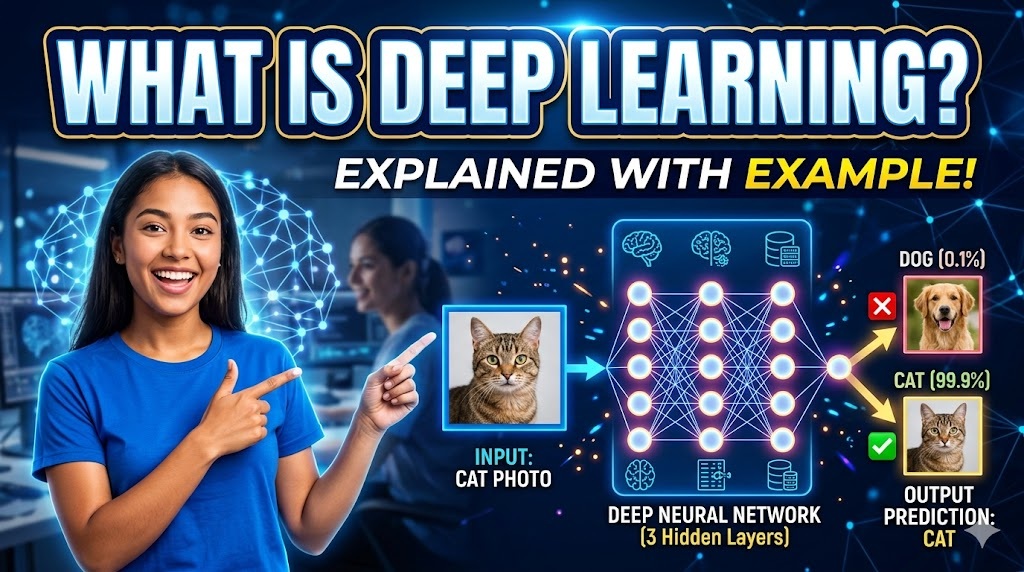
Imagine you want to build a system that can look at a photo and determine if it is a dog or a cat. You feed thousands of labeled images into a deep learning model. Here is how the “deep” layers process that data without you having to explicitly tell the computer what a dog looks like:
- 📥 The Input Layer: The network takes in the raw data—in this case, the individual pixels and colors of the image.
- 🔍 Early Hidden Layers (Basic Features): The first few layers analyze the pixels to find simple, low-level patterns, like straight lines, curves, and sharp edges.
- 🧩 Middle Hidden Layers (Complex Shapes): The network combines those basic lines and edges to identify specific shapes, such as pointy ears, a round nose, or the curve of a tail.
- 🐶 Late Hidden Layers (High-Level Concepts): The network combines these shapes to recognize the complete, overarching structure of a dog’s face versus a cat’s face.
- 📊 The Output Layer: The network makes its final prediction based on everything it learned in the hidden layers, outputting a probability (e.g., 95% dog, 5% cat).
📈 Because deep learning models learn these features automatically, they become incredibly accurate as they process more data. This exact same layered processing is the foundation for technologies like facial recognition on your phone 📱, language translation 🗣️, and self-driving cars 🚗.
🧠 డీప్ లెర్నింగ్ అంటే ఏమిటి?
డీప్ లెర్నింగ్ అనేది మానవ మెదడు యొక్క నిర్మాణం మరియు పనితీరు నుండి ప్రేరణ పొందిన మెషిన్ లెర్నింగ్ యొక్క అత్యంత అధునాతన ఉపసమితి (subset). సాంప్రదాయ మెషిన్ లెర్నింగ్లో కంప్యూటర్ కోసం డేటాను మాన్యువల్గా నిర్వహించడం మరియు ఫీచర్లను నిర్వచించడం మానవులకు తరచుగా అవసరమవుతుంది, అయితే డీప్ లెర్నింగ్ భారీ మొత్తంలో ముడి (raw) మరియు అసంఘటిత డేటా నుండి ప్యాటర్న్లను స్వయంచాలకంగా గ్రహించడానికి ఆర్టిఫిషియల్ న్యూరల్ నెట్వర్క్లు అని పిలువబడే అల్గారిథమ్లను ఉపయోగిస్తుంది.
డీప్ లెర్నింగ్లో “డీప్” (లోతైన) అనేది సమాచారాన్ని ప్రాసెస్ చేయడానికి ఒకదానిపై ఒకటి పేర్చబడిన ఈ న్యూరల్ నెట్వర్క్ల యొక్క బహుళ పొరలను (layers) సూచిస్తుంది. 🥞
🐕 ఇది ఎలా పనిచేస్తుంది: ఒక వాస్తవ-ప్రపంచ ఉదాహరణ 🐈
ఒక ఫోటోను చూసి అది కుక్క లేదా పిల్లి అని నిర్ధారించగల సిస్టమ్ను మీరు రూపొందించాలనుకుంటున్నారని ఊహించుకోండి. మీరు లేబుల్ చేయబడిన వేలాది చిత్రాలను డీప్ లెర్నింగ్ మోడల్లోకి పంపుతారు. కుక్క ఎలా ఉంటుందో మీరు కంప్యూటర్కు స్పష్టంగా చెప్పాల్సిన అవసరం లేకుండానే “డీప్” పొరలు ఆ డేటాను ఎలా ప్రాసెస్ చేస్తాయో ఇక్కడ వివరించబడింది:
- 📥 ఇన్పుట్ లేయర్ (The Input Layer): నెట్వర్క్ ముడి డేటాను తీసుకుంటుంది—ఈ సందర్భంలో, చిత్రం యొక్క ఒక్కొక్క పిక్సెల్లు మరియు రంగులు.
- 🔍 మొదటి హిడెన్ లేయర్స్ (ప్రాథమిక లక్షణాలు): మొదటి కొన్ని పొరలు సరళ రేఖలు, వంపులు మరియు పదునైన అంచులు వంటి సరళమైన, తక్కువ-స్థాయి నమూనాలను కనుగొనడానికి పిక్సెల్లను విశ్లేషిస్తాయి.
- 🧩 మధ్య హిడెన్ లేయర్స్ (సంక్లిష్ట ఆకారాలు): నెట్వర్క్ ఆ ప్రాథమిక పంక్తులు మరియు అంచులను కలిపి నిర్దిష్ట ఆకృతులను గుర్తిస్తుంది, అంటే మొనదేలిన చెవులు, గుండ్రని ముక్కు లేదా తోక యొక్క వంపు.
- 🐶 చివరి హిడెన్ లేయర్స్ (ఉన్నత-స్థాయి భావనలు): కుక్క ముఖానికి మరియు పిల్లి ముఖానికి మధ్య తేడాలను మరియు వాటి పూర్తి, సమగ్ర నిర్మాణాన్ని గుర్తించడానికి నెట్వర్క్ ఈ ఆకృతులను మిళితం చేస్తుంది.
- 📊 అవుట్పుట్ లేయర్ (The Output Layer): నెట్వర్క్ దాని హిడెన్ లేయర్లలో నేర్చుకున్న ప్రతిదాని ఆధారంగా తన తుది అంచనాను వేస్తుంది, సంభావ్యతను అవుట్పుట్గా ఇస్తుంది (ఉదాహరణకు, 95% కుక్క, 5% పిల్లి).
📈 డీప్ లెర్నింగ్ మోడల్లు ఈ లక్షణాలను స్వయంచాలకంగా నేర్చుకుంటాయి కాబట్టి, అవి మరింత డేటాను ప్రాసెస్ చేస్తున్న కొద్దీ చాలా ఖచ్చితమైనవిగా (accurate) మారతాయి. మీ ఫోన్లోని ఫేషియల్ రికగ్నిషన్ 📱, భాషా అనువాదం 🗣️ మరియు సెల్ఫ్ డ్రైవింగ్ కార్ల 🚗 వంటి సాంకేతికతలకు ఈ విధంగా పొరలుగా జరిగే ప్రాసెసింగ్ (layered processing) విధానమే పునాది.