🚀 *Gen AI Engineer (Production Focused)*
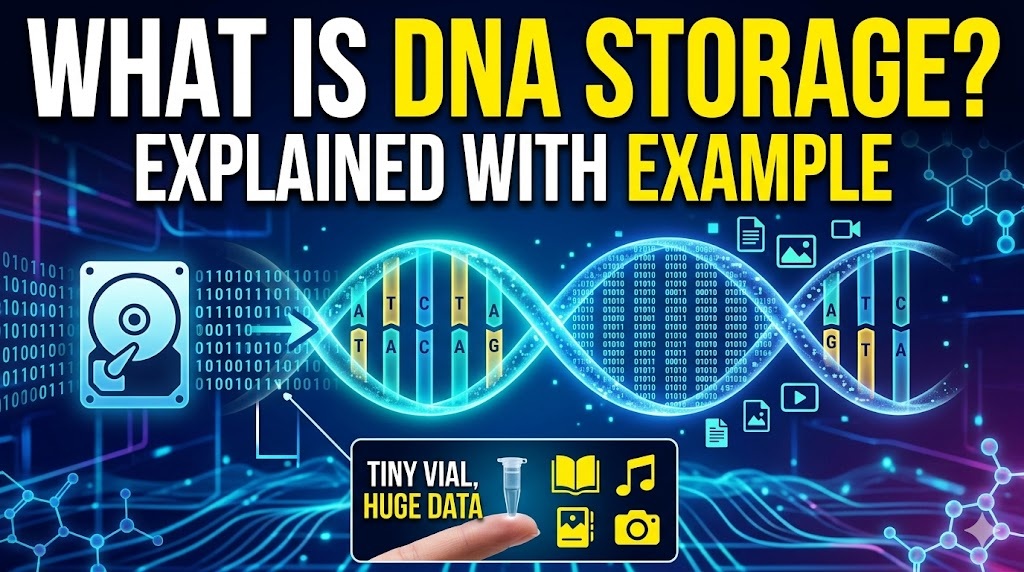
 🧬 DNA Data Storage is the process of encoding digital information (the 1s and 0s used by computers) into artificial strands of DNA.
Instead of storing data on magnetic hard drives or silicon memory chips, this technology uses the fundamental building blocks of life. It takes advantage of DNA’s incredible density and stability:
- ⚖️ High Density: A single gram of DNA can theoretically store over 215 million gigabytes of data.
- ⏳ Longevity: It can last for thousands of years if kept cool and dry.
⚙️ How It Works
The process involves four main steps:
- 🔢 Encoding: A computer algorithm translates standard binary code (0s and 1s) into the four chemical bases of DNA: Adenine (A), Cytosine (C), Guanine (G), and Thymine (T). For instance, 00 might become A, 01 becomes C, 10 becomes G, and 11 becomes T.
- 🧪 Synthesis: Machines chemically build these exact, custom DNA strands base-by-base in a lab. (This is artificial DNA, not taken from any living organism).
- 🫙 Storage: The synthesized DNA is freeze-dried into a powder and stored in a microscopic vial.
- 💻 Decoding: When the data is needed, a DNA sequencer reads the chemical bases (A, C, G, T) back into a computer, which translates them back into the original 0s and 1s.
💡 A Conceptual Example
Imagine you want to store the word “HI”.
- ⌨️ Step 1 (Text to Binary): The computer translates “HI” into binary code using standard text formatting:
01001000(H) and01001001(I). - 🧬 Step 2 (Binary to DNA): Using our simple rule (
00=A,01=C,10=G,11=T), the sequence is paired off:01001000-> C A G A01001001-> C A G C - 🖨️ Step 3 (Synthesis): A lab prints a physical molecule with the sequence CAGACAGC.
🌍 A Real-World Example
In 2016, researchers at Microsoft and the University of Washington demonstrated the massive potential of this technology by storing 200 megabytes of data in a tiny smear of synthetic DNA.
They successfully encoded:
- 🎵 A high-definition music video by the band OK Go (“This Too Shall Pass”)
- 📜 The Universal Declaration of Human Rights in over 100 languages
- 📚 The top 100 books from Project Gutenberg
- 🌱 The Crop Trust’s seed database
✏️ The entire physical volume of this stored data was smaller than the tip of a pencil.
💯 When they sequenced the DNA later, they recovered all the files with 100% accuracy.
🧬 DNA Data Storage అనేది digital information ని (అంటే computers వాడే 1s మరియు 0s ని) artificial DNA strands లోకి encode చేసే ప్రాసెస్.
డేటాని magnetic hard drives లేదా silicon memory chips పైన store చేయడానికి బదులు, ఈ technology life యొక్క fundamental building blocks ని వాడుకుంటుంది. ఇది DNA కి ఉన్న incredible density మరియు stability ని అడ్వాంటేజ్ గా తీసుకుంటుంది:
- ⚖️ High Density: కేవలం ఒక గ్రాము DNA లో theoretically 215 million gigabytes కి పైగా డేటాని store చేయవచ్చు.
- ⏳ Stability: దీన్ని cool అండ్ dry గా ఉంచితే, వేల సంవత్సరాల పాటు పదిలంగా ఉంటుంది.
⚙️ ఎలా పనిచేస్తుంది (How It Works)
ఈ ప్రాసెస్ లో నాలుగు main steps ఉంటాయి:
- 🔢 Encoding: ఒక computer algorithm స్టాండర్డ్ binary code (0s మరియు 1s) ని DNA యొక్క నాలుగు chemical bases గా translate చేస్తుంది: అవి Adenine (A), Cytosine (C), Guanine (G), మరియు Thymine (T). ఉదాహరణకు, 00 అనేది A లాగా, 01 అనేది C లాగా, 10 అనేది G లాగా, మరియు 11 అనేది T లాగా మారుతుంది.
- 🧪 Synthesis: ల్యాబ్ (lab) లో machines కెమికల్ గా ఈ exact, custom DNA strands ని base-by-base తయారు చేస్తాయి. (ఇది artificial DNA, ఏ ప్రాణి నుండి తీసుకున్నది కాదు).
- 🫙 Storage: తయారు చేయబడిన (synthesized) DNA ని ఒక పౌడర్ లా freeze-dry చేసి, ఒక microscopic vial లో store చేస్తారు.
- 💻 Decoding: మనకు డేటా అవసరమైనప్పుడు, ఒక DNA sequencer ఆ chemical bases (A, C, G, T) ని చదివి మళ్లీ computer లోకి పంపుతుంది, అది వాటిని తిరిగి ఒరిజినల్ 0s మరియు 1s గా translate చేస్తుంది.
💡 ఒక Conceptual Example
మీరు “HI” అనే పదాన్ని store చేయాలి అనుకుందాం.
- ⌨️ Step 1 (Text to Binary): కంప్యూటర్ standard text formatting ని ఉపయోగించి “HI” ని binary code లోకి translate చేస్తుంది:
01001000(H) మరియు01001001(I). - 🧬 Step 2 (Binary to DNA): పైన చెప్పుకున్న సింపుల్ రూల్ (
00=A,01=C,10=G,11=T) ని వాడితే, ఈ sequence ఇలా జతలుగా (paired off) మారుతుంది:01001000-> C A G A01001001-> C A G C - 🖨️ Step 3 (Synthesis): ఒక ల్యాబ్ CAGACAGC అనే sequence తో ఒక physical molecule ని ప్రింట్ చేస్తుంది.
🌍 ఒక Real-World Example
2016 లో, Microsoft మరియు University of Washington కి చెందిన researchers 200 megabytes డేటాని ఒక చిన్న synthetic DNA లో store చేసి, ఈ technology యొక్క massive potential ని demonstate చేసారు.
వారు వీటిని successfully గా encode చేశారు:
- 🎵 OK Go బ్యాండ్ పాడిన ఒక high-definition music video (“This Too Shall Pass”)
- 📜 100 కంటే ఎక్కువ భాషలలో ఉన్న The Universal Declaration of Human Rights
- 📚 Project Gutenberg కి చెందిన టాప్ 100 బుక్స్ (books)
- 🌱 The Crop Trust వాళ్ళ seed database
✏️ ఈ stored data యొక్క మొత్తం physical volume ఒక పెన్సిల్ మొన (tip of a pencil) కంటే చిన్నదిగా ఉంటుంది.
💯 తర్వాత వారు ఆ DNA ని సీక్వెన్స్ చేసినప్పుడు, ఆ files అన్నింటినీ 100% accuracy తో రికవర్ చేశారు.