🚀 *Gen AI Engineer Telugu (Production Focused)*
 🛡️ Post-Quantum Cryptography (PQC)
Post-Quantum Cryptography (PQC)—also known as quantum-resistant or quantum-safe cryptography—refers to cryptographic algorithms designed to be secure against the unique processing power of a quantum computer.
While current encryption keeps our data safe from today’s fastest supercomputers, a sufficiently powerful quantum computer could bypass those defenses in seconds. PQC is the “digital armor” being built to survive that transition. 💻⚛️
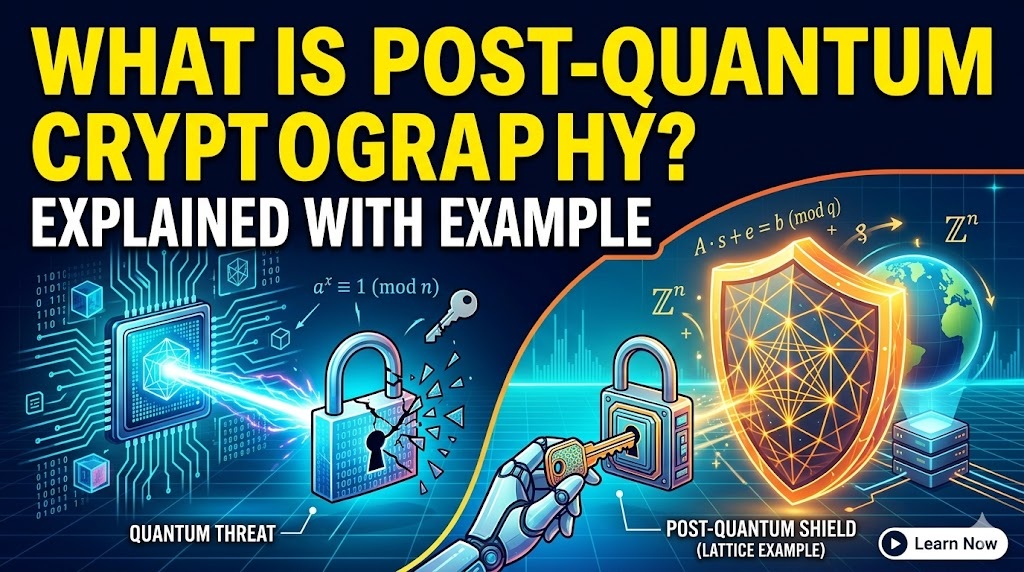
⚠️ The Core Problem: Shor’s Algorithm
Most of our current digital security (like RSA and Elliptic Curve Cryptography) relies on two specific mathematical hurdles: Integer Factorization and Discrete Logarithms.
- The Threat: While these problems are nearly impossible for classical computers to solve at high bit-lengths, a large-scale quantum computer can use Shor’s Algorithm to solve them almost instantly. 🧩
- The Impact: This would effectively “break” the internet’s current security protocols, including HTTPS, VPNs, and digital signatures. 🔓
⚙️ How PQC Works
PQC does not rely on quantum mechanics to work (that is “Quantum Cryptography” or QKD). Instead, PQC uses “classical” math—equations that can run on your current laptop or phone—but uses mathematical problems that are so complex even a quantum computer cannot solve them efficiently. 🧠🚫
📂 Primary Families of PQC:
- 🕸️ Lattice-based Cryptography: Based on finding specific points in a multi-dimensional grid.
- 📜 Code-based Cryptography: Based on error-correcting codes.
- ➗ Multivariate Cryptography: Based on systems of multivariate polynomials.
- 🔑 Hash-based Signatures: Based on the security of cryptographic hash functions.
🕸️ A Working Example: Lattice-Based Cryptography
Lattice-based cryptography is currently the most popular approach and the foundation for the NIST-standardized ML-KEM. It relies on the Shortest Vector Problem (SVP).
📍 The Concept
Imagine a grid of dots (a lattice) in a space with hundreds of dimensions. The “math problem” is to find the point in that grid that is closest to a specific, random target point, or to find the shortest possible line between two points in this massive, multi-dimensional maze. 📏
➕ The Math
A typical problem involves “Learning with Errors” (LWE). To encrypt a message, we essentially provide a set of linear equations like:
$$A \cdot s + e = b \pmod q$$
Where:
- $A$: A known matrix (the “grid”).
- $s$: The secret key.
- $e$: A small amount of random “noise” or error.
- $b$: The result.
For a classical or quantum computer, trying to find $s$ while $e$ is hiding the exact answer is like trying to find a specific needle in a haystack that is vibrating and shifting in 1,000 dimensions simultaneously. There is no known quantum shortcut to “cancel out” that noise. 🪡
⏳ Why It Matters Today: “Harvest Now, Decrypt Later”
Even though large-scale quantum computers aren’t fully operational yet, PQC is being implemented now to combat Harvest Now, Decrypt Later attacks. 📦
- The Strategy: Bad actors steal encrypted data today and store it.
- The Goal: They wait for the day a quantum computer is powerful enough to crack it.
- The Solution: As of late 2024 and throughout 2025, organizations like NIST finalized standards (ML-KEM and ML-DSA) to ensure that by 2026, the transition to quantum-resistant systems is well underway across global infrastructure. 🗓️🛡️
🛡️ Post-Quantum Cryptography (PQC)
Post-Quantum Cryptography (PQC) అంటే, ఫ్యూచర్లో వచ్చే పవర్ఫుల్ క్వాంటం కంప్యూటర్స్ నుండి మన డేటాను సేవ్ చేసే ఒక స్పెషల్ రకమైన ఎన్క్రిప్షన్. దీనినే Quantum-Resistant లేదా Quantum-Safe క్రిప్టోగ్రఫీ అని కూడా అంటారు. ⚛️
ప్రస్తుతం మనం వాడుతున్న సెక్యూరిటీని మన దగ్గర ఉన్న సూపర్కంప్యూటర్స్ కూడా బ్రేక్ చేయలేవు. కానీ, క్వాంటం కంప్యూటర్స్ వస్తే అవి కేవలం సెకన్లలోనే మన పాస్వర్డ్స్ లేదా డేటాను హ్యాక్ చేయగలవు. ఆ ముప్పును తట్టుకోవడానికే ఈ PQCని డెవలప్ చేశారు. 💻🛡️
⚠️ అసలు ప్రాబ్లం ఏమిటి? (The Shor’s Algorithm)
ప్రస్తుతం మన ఇంటర్నెట్ సెక్యూరిటీ (RSA, ECC వంటివి) కొన్ని కష్టమైన మ్యాథమెటికల్ ప్రాబ్లమ్స్ మీద ఆధారపడి ఉన్నాయి.
- The Threat: క్లాసికల్ కంప్యూటర్స్కు పెద్ద నంబర్స్ను ఫ్యాక్టరైజ్ చేయడం చాలా టైమ్ పడుతుంది. కానీ, క్వాంటం కంప్యూటర్లు Shor’s Algorithm ఉపయోగించి ఈ ప్రాబ్లమ్స్ను చిటికెలో సాల్వ్ చేస్తాయి. 🧩🔓
- The Impact: దీనివల్ల మన డిజిటల్ సిగ్నేచర్స్, VPNs, మరియు HTTPS అన్నీ రిస్క్లో పడతాయి.
⚙️ PQC ఎలా పనిచేస్తుంది?
చాలామంది క్వాంటం క్రిప్టోగ్రఫీ అంటే క్వాంటం ఫిజిక్స్ అనుకుంటారు, కానీ PQC అలా కాదు. ఇది మన నార్మల్ కంప్యూటర్స్ లేదా లాప్టాప్స్లోనే రన్ అవుతుంది. కాకపోతే, ఇందులో ఉపయోగించే Mathematical Problems ఎంత కాంప్లెక్స్గా ఉంటాయంటే, క్వాంటం కంప్యూటర్స్ కూడా వాటిని సాల్వ్ చేయలేవు. 🧠🚫
📂 PQC లోని రకాలు:
- 🕸️ Lattice-based Cryptography: మల్టీ-డైమెన్షనల్ గ్రిడ్స్ ఉపయోగించి చేసే సెక్యూరిటీ.
- 📜 Code-based Cryptography: ఎర్రర్-కరెక్టింగ్ కోడ్స్ మీద ఆధారపడి ఉంటుంది.
- 🔑 Hash-based Signatures: హ్యాష్ ఫంక్షన్స్ ఉపయోగించి సెక్యూరిటీ కల్పిస్తారు.
🕸️ Example: Lattice-Based Cryptography
దీనిని ఒక చిన్న ఉదాహరణతో అర్థం చేసుకుందాం. Lattice అంటే ఒక పెద్ద గ్రిడ్ లేదా చుక్కల ముగ్గులా ఊహించుకోండి. కానీ ఇది 2D లో కాదు, వందల లేదా వేల డైమెన్షన్స్లో ఉంటుంది. 📏
📍 The Concept
మీకు ఒక టార్గెట్ పాయింట్ ఇచ్చి, ఆ గ్రిడ్లో దానికి అత్యంత దగ్గరగా ఉన్న చుక్క (Point) ఏదో కనిపెట్టమంటే, అది చాలా కష్టం. దీనినే Shortest Vector Problem (SVP) అంటారు.
➕ The Math
సాధారణంగా ఇందులో “Learning with Errors” (LWE) అనే పద్ధతిని వాడతారు. ఈ ఈక్వేషన్ చూడండి:
$$A \cdot s + e = b \pmod q$$
ఇక్కడ:
- $A$: అందరికీ తెలిసిన గ్రిడ్.
- $s$: మన Secret Key.
- $e$: ఒక చిన్న “Noise” లేదా ఎర్రర్. 🌫️
క్వాంటం కంప్యూటర్ అయినా సరే, ఆ చిన్న ఎర్రర్ ($e$) వల్ల అసలైన సీక్రెట్ కీ ($s$) ని కనిపెట్టలేక కన్ఫ్యూజ్ అవుతుంది. వెయ్యి డైమెన్షన్స్ ఉన్న మేజ్ (Maze) లో ఒక చిన్న మార్పు వల్ల దారి వెతకడం ఎంత కష్టమో, PQC ని బ్రేక్ చేయడం అంత కష్టం. 🪡
⏳ ఇప్పుడు ఇది ఎందుకు ముఖ్యం?
దీనినే “Harvest Now, Decrypt Later” అంటారు. 📦
- The Risk: హ్యాకర్లు మన డేటాను ఇప్పుడే దొంగిలించి దాచుకుంటున్నారు.
- The Future: క్వాంటం కంప్యూటర్స్ అందుబాటులోకి రాగానే, ఆ పాత డేటాను క్రాక్ చేస్తారు.
- The Deadline: అందుకే 2026 కల్లా గ్లోబల్ లెవల్లో చాలా కంపెనీలు NIST ప్రమాణాల ప్రకారం ML-KEM లాంటి కొత్త PQC అల్గారిథమ్స్ను ఇంప్లిమెంట్ చేస్తున్నాయి. 🗓️🛡️