🚀 *Gen AI Engineer Telugu (Production Focused)*
 ☁️ Multi-Cloud: A Strategic Overview
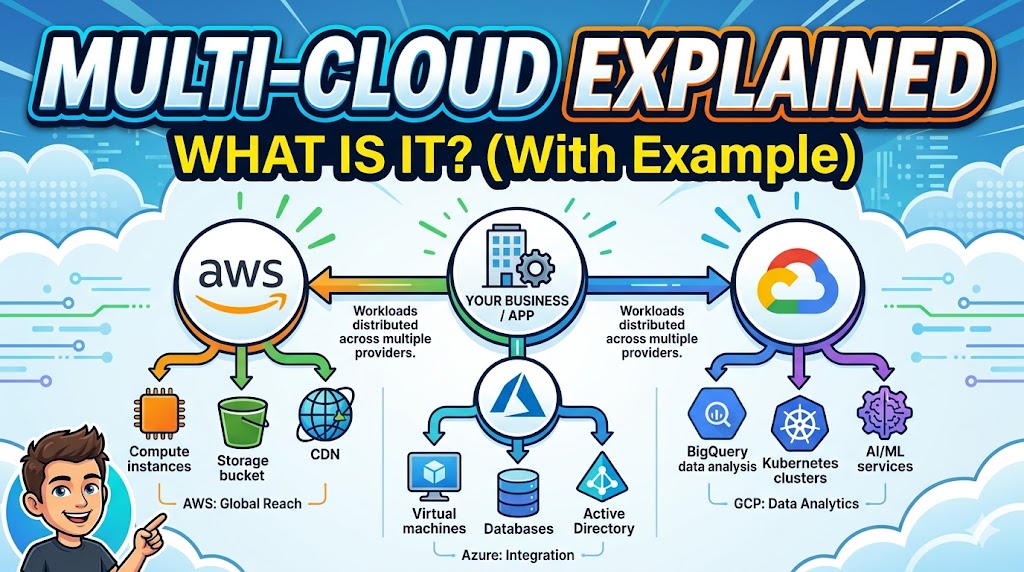
Multi-cloud is a strategy where an organization uses cloud computing services from two or more different providers.
While a “hybrid cloud” mixes private and public environments, a multi-cloud setup focuses on distributing workloads across multiple public cloud vendors—like AWS, Google Cloud, and Microsoft Azure—to avoid relying on a single source.
🚀 Why Organizations Use It
- 🛡️ Risk Mitigation: If one provider experiences a major outage, services can failover to another provider, ensuring the business stays online.
- 🔓 Avoiding Vendor Lock-in: It prevents a company from becoming overly dependent on one vendor’s pricing, API, or infrastructure.
- 🛠️ Best-of-Breed Tools: Different providers have different strengths. A company can pick one for its AI capabilities and another for its global database footprint.
- ⚖️ Compliance: Some regions require data to be stored within specific borders; using multiple providers makes it easier to meet these local residency requirements.
🏢 A Practical Example: “GlobalRetail Inc.”
Imagine a large e-commerce company that wants to optimize its operations. Instead of putting everything on one platform, they distribute their tech stack like this:
| Component | Provider | Why? |
| 🛒 E-commerce Website | AWS | To use their massive global content delivery network (CDN) and scaling for holiday sales. |
| 📊 Data Analytics & AI | Google Cloud | To use BigQuery and TensorFlow for predicting customer behavior and inventory needs. |
| 💻 Corporate Apps | Microsoft Azure | To seamlessly integrate with employee tools like Outlook, Teams, and Windows servers. |
🎯 The Bottom Line:
In this scenario, if AWS has a regional server issue, the company’s internal operations (on Azure) and data processing (on GCP) remain completely unaffected. They aren’t “locked” into one ecosystem; they are simply using the best tool for each specific job.
☁️ మల్టీ-క్లౌడ్ (Multi-cloud): ఒక సంక్షిప్త వివరణ
మల్టీ-క్లౌడ్ అంటే ఒక సంస్థ తన డిజిటల్ అవసరాల కోసం రెండు లేదా అంతకంటే ఎక్కువ వేర్వేరు క్లౌడ్ సర్వీస్ ప్రొవైడర్ల (Cloud Providers) సేవలను ఉపయోగించుకోవడం.
💡 సాధారణంగా కంపెనీలు కేవలం ఒకే ప్లాట్ఫారమ్ (ఉదాహరణకు కేవలం AWS మాత్రమే) వాడకుండా, విభిన్న పనుల కోసం అమెజాన్ (AWS), గూగుల్ (GCP), మరియు మైక్రోసాఫ్ట్ (Azure) వంటి వివిధ ప్రొవైడర్లను కలిపి ఎంచుకుంటాయి.
🚀 సంస్థలు దీనిని ఎందుకు ఉపయోగిస్తాయి?
- 🛡️ రిస్క్ తగ్గించడం (Risk Mitigation): ఒక క్లౌడ్ ప్రొవైడర్ సర్వర్లలో సాంకేతిక సమస్యలు తలెత్తి సేవలు ఆగిపోయినా, మరో క్లౌడ్ ప్రొవైడర్ ద్వారా వ్యాపారం నిరంతరాయంగా కొనసాగించవచ్చు.
- 🔓 వెండర్ లాక్-ఇన్ నివారణ (No Vendor Lock-in): ఒకే కంపెనీపై పూర్తిగా ఆధారపడటం వల్ల భవిష్యత్తులో ధరలు పెరిగినా లేదా ఫీచర్లు మారినా ఇబ్బంది కలగకుండా ఉండటానికి ఇది సహాయపడుతుంది.
- 🛠️ ఉత్తమ ఫీచర్లను ఎంచుకోవడం (Best-of-Breed Tools): ఒక్కో క్లౌడ్ ప్రొవైడర్ ఒక్కో విభాగంలో బలంగా ఉంటుంది. ఉదాహరణకు, ఒకరు డేటా అనలిటిక్స్లో మెరుగ్గా ఉంటే, మరొకరు సెక్యూరిటీలో మెరుగ్గా ఉండవచ్చు.
- ⚖️ నిబంధనల పాటించడం (Compliance): కొన్ని దేశాల చట్టాల ప్రకారం డేటాను ఆ దేశ సరిహద్దుల్లోనే భద్రపరచాలి. అటువంటప్పుడు ఆ ప్రాంతంలో అందుబాటులో ఉన్న ప్రొవైడర్ను వాడుకోవచ్చు.
🏢 ఒక ఉదాహరణ: “గ్లోబల్ రిటైల్ (GlobalRetail Inc.)”
ఒక పెద్ద ఈ-కామర్స్ కంపెనీ తన కార్యకలాపాలను మెరుగుపరచుకోవడానికి క్లౌడ్ సేవలను ఈ క్రింది విధంగా విభజించుకుంది:
| విభాగం (Component) | క్లౌడ్ ప్రొవైడర్ | ఎందుకు? |
| 🛒 ఈ-కామర్స్ వెబ్సైట్ | AWS (Amazon) | ప్రపంచవ్యాప్తంగా ఎక్కువ మంది యూజర్లను తట్టుకునే సామర్థ్యం (Scaling) దీనికి ఉంది. |
| 📊 డేటా అనలిటిక్స్ & AI | Google Cloud (GCP) | కస్టమర్ల అలవాట్లను విశ్లేషించడానికి గూగుల్ AI టూల్స్ చాలా శక్తివంతమైనవి. |
| 💻 కార్పొరేట్ అప్లికేషన్స్ | Microsoft Azure | ఆఫీసులో వాడే Outlook, Teams వంటి సాఫ్ట్వేర్లతో ఇది సులభంగా కలిసి పనిచేస్తుంది. |
✅ ముగింపు:
ఈ విధానం వల్ల, ఒకవేళ AWS సర్వర్లు డౌన్ అయినా, ఆ కంపెనీ అంతర్గత పనులు (Azure ద్వారా) మరియు డేటా విశ్లేషణ (GCP ద్వారా) ఎలాంటి ఆటంకం లేకుండా సాగుతాయి. ఇది ఆ కంపెనీకి ఒకే చోట చిక్కుకుపోకుండా పూర్తి స్వేచ్ఛను ఇస్తుంది.