🚀 *Gen AI Engineer (Production Focused)*
 👁️ What is Observability?
⚙️ In software and systems engineering, observability is the ability to understand the internal state of a complex system based entirely on the external data it produces.
🎯 If a system is highly observable, you can pinpoint exactly why a problem is happening without having to deploy new code, shut things down, or guess what went wrong.
🏛️ To achieve this, systems output three main types of telemetry data, often called the “Three Pillars of Observability”:
- 📊 Metrics: Aggregated numbers measured over time. They give you the big picture and tell you that there is a problem (e.g., CPU usage spiked to 99%, or web traffic dropped by half).
- 📝 Logs: Detailed, timestamped records of specific events. They provide the granular details of what happened (e.g., “Error: Database connection refused at 10:45:01 AM”).
- 🛤️ Traces: The end-to-end journey of a single user request as it travels through different servers, microservices, and databases. Traces show you exactly where a bottleneck or failure occurred in a complex chain of events.
⚖️ Monitoring vs. Observability
These terms are often confused, but they serve different purposes:
- 🚨 Monitoring is for known unknowns. It answers the question: “Is the system working?” (e.g., Alerting you when a server crashes).
- 🔍 Observability is for unknown unknowns. It answers the question: “Why isn’t it working?” (e.g., Helping you investigate a bizarre bug that has never happened before).
🛒 An Example: The E-Commerce Checkout
🏢 Imagine you run a large online store with a complex backend architecture.
⚠️ The Problem: Suddenly, customers start complaining on social media that they can’t complete their purchases.
🙈 Without Observability (Just Monitoring):
An alarm goes off because your overall checkout error rate just spiked to 40%. You know the checkout is broken, but you have no idea why. Your engineers have to frantically manually check the web servers, the inventory database, the shopping cart service, and the payment provider to hunt down the issue. It takes hours of blind guessing.
💡 With Observability:
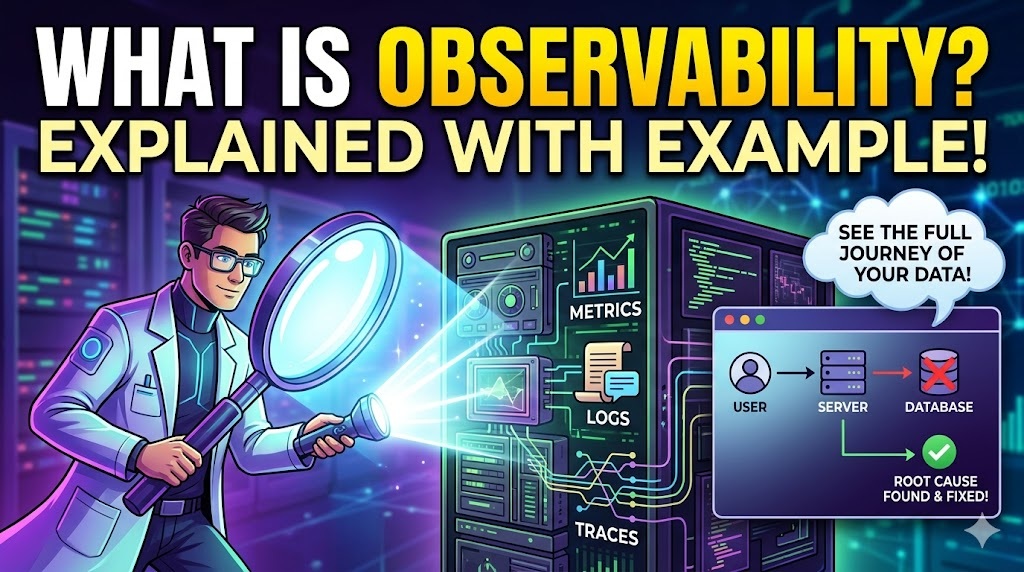
- 📈 The Metric alerts you: Your dashboard flags that the checkout success rate has dropped drastically.
- 🗺️ The Trace shows the path: You pull up a trace of a failed transaction. It visually maps the customer’s click:
Web Browser -> Shopping Cart Service -> Inventory Database -> Payment Gateway. The trace clearly highlights that the request moved fine until it hit the Payment Gateway, where it hung for 10 seconds and failed. - 📄 The Log gives the answer: You click directly on that failed Payment Gateway step in the trace to view the exact logs for that millisecond. The log reads: “Error 401 Unauthorized: Third-party Stripe API token expired.”
✅ The Result:
Instead of guessing for hours, observability allowed you to follow the breadcrumbs. Within three minutes, you know exactly what broke, where it broke, and why it broke. You update the API token, and the system is fixed.
👁️ అబ్జర్వబిలిటీ (Observability) అంటే ఏమిటి?
⚙️ సాఫ్ట్వేర్ మరియు సిస్టమ్స్ ఇంజనీరింగ్లో, ఒక సంక్లిష్టమైన సిస్టమ్ ఉత్పత్తి చేసే బాహ్య డేటా ఆధారంగా ఆ సిస్టమ్ యొక్క అంతర్గత స్థితిని అర్థం చేసుకునే సామర్థ్యాన్ని అబ్జర్వబిలిటీ (observability) అంటారు.
🎯 ఒక సిస్టమ్ అత్యంత అబ్జర్వబుల్గా ఉంటే, కొత్త కోడ్ను డిప్లాయ్ చేయకుండా, సిస్టమ్ను ఆపివేయకుండా లేదా ఏమి తప్పు జరిగిందో ఊహించకుండా, సమస్య కచ్చితంగా ఎందుకు జరుగుతుందో మీరు గుర్తించగలరు.
🏛️ దీన్ని సాధించడానికి, సిస్టమ్లు మూడు ప్రధాన రకాల టెలిమెట్రీ డేటాను అందిస్తాయి, వీటిని తరచుగా “అబ్జర్వబిలిటీ యొక్క మూడు మూలస్తంభాలు (Three Pillars of Observability)” అని పిలుస్తారు:
- 📊 మెట్రిక్స్ (Metrics): కాలానుగుణంగా కొలవబడిన సమగ్ర సంఖ్యలు. ఇవి మీకు పూర్తి చిత్రాన్ని ఇస్తాయి మరియు ఒక సమస్య ఉందని మీకు చెబుతాయి (ఉదాహరణకు, CPU వినియోగం 99% కి పెరగడం లేదా వెబ్ ట్రాఫిక్ సగానికి పడిపోవడం).
- 📝 లాగ్స్ (Logs): నిర్దిష్ట సంఘటనల యొక్క వివరణాత్మక, సమయంతో కూడిన (timestamped) రికార్డులు. అవి ఏమి జరిగిందనే దాని గురించి సూక్ష్మ వివరాలను అందిస్తాయి (ఉదా., “Error: Database connection refused at 10:45:01 AM”).
- 🛤️ ట్రేసెస్ (Traces): వివిధ సర్వర్లు, మైక్రోసర్వీసులు మరియు డేటాబేస్ల ద్వారా ప్రయాణించే ఒకే యూజర్ రిక్వెస్ట్ యొక్క మొదటి నుండి చివరి వరకు సాగే ప్రయాణం. సంక్లిష్టమైన ఈ ప్రక్రియలో ఎక్కడ ఆటంకం లేదా వైఫల్యం సంభవించిందో ట్రేసెస్ కచ్చితంగా చూపుతాయి.
⚖️ మానిటరింగ్ (Monitoring) vs అబ్జర్వబిలిటీ (Observability)
ఈ పదాలు తరచుగా అయోమయానికి గురిచేస్తాయి, కానీ అవి వేర్వేరు ప్రయోజనాలకు ఉపయోగపడతాయి:
- 🚨 మానిటరింగ్ అనేది తెలిసిన-తెలియని వాటి కోసం (known unknowns). ఇది “సిస్టమ్ పనిచేస్తోందా?” అనే ప్రశ్నకు సమాధానం ఇస్తుంది. (ఉదా., సర్వర్ క్రాష్ అయినప్పుడు మిమ్మల్ని అప్రమత్తం చేయడం).
- 🔍 అబ్జర్వబిలిటీ అనేది తెలియని-తెలియని వాటి కోసం (unknown unknowns). ఇది “అది ఎందుకు పని చేయడం లేదు?” అనే ప్రశ్నకు సమాధానం ఇస్తుంది. (ఉదా., ఇంతకు ముందెన్నడూ జరగని వింతైన బగ్ను పరిశోధించడంలో మీకు సహాయం చేయడం).
🛒 ఒక ఉదాహరణ: ఈ-కామర్స్ చెక్అవుట్ (The E-Commerce Checkout)
🏢 మీరు సంక్లిష్టమైన బ్యాకెండ్ ఆర్కిటెక్చర్తో ఒక పెద్ద ఆన్లైన్ స్టోర్ను నడుపుతున్నారని ఊహించుకోండి.
⚠️ సమస్య: అకస్మాత్తుగా, కస్టమర్లు తమ కొనుగోళ్లను పూర్తి చేయలేకపోతున్నామని సోషల్ మీడియాలో ఫిర్యాదు చేయడం ప్రారంభిస్తారు.
🙈 అబ్జర్వబిలిటీ లేకుండా (కేవలం మానిటరింగ్ ఉంటే):
మీ మొత్తం చెక్అవుట్ ఎర్రర్ రేట్ 40% కి పెరిగినందున అలారం మోగుతుంది. చెక్అవుట్ పనిచేయడం లేదని మీకు తెలుసు, కానీ ఎందుకో మీకు తెలియదు. సమస్యను కనుగొనడానికి మీ ఇంజనీర్లు వెబ్ సర్వర్లు, ఇన్వెంటరీ డేటాబేస్, షాపింగ్ కార్ట్ సర్వీస్ మరియు పేమెంట్ ప్రొవైడర్ను మాన్యువల్గా కంగారుగా తనిఖీ చేయాలి. ఏమి జరుగుతుందో గుడ్డిగా ఊహించడానికి గంటల సమయం పడుతుంది.
💡 అబ్జర్వబిలిటీతో:
- 📈 మెట్రిక్ మిమ్మల్ని అప్రమత్తం చేస్తుంది: చెక్అవుట్ సక్సెస్ రేట్ భారీగా పడిపోయిందని మీ డాష్బోర్డ్ సూచిస్తుంది.
- 🗺️ ట్రేస్ మార్గాన్ని చూపుతుంది: మీరు విఫలమైన లావాదేవీ యొక్క ట్రేస్ను పరిశీలిస్తారు. ఇది కస్టమర్ యొక్క క్లిక్ను దృశ్యమానంగా మ్యాప్ చేస్తుంది:
Web Browser -> Shopping Cart Service -> Inventory Database -> Payment Gateway. రిక్వెస్ట్ పేమెంట్ గేట్వేను చేరేవరకు బాగానే వెళ్లిందని, కానీ అక్కడ 10 సెకన్ల పాటు ఆగిపోయి విఫలమైందని ట్రేస్ స్పష్టంగా హైలైట్ చేస్తుంది. - 📄 లాగ్ సమాధానం ఇస్తుంది: ఆ మిల్లీసెకనుకు సంబంధించిన కచ్చితమైన లాగ్లను వీక్షించడానికి మీరు ట్రేస్లో విఫలమైన పేమెంట్ గేట్వే దశపై నేరుగా క్లిక్ చేస్తారు. లాగ్ ఇలా చెబుతుంది: “Error 401 Unauthorized: Third-party Stripe API token expired.”
✅ ఫలితం:
గంటల తరబడి ఊహించే బదులు, ఆధారాలను సులభంగా అనుసరించడానికి అబ్జర్వబిలిటీ మిమ్మల్ని అనుమతించింది. మూడు నిమిషాల్లో, సరిగ్గా ఏమి పాడైంది, ఎక్కడ పాడైంది మరియు ఎందుకు పాడైందో మీకు తెలుస్తుంది. మీరు API టోకెన్ను అప్డేట్ చేస్తారు, మరియు సిస్టమ్ రిపేర్ చేయబడుతుంది.