🚀 *Gen AI Engineer (Production Focused)*
 ⚡ Real-Time Streaming is the continuous processing of data as it is generated, rather than waiting to process it in large batches (like overnight data loading). Instead of analyzing what happened yesterday 📅, real-time streaming allows organizations to analyze and react to what is happening right now 📍.
To build a production-grade real-time streaming system, companies often pair Apache Kafka and Apache Flink. They handle two different, crucial halves of the problem: ingestion 📥 and computation ⚙️.
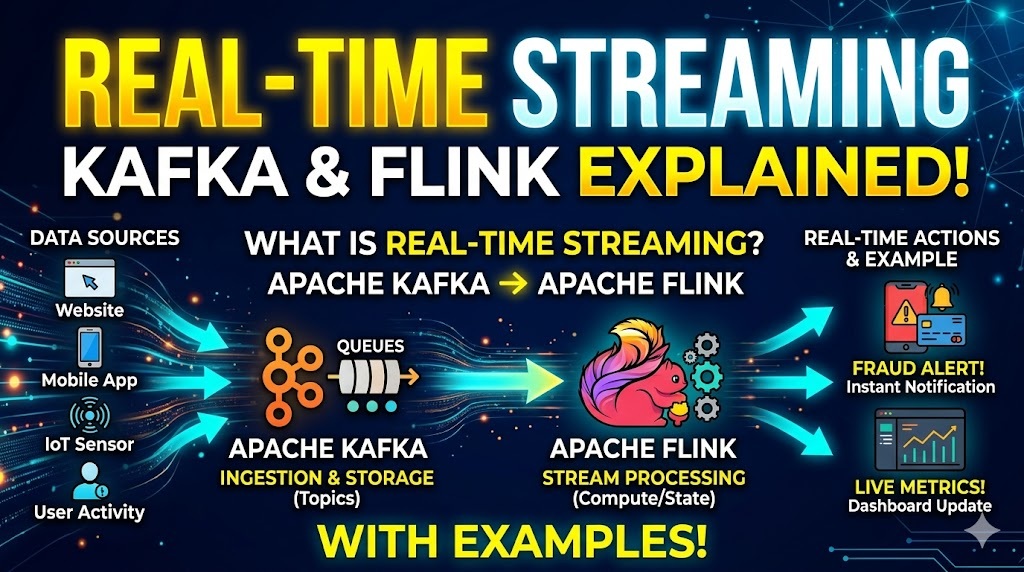
🏢 The Roles: Kafka vs. Flink
To understand how they work together, think of a massive, fast-moving sorting facility:
📥 Apache Kafka (The Transport & Storage Layer)
- What it is: A distributed event streaming platform that acts like a highly resilient, ultra-fast mailbox or centralized log 📨.
- The Job: It is ingestion-heavy, meaning it accepts millions of data points per second from various sources, organizes them into categories called topics, and stores them safely in the exact order they arrived.
- Core Trait: Kafka doesn’t alter or analyze the data; it just holds it reliably 🛡️.
🧠 Apache Flink (The Processing & Compute Layer)
- What it is: A distributed processing engine designed specifically for stateful computations over data streams. Flink is the “brain” 🧠.
- The Job: It sits right next to Kafka, constantly reading the incoming data streams, performing complex math, tracking patterns over time (state), and triggering immediate actions.
- Core Trait: Flink processes data line-by-line as it streams past, enabling sub-second decision-making ⚡.
💳 A Real-World Example: Credit Card Fraud Detection
Imagine a bank wants to stop fraudulent credit card transactions before the payment clears, rather than sending an alert hours after the thief has walked away 🏃♂️💨.
Here is how Kafka and Flink team up to handle this in milliseconds:
1. 🛒 The Event (Data Generation)
- You swipe your credit card at a coffee shop in New York City 🗽.
- Exactly one second later, your card details are used at an electronics store in London 🇬🇧.
- Both terminal swipes generate data packets containing the card number, time, location, and amount.
2. 📥 Ingestion (Kafka’s Job)
- The bank’s global payment servers immediately shoot these two transaction events into a Kafka topic named
customer-transactions. - Kafka guarantees that the NYC transaction is recorded right before the London transaction, perfectly preserving the timeline ⏳.
- Even if millions of other people are swiping cards simultaneously, Kafka scales smoothly to buffer all the incoming data.
3. ⚙️ Processing (Flink’s Job)
- Flink is actively “subscribed” to that Kafka
customer-transactionstopic, consuming events the millisecond they land. - State Memory: Flink maintains a “state” in its internal memory—it remembers that 1 second ago, your card was in NYC.
- The Rule: When Flink processes the London event, its internal logic triggers a rule: If the same card is used in two locations separated by more than 100 miles within a 1-hour window, flag it! 🚨
- Because Flink looks at data on the fly, it instantly catches this geographic impossibility.
4. 🚨 Action (The Output)
- Flink immediately outputs a new alert event (
"Potential Fraud detected on Card X") into a different Kafka topic calledfraud-alerts. - A downstream microservice reads from this topic, instantly blocks the card, and sends a push notification to your phone 📱 asking if you authorized the charge.
⏱️ Total Time Elapsed: Under 100 milliseconds—while the thief in London is still waiting for the card reader to say “Approved,” the card is already declined.
⚡ Real-time streaming అంటే data జెనరేట్ అవ్వగానే, దాన్ని continuous గా process చేయడం. Large batches కోసం (అంటే overnight data loading లాగా) వెయిట్ చేయాల్సిన అవసరం లేకుండా చేస్తుంది. నిన్న ఏం జరిగిందో తర్వాత analyze చేయడం కంటే, ప్రస్తుతం (right now 📍) ఏం జరుగుతుందో analyze చేసి, వెంటనే react అవ్వడానికి organizations కి real-time streaming హెల్ప్ అవుతుంది.
ఒక production-grade real-time streaming system ని బిల్డ్ చేయడానికి, కంపెనీలు తరచుగా Apache Kafka మరియు Apache Flink లని కలిపి వాడుతుంటాయి. ఇవి ఈ ప్రాసెస్ లోని రెండు ముఖ్యమైన భాగాలను హ్యాండిల్ చేస్తాయి: ingestion 📥 మరియు computation ⚙️.
🏢 The Roles: Kafka vs. Flink
ఇవి రెండూ కలిసి ఎలా పనిచేస్తాయో అర్థం చేసుకోవడానికి, ఒక పెద్ద, ఫాస్ట్ గా పనిచేసే sorting facility ని ఊహించుకోండి:
📥 Apache Kafka (The Transport & Storage Layer)
- What it is: Kafka అనేది ఒక distributed event streaming platform. ఇది ఒక highly resilient మరియు ultra-fast mailbox లేదా log లాగా పనిచేస్తుంది 📨.
- The Job: ఇది ingestion-heavy, అంటే विभिन्न source ల నుండి సెకనుకు మిలియన్ల కొద్దీ data points ని యాక్సెప్ట్ చేస్తుంది, వాటిని topics అనే categories గా ఆర్గనైజ్ చేస్తుంది, మరియు అవి వచ్చిన లైనప్ (exact order) లోనే సేఫ్ గా స్టోర్ చేస్తుంది.
- Core Trait: Kafka డేటాని మార్చదు లేదా analyze చేయదు; కేవలం నమ్మకంగా హోల్డ్ చేస్తుంది 🛡️.
🧠 Apache Flink (The Processing & Compute Layer)
- What it is: Flink అనేది data streams పై stateful computations చేయడం కోసం డిజైన్ చేయబడిన ఒక distributed processing engine. Flink అనేది ఈ సిస్టమ్ కి “brain” లాంటిది 🧠.
- The Job: ఇది Kafka పక్కనే కూర్చుని, వస్తున్న incoming data streams ని కాన్స్టెంట్ గా రీడ్ చేస్తూ, కాంప్లెక్స్ మ్యాథ్స్ ని పర్ఫామ్ చేస్తూ, టైమ్ బట్టి ప్యాటర్న్స్ ని ట్రాక్ చేస్తూ (state ని మెయింటైన్ చేస్తూ), వెంటనే యాక్షన్స్ ని ట్రిగ్గర్ చేస్తుంది.
💳 A Real-World Example: Credit Card Fraud Detection
ఒక దొంగ క్రెడిట్ కార్డ్ దొంగిలించి షాపింగ్ చేసి వెళ్ళిపోయిన గంటల తర్వాత అలర్ట్ పంపడం కంటే, payment క్లియర్ అవ్వడానికి ముందే ఆ fraudulent transaction ని ఆపాలని బ్యాంక్ అనుకుంటోంది 🏃♂️💨.
దీనికోసం Kafka మరియు Flink కలిసి కేవలం milliseconds లో ఈ ప్రాసెస్ ని ఎలా హ్యాండిల్ చేస్తాయో చూడండి:
1. 🛒 The Event (Data Generation)
- మీరు New York City 🗽 లోని ఒక కాఫీ షాప్ లో మీ క్రెడిట్ కార్డ్ ని స్వైప్ చేశారు.
- సరిగ్గా ఒక సెకండ్ తర్వాత, London 🇬🇧 లోని ఒక ఎలక్ట్రానిక్స్ స్టోర్ లో మీ కార్డ్ డీటెయిల్స్ వాడబడ్డాయి.
- ఈ రెండు టెర్మినల్ స్వైప్స్ వల్ల కార్డ్ నంబర్, టైమ్, లొకేషన్ మరియు అమౌంట్ తో కూడిన data packets (events) జనరేట్ అవుతాయి.
2. 📥 Ingestion (Kafka’s Job)
- బ్యాంక్ యొక్క గ్లోబల్ పేమెంట్ సర్వర్లు వెంటనే ఈ రెండు ట్రాన్సాక్షన్ ఈవెంట్స్ ని
customer-transactionsఅనే Kafka topic లోకి పంపుతాయి. - Kafka ఆ NYC ట్రాన్సాక్షన్ ని London ట్రాన్సాక్షన్ కంటే ముందే రికార్డ్ చేసి, టైమ్లైన్ ని కరెక్ట్ గా కాపాడుతుంది (preserve చేస్తుంది) ⏳.
- అదే టైమ్ లో మిలియన్ల కొద్దీ ఇతర వ్యక్తులు కార్డ్స్ స్వైప్ చేస్తున్నప్పటికీ, Kafka ఏమాత్రం ఇబ్బంది లేకుండా scale అయి, data మొత్తాన్ని buffer చేస్తుంది.
3. ⚙️ Processing (Flink’s Job)
- Flink ఆ Kafka
customer-transactionstopic కి “subscribe” అయి ఉంటుంది, కాబట్టి ఆ ఈవెంట్స్ ల్యాండ్ అయిన మిల్లీసెకన్ లోనే వాటిని కన్జ్యూమ్ చేస్తుంది. - State Memory: Flink తన మెమరీలో ఒక “state” ని మెయింటైన్ చేస్తుంది—అంటే 1 సెకండ్ క్రితం మీ కార్డ్ NYC లో ఉందని అది గుర్తుపెట్టుకుంటుంది.
- The Rule: ఎప్పుడైతే Flink ఆ London ఈవెంట్ ని ప్రాసెస్ చేస్తుందో, దాని ఇంటర్నల్ లాజిక్ ఒక రూల్ ని ట్రిగ్గర్ చేస్తుంది: ఒకే కార్డ్ ని 1-hour window లోపల 100 మైళ్ళ కంటే ఎక్కువ దూరం ఉన్న రెండు లొకేషన్స్ లో వాడితే, దాన్ని flag చెయ్. 🚨
- Flink డేటాని స్ట్రీమ్ అవుతున్నప్పుడే line-by-line ప్రాసెస్ చేస్తుంది కాబట్టి, ఈ భౌగోళిక అసాధ్యతను (geographic impossibility) అది instant గా పసిగడుతుంది.
4. 🚨 Action (The Output)
- Flink వెంటనే “Potential Fraud detected on Card X” అనే ఒక కొత్త అలర్ట్ ఈవెంట్ ని
fraud-alertsఅనే వేరే Kafka topic లోకి అవుట్పుట్ చేస్తుంది. - ఒక downstream microservice ఈ topic నుండి రీడ్ చేసి, ఇన్స్టెంట్ గా ఆ కార్డ్ ని బ్లాక్ చేస్తుంది, అలాగే మీ ఫోన్ కి ఒక push notification పంపుతుంది 📱.
⏱️ Total Time Elapsed: ఇదంతా కేవలం 100 milliseconds లోపల జరిగిపోతుంది—అక్కడ London లో ఉన్న దొంగ కార్డ్ రీడర్ “Approved” అని చూపించడం కోసం వెయిట్ చేసేలోపే ఇక్కడ కార్డ్ బ్లాక్ అయిపోతుంది.