🚀 *Gen AI Engineer (Production Focused)*
 🚀 Understanding Hyperautomation
🎯 Hyperautomation is a business strategy focused on rapidly identifying, vetting, and automating as many business and IT processes as possible.
⚙️ While traditional automation relies on a single tool to automate a simple, repetitive task, hyperautomation orchestrates an entire ecosystem of advanced technologies. It combines tools to automate complex workflows that previously required human thought, judgment, and decision-making.
🧩 Core Technologies in a Hyperautomation Ecosystem
Here are the core technologies that typically make up this ecosystem:
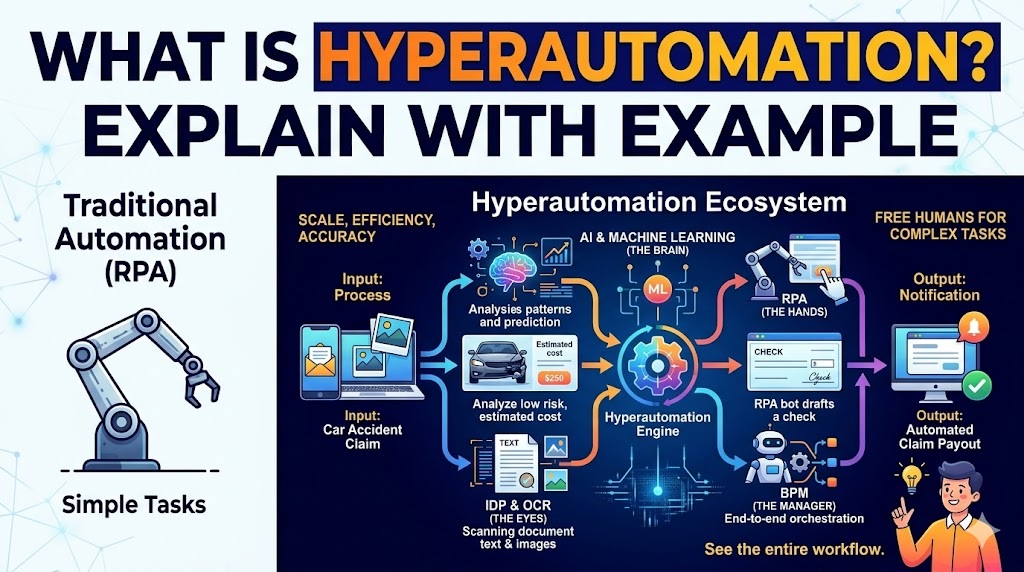
- 🤖 Robotic Process Automation (RPA) — The “Hands” 👐Software bots that perform repetitive, rule-based tasks across software applications (e.g., clicking, copying, pasting).
- 🧠 Artificial Intelligence (AI) & Machine Learning (ML) — The “Brain” 💡These systems analyze data, recognize patterns, make predictions, and handle tasks requiring cognitive logic.
- 👁️ Intelligent Document Processing (IDP) — The “Eyes” 📄Technology that uses Optical Character Recognition (OCR) and Natural Language Processing (NLP) to read and extract data from unstructured formats like PDFs or emails.
- 👔 Business Process Management (BPM) — The “Manager” 📊Software that models, monitors, and orchestrates the entire workflow from end to end.
🏢 A Real-World Example: Processing Insurance Claims 🚗
To understand the difference between standard automation and hyperautomation, let’s look at how an auto insurance company processes a claim after a car accident.
📝 1. The Old Way (Manual) 🧑💻
A customer emails photos of their damaged car. An agent opens the email, downloads the photos, reads the customer’s policy, estimates the damage by looking at the photos, manually types the information into the company’s database, and decides whether to approve the claim.
⚙️ 2. Traditional Automation (RPA Only) 🤖
The company deploys an RPA bot. The bot is programmed to automatically open incoming emails, download the attached photos, and move them into a specific folder on the company’s server. However, a human agent still has to look at the photos, assess the damage, read the policy, and make the final decision. The automation is limited to moving files.
🌐 3. Hyperautomation (The Full Ecosystem) ✨
Here is how hyperautomation transforms the entire end-to-end process:
- 👁️🗨️ IDP & NLP: The system automatically reads the customer’s initial email, understands the context (that it is a claim for a rear-end collision), and extracts the policy number.
- 📸 Computer Vision (AI): An AI model scans the attached photos, identifies a crushed bumper and broken taillight, and automatically estimates the repair cost based on historical data.
- 🛡️ Machine Learning: The system flags the claim as “low risk for fraud” based on the customer’s driving history and the AI damage assessment.
- ⌨️ RPA: A software bot takes the AI’s estimate, logs into the company’s legacy financial system, and automatically drafts the payout check.
- 📈 BPM: The orchestration platform tracks this entire flow. It instantly routes the drafted check to a human manager for a final one-click approval, and then automatically emails the customer with the resolution.
💡 The Bottom Line 🚀
Hyperautomation doesn’t just replace human clicks; it connects different intelligent tools to automate entire chains of work. It allows businesses to scale operations efficiently, reduce human error, and free up human employees to focus on complex, creative, or customer-facing tasks.
🚀 హైపర్ఆటోమేషన్ను అర్థం చేసుకోవడం
🎯 వీలైనన్ని ఎక్కువ వ్యాపార మరియు ఐటీ (IT) ప్రక్రియలను వేగంగా గుర్తించి, పరిశీలించి, మరియు ఆటోమేట్ చేయడంపై దృష్టి సారించే ఒక వ్యాపార వ్యూహమే హైపర్ఆటోమేషన్ (Hyperautomation).
⚙️ సాంప్రదాయిక ఆటోమేషన్ కేవలం ఒక సాధారణ, పునరావృతమయ్యే పనిని ఆటోమేట్ చేయడానికి ఒకే సాధనం (tool) పై ఆధారపడితే, హైపర్ఆటోమేషన్ అధునాతన సాంకేతికతల వ్యవస్థ మొత్తాన్ని అనుసంధానం చేస్తుంది. ఇంతకుముందు మనుషుల ఆలోచన, తీర్పు మరియు నిర్ణయాలు తీసుకునే సామర్థ్యం అవసరమైన సంక్లిష్టమైన వర్క్ఫ్లోలను ఆటోమేట్ చేయడానికి ఇది వివిధ సాధనాలను మిళితం చేస్తుంది.
🧩 హైపర్ఆటోమేషన్ వ్యవస్థలో సాధారణంగా ఉండే ప్రధాన సాంకేతికతలు ఇవే:
- 🤖 రోబోటిక్ ప్రాసెస్ ఆటోమేషన్ (RPA) — ఇవి “చేతులు” లాంటివి 👐సాఫ్ట్వేర్ అప్లికేషన్లలో పునరావృతమయ్యే, నియమాల ఆధారిత పనులను (ఉదాహరణకు: క్లిక్ చేయడం, కాపీ చేయడం, పేస్ట్ చేయడం) చేసే సాఫ్ట్వేర్ బాట్లు.
- 🧠 ఆర్టిఫిషియల్ ఇంటెలిజెన్స్ (AI) & మెషీన్ లెర్నింగ్ (ML) — ఇవి “మెదడు” లాంటివి 💡ఈ సిస్టమ్లు డేటాను విశ్లేషిస్తాయి, ప్యాటర్న్లను గుర్తిస్తాయి, అంచనాలు వేస్తాయి మరియు ఆలోచనాత్మక తర్కం అవసరమైన పనులను నిర్వహిస్తాయి.
- 👁️ ఇంటెలిజెంట్ డాక్యుమెంట్ ప్రాసెసింగ్ (IDP) — ఇవి “కళ్ళు” లాంటివి 📄PDFలు లేదా ఈమెయిల్ల వంటి నిర్మాణాత్మకం కాని ఫార్మాట్ల నుండి డేటాను చదవడానికి మరియు సేకరించడానికి ఆప్టికల్ క్యారెక్టర్ రికగ్నిషన్ (OCR) మరియు న్యాచురల్ లాంగ్వేజ్ ప్రాసెసింగ్ (NLP)లను ఉపయోగించే సాంకేతికత.
- 👔 బిజినెస్ ప్రాసెస్ మేనేజ్మెంట్ (BPM) — ఇది “మేనేజర్” లాంటిది 📊మొదటి నుండి చివరి వరకు మొత్తం పని ప్రవాహాన్ని (workflow) మోడల్ చేసే, పర్యవేక్షించే మరియు సమన్వయం చేసే సాఫ్ట్వేర్.
🏢 ఒక వాస్తవ ప్రపంచ ఉదాహరణ: ఇన్సూరెన్స్ క్లెయిమ్ల ప్రాసెసింగ్ 🚗
సాధారణ ఆటోమేషన్ మరియు హైపర్ఆటోమేషన్ మధ్య ఉన్న వ్యత్యాసాన్ని అర్థం చేసుకోవడానికి, కారు ప్రమాదం జరిగిన తర్వాత ఒక ఆటో ఇన్సూరెన్స్ కంపెనీ క్లెయిమ్ను ఎలా ప్రాసెస్ చేస్తుందో చూద్దాం.
📝 1. పాత పద్ధతి (మాన్యువల్) 🧑💻
ఒక కస్టమర్ తమ దెబ్బతిన్న కారు ఫోటోలను ఈమెయిల్ చేస్తారు. ఒక ఏజెంట్ ఆ ఈమెయిల్ను తెరిచి, ఫోటోలను డౌన్లోడ్ చేసి, కస్టమర్ పాలసీని చదివి, ఫోటోలను చూసి నష్టాన్ని అంచనా వేసి, ఆ సమాచారాన్ని స్వయంగా కంపెనీ డేటాబేస్లో టైప్ చేసి, క్లెయిమ్ను ఆమోదించాలా వద్దా అని నిర్ణయిస్తారు.
⚙️ 2. సాంప్రదాయ ఆటోమేషన్ (RPA మాత్రమే) 🤖
కంపెనీ ఒక RPA బాట్ను ప్రవేశపెడుతుంది. వచ్చే ఈమెయిల్లను ఆటోమేటిక్గా తెరవడానికి, జతచేయబడిన ఫోటోలను డౌన్లోడ్ చేయడానికి మరియు వాటిని కంపెనీ సర్వర్లోని ఒక నిర్దిష్ట ఫోల్డర్లోకి మార్చడానికి ఈ బాట్ ప్రోగ్రామ్ చేయబడుతుంది. అయితే, ఒక మానవ ఏజెంట్ ఇప్పటికీ ఆ ఫోటోలను చూడాలి, నష్టాన్ని అంచనా వేయాలి, పాలసీని చదవాలి మరియు తుది నిర్ణయం తీసుకోవాలి. ఇక్కడ ఆటోమేషన్ కేవలం ఫైళ్లను తరలించడానికి మాత్రమే పరిమితం చేయబడింది.
🌐 3. హైపర్ఆటోమేషన్ (పూర్తి వ్యవస్థ) ✨
మొత్తం ప్రక్రియను మొదటినుండి చివరిదాకా హైపర్ఆటోమేషన్ ఎలా మారుస్తుందో ఇక్కడ చూడండి:
- 👁️🗨️ IDP & NLP: సిస్టమ్ ఆటోమేటిక్గా కస్టమర్ పంపిన మొదటి ఈమెయిల్ను చదువుతుంది, సందర్భాన్ని అర్థం చేసుకుంటుంది (అది కారు వెనుక భాగం ఢీకొన్నందుకు క్లెయిమ్ అని), మరియు పాలసీ నంబర్ను సేకరిస్తుంది.
- 📸 కంప్యూటర్ విజన్ (AI): ఒక AI మోడల్ జతచేయబడిన ఫోటోలను స్కాన్ చేస్తుంది, దెబ్బతిన్న బంపర్ మరియు పగిలిన టెయిల్లైట్ను గుర్తిస్తుంది, మరియు గత డేటా ఆధారంగా మరమ్మత్తు ఖర్చును ఆటోమేటిక్గా అంచనా వేస్తుంది.
- 🛡️ మెషీన్ లెర్నింగ్: కస్టమర్ డ్రైవింగ్ హిస్టరీ మరియు AI చేసిన నష్టం అంచనా ఆధారంగా సిస్టమ్ ఈ క్లెయిమ్ను “తక్కువ మోసపూరిత ప్రమాదం (low risk for fraud)” ఉన్నదిగా గుర్తిస్తుంది.
- ⌨️ RPA: ఒక సాఫ్ట్వేర్ బాట్ AI అంచనాను తీసుకుని, కంపెనీ పాత ఆర్థిక వ్యవస్థలోనికి లాగిన్ అయి, చెల్లించాల్సిన చెక్కును ఆటోమేటిక్గా డ్రాఫ్ట్ చేస్తుంది.
- 📈 BPM: ఆర్కెస్ట్రేషన్ ప్లాట్ఫారమ్ ఈ మొత్తం పని ప్రవాహాన్ని ట్రాక్ చేస్తుంది. ఇది వెంటనే డ్రాఫ్ట్ చేసిన చెక్కును తుది ఆమోదం (ఒక క్లిక్ ఆమోదం) కోసం మానవ మేనేజర్కు పంపుతుంది మరియు ఆ తర్వాత పరిష్కారంతో కస్టమర్కు ఆటోమేటిక్గా ఈమెయిల్ చేస్తుంది.
💡 ముగింపు (The Bottom Line) 🚀
హైపర్ఆటోమేషన్ కేవలం మనుషులు చేసే క్లిక్లను మాత్రమే భర్తీ చేయదు; మొత్తం పనుల శ్రేణిని ఆటోమేట్ చేయడానికి ఇది వివిధ తెలివైన సాధనాలను కలుపుతుంది. ఇది వ్యాపారాలు తమ కార్యకలాపాలను సమర్థవంతంగా విస్తరించుకోవడానికి, మానవ తప్పిదాలను తగ్గించడానికి మరియు మానవ ఉద్యోగులు మరింత సంక్లిష్టమైన, సృజనాత్మక లేదా కస్టమర్లకు సేవ చేసే పనులపై దృష్టి పెట్టేలా వారికి సమయాన్ని ఆదా చేయడానికి అనుమతిస్తుంది.